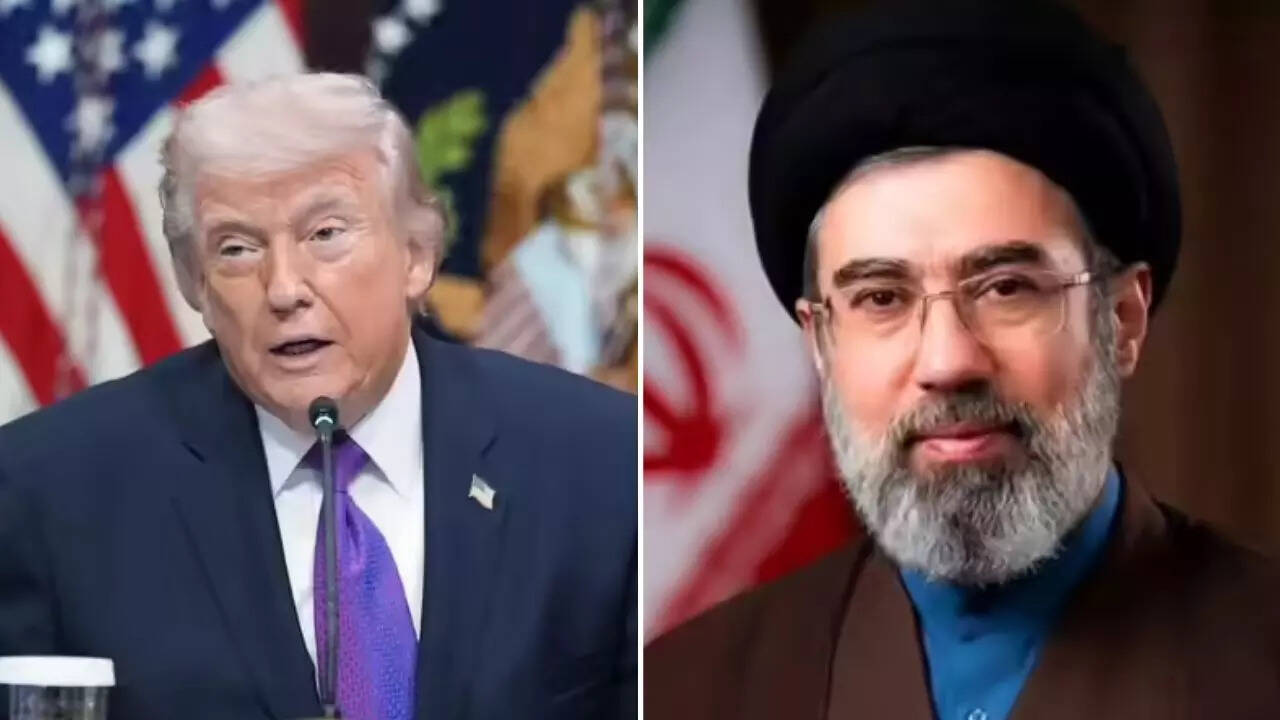
The five-day window currently stalling a full-scale energy war in the Persian Gulf is not the diplomatic breakthrough Donald Trump claims it to be. On Monday morning, the U.S. President declared that "very good and productive conversations" had taken place between Washington and Tehran, leading him to postpone a devastating ultimatum to "obliterate" Iranian power plants. Within hours, the Iranian Foreign Ministry and the Speaker of the Parliament, Mohammad Bagher Ghalibaf, fired back, dismissing the claims as "fake news" and "psychological warfare."
This is not a simple case of "he-said, she-said" diplomacy. It is a calculated high-stakes gamble where both sides are using the narrative of negotiations to mask deeper, more desperate strategic needs. While Trump seeks to cool an overheating global oil market and buy time for military repositioning, Tehran is digging in, convinced that any admission of talks would signal a collapse of their internal deterrence at a time when their leadership has been decapitated.
The Mirage of Productive Conversations
The discrepancy between the White House and the Iranian Foreign Ministry is jarring. Trump’s Truth Social posts paint a picture of Jared Kushner and Steve Witkoff engaged in "in-depth, detailed" discussions with a "most respected" Iranian figure who is notably not the Supreme Leader. The President even suggested that Iran is ready to abandon its nuclear ambitions and hand over its enriched uranium.
The reality on the ground in Tehran suggests otherwise. The Iranian leadership is currently reeling from the February 28 strikes that killed Supreme Leader Ayatollah Ali Khamenei. In this power vacuum, admitting to direct talks with the "Great Satan" is political suicide for any faction trying to claim the mantle of the late leader. By denying the talks, the Iranian Foreign Ministry is maintaining a domestic front of "principled resistance," even if messages are being passed through backchannels in Oman, Turkey, or Pakistan.
Why the Five Day Pause is a Tactical Reset
To understand why this "peace deal" is failing before it begins, one must look at the 48-hour ultimatum that preceded it. Trump had demanded the full reopening of the Strait of Hormuz, threatening to destroy Iran’s electricity grid if the world’s most vital oil chokepoint remained closed. Iran countered by threatening to "irreversibly destroy" desalination plants and energy hubs across the entire Gulf, a move that would leave millions in the region without water or power.
The five-day pause is less about a "total resolution of hostilities" and more about the following three factors:
- Oil Market Manipulation: Global crude prices have been in a tailspin. By signaling a potential deal, Trump successfully cooled a market that was pricing in a catastrophic supply disruption.
- Military Logistics: Analysts suggest the U.S. "Department of War" (Trump's preferred nomenclature for the Pentagon in this term) requires this window to finalize the positioning of missile interceptors and a second aircraft carrier group.
- The Kharg Island Variable: Reports have surfaced that the U.S. is considering a blockade or occupation of Kharg Island, Iran's primary oil export terminal. A "pause" in strikes on the mainland allows the U.S. to refine these specific operational plans without the immediate pressure of an expiring clock.
The Credibility Gap and the Secret Intermediary
Trump’s claim that he is talking to a "respected" figure he cannot name to prevent them from being "killed" adds a layer of spy-novel intrigue that Iranian officials are quick to mock. Speaker Ghalibaf’s assertion that the U.S. is merely trying to "escape the quagmire" highlights the Iranian belief that Trump is overextended.
There is a historical precedent for this kind of disconnect. In previous administrations, "indirect talks" meant weeks of message-passing through the Swiss or Omanis. Trump’s approach is to announce the deal as finished before the first meeting has even concluded. This "Art of the Deal" style of diplomacy fails in the Middle East because it ignores the "face-saving" culture essential to Iranian domestic politics. If a deal is being discussed, Trump’s public boasting makes it nearly impossible for the Iranians to sign it.
The Brutal Truth of Regional Deterrence
Iran’s strategy is not to win a war against the United States, but to make the cost of American victory high enough that Trump’s domestic base rebels. They are banking on the "peace president" persona Trump campaigned on. By threatening regional desalination plants—the lifeblood of U.S. allies like Saudi Arabia and the UAE—Tehran is holding the entire region hostage.
The Iranian Foreign Ministry’s statement that "all requests should be referred to Washington" is a clear signal: they will not blink first. They view the current "pause" as a sign that their threats to destroy regional infrastructure actually worked. From their perspective, Trump didn't choose peace; he retreated in the face of "irreversible retaliation."
The Nuclear Sticking Point
Trump’s insistence that Iran is agreeing to "not have nuclear weapons anymore" is perhaps the most contested part of his narrative. Since the 2025-2026 conflict began, Iran has accelerated its enrichment as its only remaining leverage. Asking them to hand over that uranium now, while U.S. and Israeli jets are actively striking IRGC headquarters in Tehran, is a demand for total surrender. In the history of the Islamic Republic, they have never surrendered under direct fire.
The Friday Deadline
The clock is ticking toward Friday evening. If no tangible progress is made—which seems likely given the public denials—Trump has already promised to return to "bombing our little hearts out." This flippant rhetoric masks a terrifying reality: the next phase of this conflict will target the very survival of the Iranian state’s infrastructure.
The tragedy of the current "negotiations" is that they are being conducted via social media and press scrums rather than secure rooms. Until the U.S. provides a path for Iranian leadership to de-escalate without appearing to collapse, the "productive conversations" will remain a mirage. The five-day pause isn't a bridge to peace; it's the quiet before a much larger storm.
Monitor the price of Brent Crude on Friday afternoon. If it spikes, the market has already decided that the "respected leader" Trump is talking to doesn't exist.