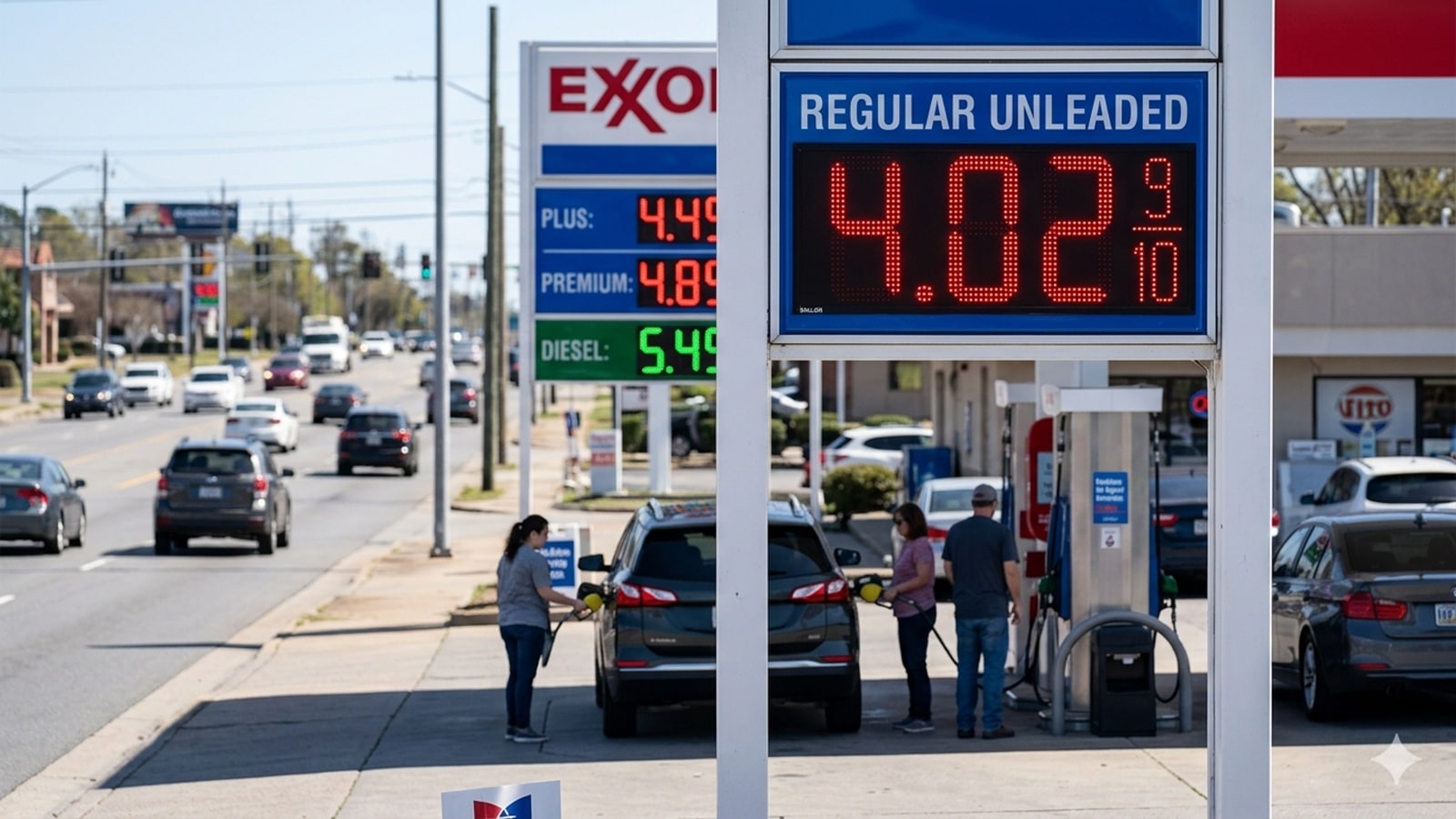
The American driver is currently staring at a psychological wall that has not been breached since the dark early days of the Ukraine invasion. As of April 1, 2026, the national average for a gallon of regular unleaded has officially crossed the $4.00 mark, a staggering jump from the $3.00 levels seen just weeks ago. While the surface-level explanation is the erupting conflict between the United States and Iran, the reality is a far more complex strangulation of global energy arteries that won't be solved by a simple ceasefire or a press release from the White House.
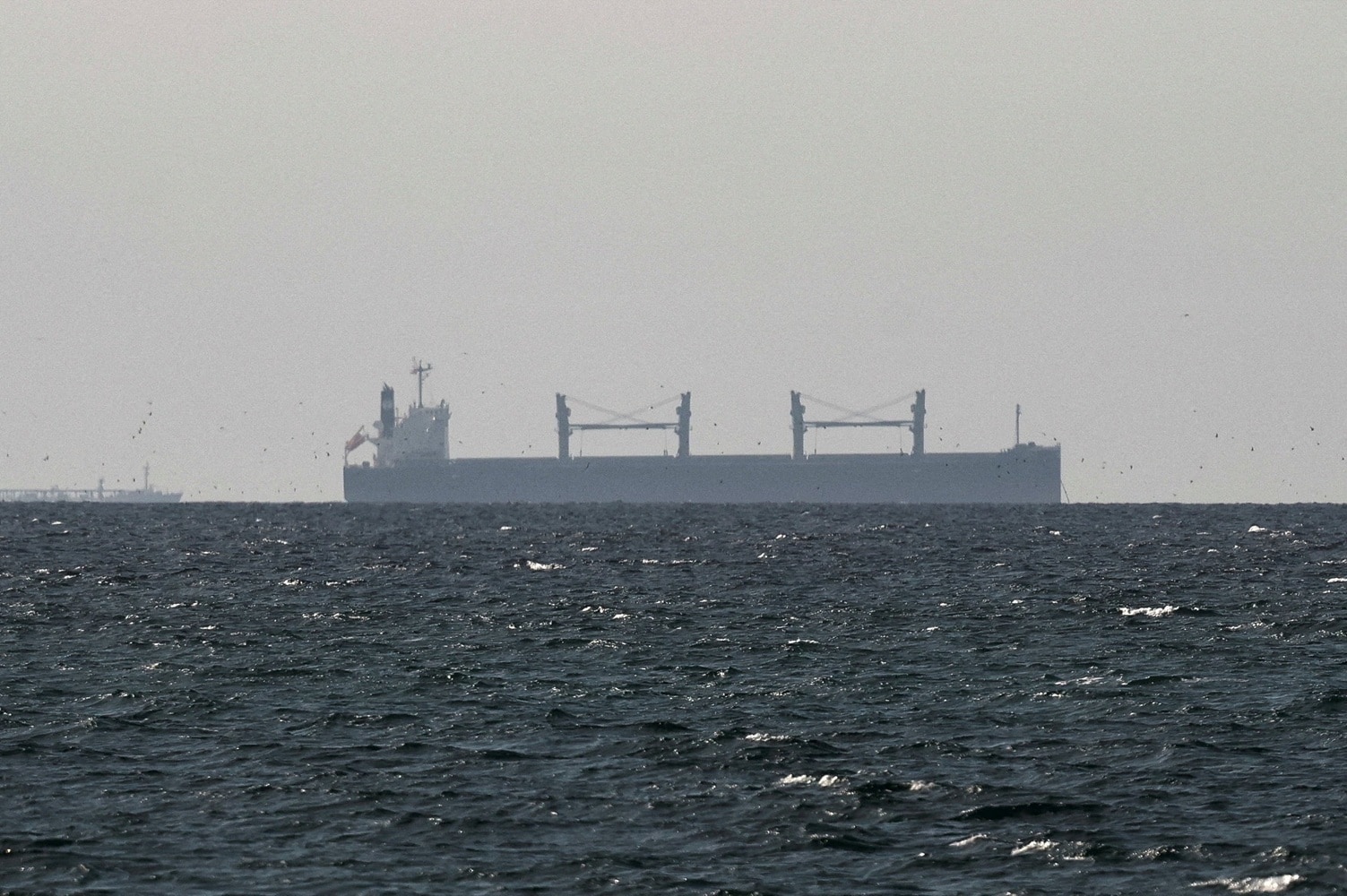
The primary driver is the effective closure of the Strait of Hormuz. This 21-mile-wide chokepoint is the carotid artery of the global energy market. Roughly 20 million barrels of oil—20% of global consumption—pass through this narrow passage every day. With Iran's blockade and the subsequent "Operation Epic Fury" launched by the Trump administration, that flow has slowed to a trickle. Brent crude has reacted predictably, screaming past $120 a barrel, leaving domestic gas stations with no choice but to pass the bill to the consumer.
The Myth of Energy Independence
For years, the political narrative has centered on the idea that the United States is "energy independent." This is a half-truth that is currently being dismantled at the pump. While the U.S. produces a massive amount of crude, our refinery infrastructure is specifically tuned to process the heavy, sour crudes that traditionally come from the Middle East. When the Strait of Hormuz closes, it isn't just about the volume of oil; it is about the type of oil available.
Domestic "light sweet" crude cannot simply replace the missing Middle Eastern barrels without significant refinery retooling, a process that takes months, not days. Consequently, U.S. refineries are operating at reduced capacity or paying exorbitant premiums to source compatible crude from alternative, longer routes. This logistical nightmare adds a hidden "security premium" to every gallon, often ranging from 30 to 50 cents, independent of the actual price of a barrel of oil.
The Strategic Reserve Gamble
The administration has moved to release 172 million barrels from the Strategic Petroleum Reserve (SPR) to stem the bleeding. However, this is a finite tool being used against an indefinite problem. Current SPR levels sit at approximately 415 million barrels. At a maximum drawdown rate of roughly 4.4 million barrels per day, the reserve provides a temporary buffer, but it cannot replace the 10 to 12 million barrels per day currently stranded in the Persian Gulf.
Market analysts are already looking past the release. They see a "replenishment risk." Every barrel pulled out of the ground today is a barrel the government must eventually buy back in a future, potentially even more expensive market. This creates a floor for oil prices; traders know the U.S. government will eventually become a massive buyer, keeping prices artificially elevated even if the shooting stops tomorrow.
The Silent Hit to Diesel and Logistics
While the $4.00 headline focuses on passenger vehicles, the real economic damage is happening in the diesel market. Diesel and jet fuel prices have more than doubled since hostilities began on February 28. Unlike gasoline, which largely affects discretionary travel, diesel powers the global supply chain.
Everything in a modern grocery store arrives on a truck burning diesel. With prices for "distillates" spiking, we are seeing the beginning of a second-wave inflation shock. Shipping companies are already implementing emergency fuel surcharges. In a world still reeling from the inflationary cycles of 2024 and 2025, this energy shock is a catalyst for a broader "commodity-driven inflation regime" that the Federal Reserve is ill-equipped to fight with interest rate hikes alone.
Regional Disparity and the Five Dollar Threat
The $4.00 national average hides the brutal reality on the West Coast. In California, prices have already surged past **$5.50**, with some stations in Los Angeles and San Francisco testing the $6.00 limit. These regions are "energy islands," disconnected from the massive pipeline networks of the Gulf Coast and heavily reliant on maritime imports—imports that are now being rerouted or cancelled entirely.
Even "cheap" markets like Kansas and Oklahoma, which enjoyed $3.00 gas in early March, are seeing daily increases of 5 to 10 cents. The speed of the ascent is what differentiates this crisis from 2022. During the Ukraine invasion, the price climb was a steady burn. This time, it is a vertical spike, driven by the immediate physical loss of supply rather than just speculative fear.
The Diplomatic Deadlock
There is a growing skepticism in the markets regarding a quick resolution. While Iranian officials have hinted at a readiness to talk, the precondition of massive "reparations" and the continued presence of U.S. troops in the region suggest a prolonged standoff. This uncertainty is priced into the market as a volatility tax.
If the Strait remains closed through April, we are looking at a structural shift in the energy landscape. Global supply is projected to plunge by 8 million barrels per day this month alone. No amount of increased production from non-OPEC+ members or North American shale can bridge that gap in the short term. We are not just dealing with a "short-term disruption," as the White House claims; we are witnessing the systemic collapse of the energy model that has powered the last four years of global growth.
The era of $3.00 gasoline died the moment the first tankers were turned back from the Gulf. Drivers shouldn't be looking for a return to the "multi-year lows" promised by political rhetoric. They should be preparing for a summer where $4.00 is the floor, not the ceiling.
Stop waiting for the "plummet." It isn't coming.