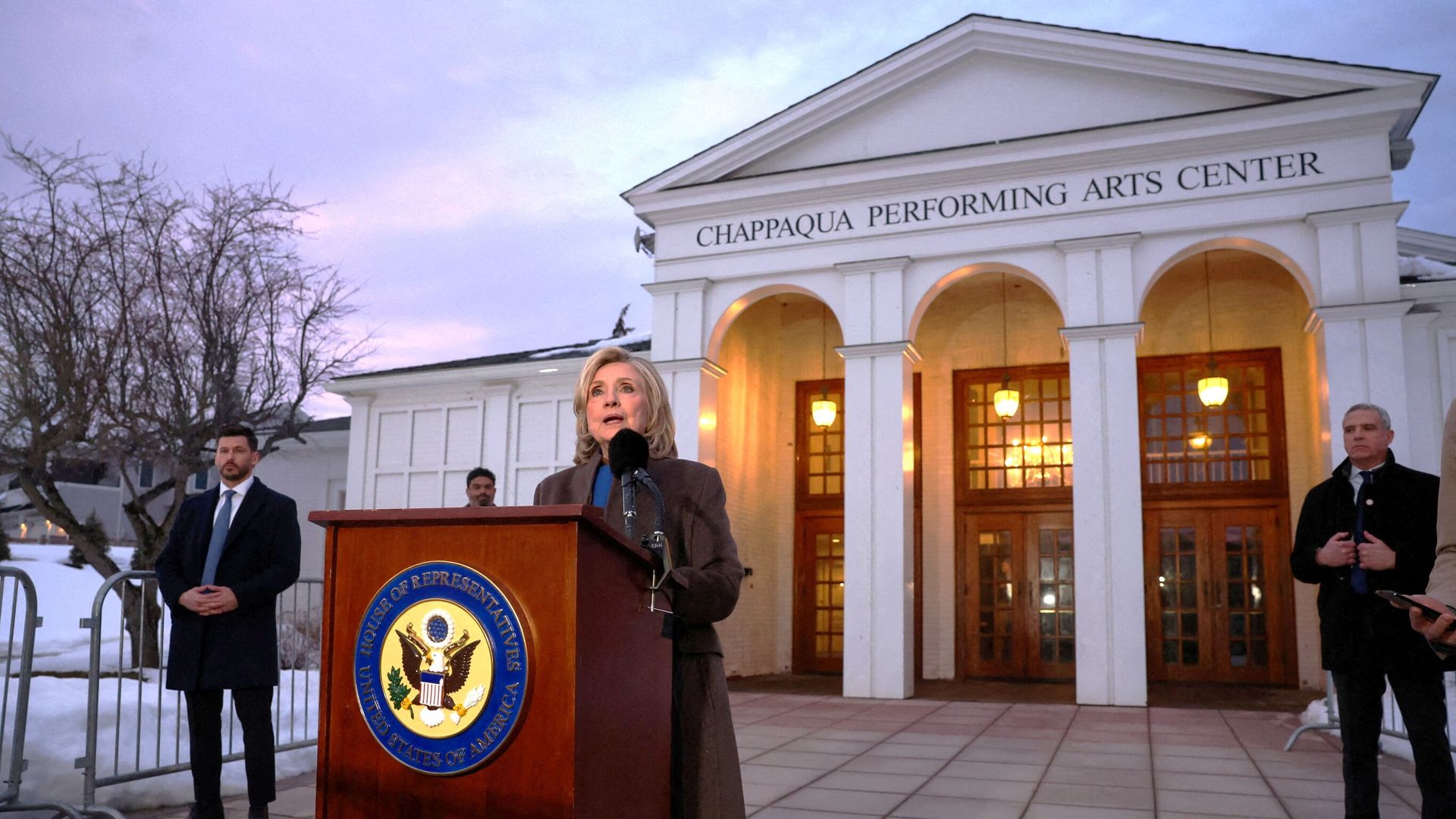
The televised breakdown of the latest Epstein oversight committee hearing was not an accident. It was the intended result of a system designed to protect itself. When Hillary Clinton walked out of the hearing room last week, the cameras captured a moment of high drama, but the real story was the mechanical failure of the investigative process. This was never about uncovering the financial network that sustained Jeffrey Epstein’s operations for decades. It was a scripted collision of political interests where the goal was visibility, not discovery.
We are seeing a repeat of the same pattern that has plagued every high-profile inquiry since the 2019 arrest. Congressional committees are currently structured to produce viral clips for social media feeds rather than subpoenas that lead to bank records. The primary query remains unanswered: how did a convicted sex offender maintain access to the highest levels of global finance and political power after his 2008 conviction? The answer lies in the strategic use of partisan friction to stall any meaningful progress toward transparency. For another look, consider: this related article.
The Architecture of a Controlled Burn
The term "partisan theatre" is often used as a critique, but in the context of the Epstein files, it functions as a shield. By turning a serious inquiry into a shouting match, the participants ensure that no real information is exchanged.
When the proceedings devolved into personal attacks and procedural bickering, the focus shifted from the "little black book" to the behavior of the witnesses and the committee members. This is a classic diversionary tactic used in crisis management. If you cannot disprove the facts, you discredit the forum. Related reporting on this matter has been published by Al Jazeera.
The fallout from the recent session demonstrates how the "theatre" serves three specific functions:
- It allows members of the committee to signal to their base without taking actual political risks.
- It provides a justification for witnesses to withhold cooperation based on the "unfair" nature of the proceedings.
- It creates a media environment where the public becomes exhausted by the bickering and stops paying attention to the underlying evidence.
This isn't just a failure of decorum. It is a failure of the investigative mandate. A veteran investigator knows that the moment a hearing turns into a spectacle, the search for truth has been abandoned in favor of brand management.
Beyond the Clinton Walkout
Focusing on the walkout itself is a mistake. It is the shiny object meant to distract from the documents that were not produced. The committee had originally requested specific communications between the State Department and various international entities during the mid-2010s. Those documents remain classified or heavily redacted.
The narrative of "Hillary Clinton vs. the Committee" is a convenient script for both sides. For her supporters, it’s a stand against a "witch hunt." For her detractors, it’s "proof of guilt." For the actual victims of the Epstein ring, it is a dead end. The oxygen in the room is consumed by these massive political personalities, leaving none for the granular details of how shell companies were used to move millions of dollars across borders.
The reality of the Epstein network was that it was non-partisan. It was an equal-opportunity predator that latched onto power wherever it resided. By framing the investigation through a red-versus-blue lens, the committee effectively protects the bipartisan nature of the original network.
The Institutional Failure of Oversight
Congressional oversight is a blunt instrument. It lacks the surgical precision of a federal grand jury, yet it is often the only public-facing mechanism for accountability. The problem arises when the "oversight" is conducted by people who are themselves part of the ecosystem they are supposedly investigating.
We have to look at the donor lists. We have to look at the social circles. Many of the individuals tasked with questioning the witnesses have, at various points, shared donors or social spaces with the very figures named in the Epstein depositions. This creates a fundamental conflict of interest that is rarely addressed on the record.
The financial mechanics are where the real story lives. Epstein wasn't just a socialite; he was a sophisticated financial architect. His "Zorro Ranch" and his private island were not just locations for crimes; they were nodes in a complex web of tax evasion and influence peddling. If the committee were serious, the room would be filled with forensic accountants, not just political consultants.
Why the Truth Remains Buried
The reason we haven't seen the full extent of the Epstein files isn't just about protecting individuals. It's about protecting the prestige of the institutions themselves. If the full scope of the compromise were revealed, it would call into question the integrity of several major financial institutions and intelligence agencies.
There is a concept in intelligence circles known as "limited sanctioned disclosure." This is when a small amount of damaging information is released to satisfy the public's appetite for justice, while the most sensitive data is kept under lock and key. The current committee hearings are the public-facing version of this concept.
The strategy is simple:
- Isolate the Target: Make the investigation about one or two high-profile individuals.
- Create a Media Whirlwind: Focus on the emotional intensity of the hearings.
- Neutralize the Documentation: Release heavily redacted or irrelevant files to fulfill the request.
If the goal were truly investigative, the focus would be on the money trail. Follow the money. Where did it come from? Where did it go? Who signed off on the massive wire transfers that were flagged by compliance officers at various banks? Why did the SAR (Suspicious Activity Reports) get buried? These questions are boring, and they don't lead to viral walkouts. They lead to indictments.
The Future of the Investigation
What we saw last week was a pivot. The committee has moved from an attempt at fact-finding to a partisan blame game. This is the final stage of a political inquiry before it is quietly folded into the next election cycle's talking points.
The public's interest in the Epstein case is being weaponized. It’s no longer about justice for the victims or the integrity of the legal system. It's about who can yell the loudest in front of the cameras.
Until there is a truly independent, non-partisan commission with full subpoena power over bank records and intelligence agency logs, we are unlikely to see the full story. The current system is designed to produce exactly what we saw: a walkout, a headline, and a complete lack of progress.
The victims of the Epstein ring deserve more than a theatrical performance. They deserve an investigation that doesn't stop because a politician decides the room has become too "hostile." Hostility is a natural consequence of searching for a truth that people in power want to keep hidden. If the committee can't handle the heat, they shouldn't be in the kitchen.
We have to demand a shift from the drama of the personalities to the cold reality of the evidence. The real story isn't about who walked out; it's about what stayed behind in the shadows.
It's time for a different approach. We need to look beyond the viral clips and the partisan bickering. We need to demand that the actual files, the ones that describe the financial and political support systems that kept this ring operating for years, are made public without redaction. Anything less is just another act in a very long, very tired play.