The morning air in Tehran tastes of exhaust and anticipation. You know this if you have ever stood on a street corner there, listening to the rhythmic hum of traffic that never quite settles into silence. Every conversation in the cafes, every stolen glance in the bazaar, feels heavy. It is the weight of a question that no one dares ask too loudly: When does the state decide that your voice is a threat to its existence?
Consider a hypothetical young woman named Sara. She is a graphic designer, twenty-four, with a phone full of saved images of art that doesn't exist in the galleries here. She stands in a crowded square, surrounded by the familiar scent of cardamom tea and burning oil. People are beginning to gather. There are no banners, no shouting yet. Just the presence of bodies, a collective sigh of frustration against the economic grind, against the slow asphyxiation of their daily lives.
She holds her phone like a talisman. She is waiting for the signal, not from a leader, but from the rhythm of the crowd.
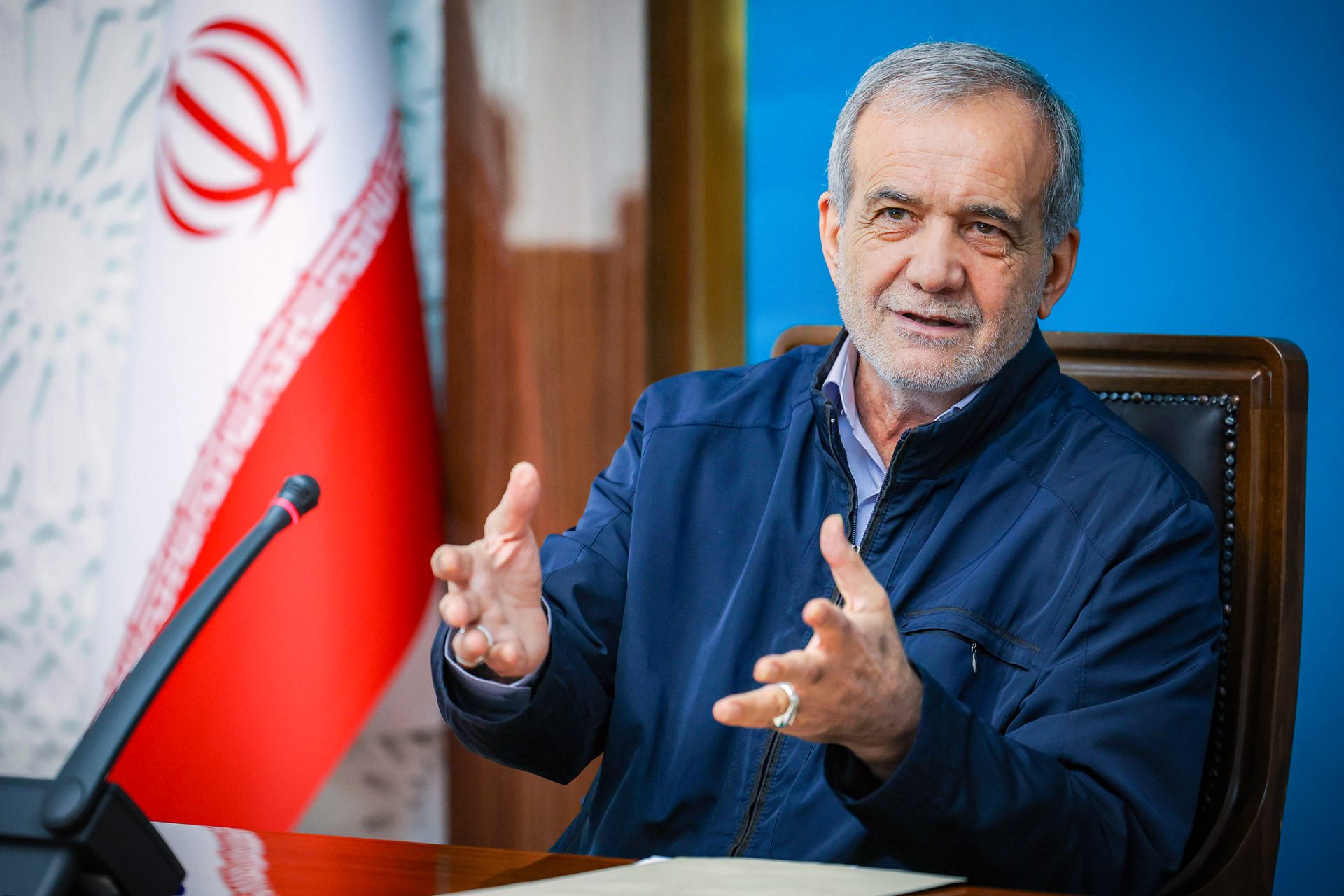
Across the city, in offices shielded by blast-proof glass and layers of bureaucracy, the directive arrives. The President of Iran has spoken. The order is clear, yet deliberately blurred: no crackdown on protesters unless national security is threatened.
This is the razor edge.
To the bureaucrat, national security is a calculation. It is a set of red lines drawn on a map, a threshold of stability that cannot be crossed without risking the entire edifice of the government. To the security forces in the street, the definition is far more fluid. It is the glint of a camera lens. It is the chant that grows too rhythmic, too infectious. It is the fear that a small gathering of students might, in the span of an hour, become a deluge.
The command from the top is a paradox. It grants a reprieve, a fleeting moment of permission for citizens to exist in public spaces, while simultaneously leaving the interpretation of that existence in the hands of the very men who view dissent as a virus.
It is a classic trap of authoritarian architecture. By keeping the criteria for violence nebulous, the state forces its enforcers to guess, and in that state of tension, they almost always default to the protection of the apparatus. They are not protecting the people. They are protecting the silence.
I remember the way the light hits the dusty windows of a Tehran apartment during a curfew. The world outside slows down until the only thing you can hear is the frantic ticking of a clock. You learn to read the silence. You learn that when the sirens start, they aren't warning you of fire or accident; they are warning you of the erasure of the individual.
When the authorities claim they will allow peaceful assembly, they are attempting to perform a kind of theater. They want the world to see a functioning society, one where grievances can be aired, provided they remain polite, provided they remain invisible. But protest in a restrictive state is, by its very nature, a disruption of the visual field. It is meant to be seen. It is meant to be heard.
The struggle is not about the specific policies or the economy, though those are the sparks. It is about the soul's right to occupy space.
If Sara stands on that corner and raises her voice, she is not just asking for bread or jobs. She is testing the tensile strength of the law. She is wondering if the man with the baton sees her as a citizen or an obstacle. If the order says "no crackdown," does he look at her and see a fellow countryman, or does he see an anomaly that must be corrected?
History is a graveyard of such directives. We have seen these promises before in various capitals, from the streets of Eastern Europe to the squares of Southeast Asia. The promise of restraint is almost always the prelude to a reassessment of the situation. Once the crowd grows, once the fear of the state is outweighed by the desperation of the citizen, the definition of "national security" shifts. It expands. It consumes.
The ambiguity is the weapon.
If the government were to say, "You are forbidden to gather," the defiance would be total. The stakes would be etched in black and white. But by saying, "You can gather, unless you break the law," they keep the population in a state of suspended animation. Everyone is left wondering if they are about to become the exception that triggers the violence.
The fear is not just of the baton. It is of the uncertainty.
You find yourself looking over your shoulder even when the streets are empty. You find yourself deleting messages you shouldn't have even received. You stop talking to your neighbors about anything that matters, settling instead for the weather, the price of gasoline, the mundane trivia of survival.
The state wins not when it kills, but when it makes you police yourself.
As the sun sets, the city of Tehran changes. The shadows in the alleys grow longer, and the police presence tightens, like a corset pulled too hard around the chest. The order from the President sits in the air, a phantom document that no one trusts but everyone must navigate.
There is a strange, brittle beauty to this moment. It is the peak of human persistence. People are still choosing to step out their doors. They are still choosing to look at one another, to share that silent, electric recognition that they are not alone in their exhaustion.
The directive will be cited in news reports across the globe. Diplomats will weigh its sincerity. Analysts will debate the tactical logic of the regime. But in the square, none of that matters. All that matters is the distance between the sole of a boot and the paving stone, the grip of a hand on a megaphone, the courage required to stand still when everything in your body is screaming at you to run.
They are holding their ground, waiting to see if the state will blink first, or if the order was just another clever way to keep the truth from spilling into the streets.
The streetlights flicker to life, casting long, jaundiced beams over the gathering crowd. Sara takes a breath, the air thick with dust and the smell of ozone. She does not know what will happen when the clock strikes the next hour. She does not know if she will be home for dinner or if the heavy steel door of a holding cell will be the last thing she sees for a long time.
But she stays. She is the living, breathing evidence that the state’s definitions have failed.
The silence is breaking. It is not with a roar, but with the shuffling of thousands of shoes against the pavement, a sound that grows louder, steadier, and more inevitable with every passing second.
One voice begins a song, a quiet, mournful melody that catches in the throat of the woman standing next to her. Then another joins. Then a dozen. The song rises, fragile as a bird, vibrating against the cold, unyielding walls of the buildings that hem them in. It is a sound that defies the state, a sound that transforms the air from a cage into a sanctuary.
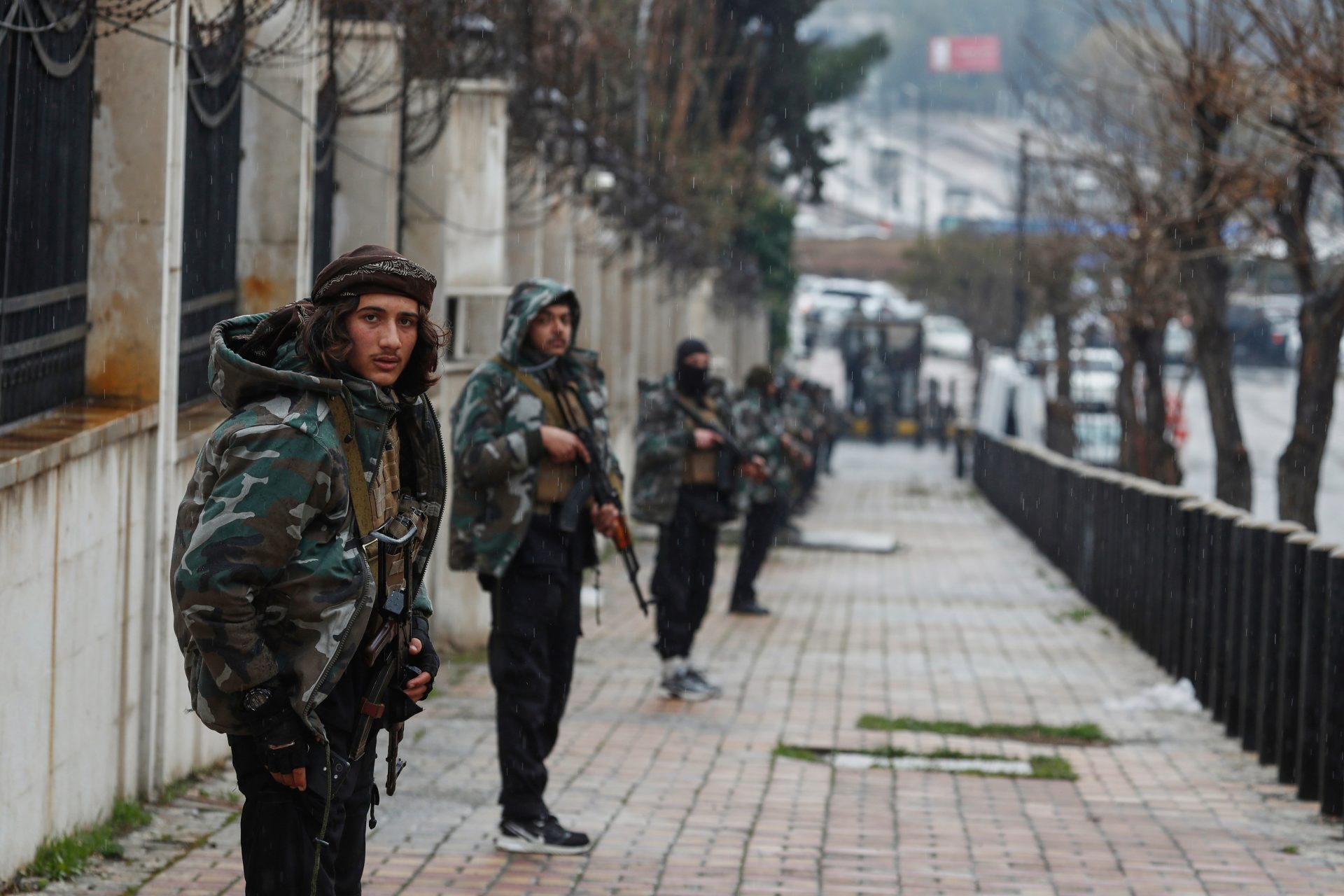
The guards shift their weight, their hands tightening on their gear, eyes scanning for the invisible line they have been told to defend. They are watching the crowd, but they are also looking at their own reflections in the store windows, searching for the moment they will be forced to choose between the order in their pockets and the humanity in their sight.
In that space between the song and the silence, the future of the nation hangs, suspended like a drop of oil on the edge of a blade.
The wind picks up, carrying the distant chime of a mosque bell, a sound that usually signals prayer but now seems to mark the passing of an era. There is no turning back now. The threshold has been crossed, not by the government's leave, but by the sheer, stubborn refusal of the people to remain anything other than what they are.
The streetlights hum, the city breathes, and the crowd begins to move.