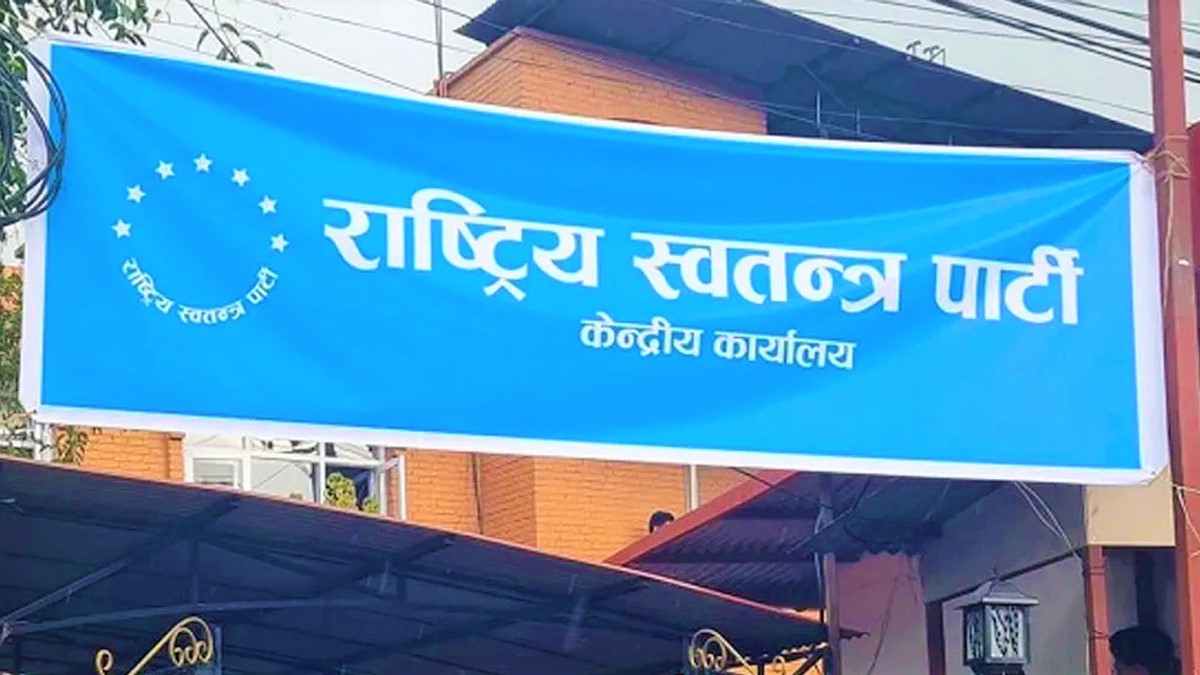
The old guard in Kathmandu didn't see it coming. They were too busy playing musical chairs with the Prime Minister’s seat to notice the ground shifting beneath them. When the 2022 general election results started rolling in, the shock wasn't just that a new party won seats. It was the sheer speed of the takeover. The Rastriya Swatantra Party (RSP) went from a television studio concept to the fourth-largest power in Parliament in less than six months.
If you've followed Nepali politics for more than a week, you know it’s usually a slow-motion car crash of aging leaders and broken promises. This time felt different. Rabi Lamichhane, a former journalist with a knack for viral outrage, traded his microphone for a bell—the party’s election symbol. It rang loud enough to wake up a frustrated middle class that had given up on the ballot box.
The Bell That Shook the Singha Durbar
The RSP didn't just win; they humiliated established giants in their own backyards. We saw high-profile ministers and seasoned veterans from the Nepali Congress and the CPN-UML lose to candidates who, just months prior, were total unknowns. This wasn't a fluke. It was a calculated strike against a political syndicate that has controlled the country since the end of the monarchy.
Voters were tired. They were tired of the "Top Three" leaders—Sher Bahadur Deuba, KP Sharma Oli, and Pushpa Kamal Dahal—shuffling power like a deck of marked cards. The RSP tapped into a specific brand of urban resentment. They didn't lead with complex Maoist theory or democratic socialism jargon. They talked about hospitals. They talked about the "triple-taxation" nightmare. They talked about why your brother or son had to fly to Qatar just to earn a living wage.
Why This Wasn't Just About Rabi Lamichhane
Many critics love to dismiss the RSP as a cult of personality. While Rabi’s celebrity status was the engine, the fuel was a roster of professionals who actually looked like they knew how to run a country. We saw doctors, economists, and activists joining the ranks. For the first time, a Nepali voter could look at a ballot and see someone who understood a spreadsheet, not just a protest rally.
The party’s success in the Kathmandu Valley was particularly telling. Kathmandu has always been the heart of Nepali political movements, and it sent a clear message. By sweeping multiple constituencies in the capital, the RSP proved that the urban elite and the working-class city dwellers were finally on the same page. They wanted competence over charisma, though they arguably got a bit of both.
Breaking the Syndicate
For decades, the "syndicate" system ensured that if you wanted a government job or a local road paved, you had to be a "jhole"—a bag-carrier for the big parties. The RSP’s victory suggests that the grip of the party cadre system is slipping. Young voters, especially those under 30, don't feel the same historical debt to the 1990 or 2006 movements. They want results now.
The Balen Shah Connection
You can't talk about the RSP’s rise without mentioning Balendra (Balen) Shah. While Balen is an independent Mayor and not officially part of the RSP, his landslide victory in the Kathmandu mayoral race months earlier was the proof of concept. He showed that a person with a vision and a social media account could bypass the traditional party machinery.
Balen’s " bulldozer diplomacy" and his focus on urban aesthetics gave the RSP a blueprint. They realized that the Nepali public was hungry for "doers." The RSP captured that same lightning in a bottle. They marketed themselves as the legislative version of Balen—disruptors who would enter the house and start cleaning out the cobwebs.
Reality Hits the Newcomers
Governing is harder than campaigning. We’ve seen the RSP struggle with the transition from being the "angry outsiders" to sitting at the cabinet table. The controversy surrounding Rabi Lamichhane’s citizenship and his subsequent brief exit from office was a massive reality check. It gave the old guard plenty of ammunition to claim that the newcomers were "unprepared" or "fragile."
But the numbers don't lie. Even with the drama, the party’s performance in by-elections showed their base isn't budging. In places like Chitwan and Tanahu, the RSP didn't just hold their ground; they expanded it. They’ve managed to convince a significant portion of the electorate that their mistakes are growing pains, while the mistakes of the older parties are systemic failures.
What This Means for the 2027 Elections
If the RSP stays unified, 2027 will be a bloodbath for the traditional parties. The RSP is currently a Kathmandu-centric power, but they are aggressively moving into the provinces. Their challenge is to prove they have a platform beyond "we aren't the other guys."
They need to tackle the big stuff. We're talking about the sluggish GDP growth, the massive trade deficit with India and China, and the education system that’s basically an export business for human capital. If they can show even a 10% improvement in service delivery in the ministries they control, the "Old Trio" of parties should be very worried.
The Strategy for the New Nepal
If you’re watching this from the outside, understand that Nepal’s democracy is maturing. It’s messy. It’s loud. But it’s finally competitive. The RSP’s rise means that no seat is safe anymore.
- Focus on the Youth: Over half of Nepal's population is under 25. The party that speaks their language—literally and figuratively—wins.
- Digital Campaigning: The days of expensive mass rallies are numbered. TikTok and Facebook are the new town squares in Nepal.
- Transparency over Ideology: People don't care about "isms" anymore. They care about whether the passport office has a shorter line today than it did yesterday.
The traditional parties are trying to adapt, but they're slow. They're trying to inject "younger faces" into their leadership, but it often feels like putting a new coat of paint on a crumbling house. The RSP has the advantage of a clean slate, but they have to keep it clean. In Nepal, the hero-to-villain pipeline is incredibly fast.
Watch the local governance in the districts where RSP has influence. That’s the real litmus test. If they can make the local government work for the average person without the usual bribery and delays, they won’t just be a historical footnote. They’ll be the new standard. The era of the "unbeatable" party leader is over, and frankly, it’s about time.
If you want to understand the future of the Himalayas, stop looking at the old treaties and start looking at the new voting patterns. The shift is real, it’s permanent, and it’s just getting started. Don't expect the old guard to go quietly, but don't expect the voters to care when they finally leave. Use the official Election Commission of Nepal portal to track the latest by-election data and see how the seat share is actually trending before the next cycle. Get involved in local ward meetings if you're on the ground; that's where the next wave of disruption is actually happening.