The coffee was still warm. That is the detail that haunts the neighbors in the leafy suburb north of Tel Aviv. A ceramic mug sat on a patio table, steam rising into the humid afternoon air, while the life it belonged to evaporated in a heartbeat.
We often talk about war in the language of maps and payloads. We use words like "ordnance" and "interdiction" to sanitizes the reality of metal tearing through a Tuesday afternoon. But for those living in the shadow of the current escalation, war isn't a map. It is the sound of a garage door halfway open. It is the smell of jasmine mixed with burnt rubber. It is the sudden, violent realization that the sky is no longer empty. You might also find this similar article interesting: Strategic Asymmetry and the Kinetic Deconstruction of Iranian Integrated Air Defense.
The Mechanics of a Miniature Apocalypse
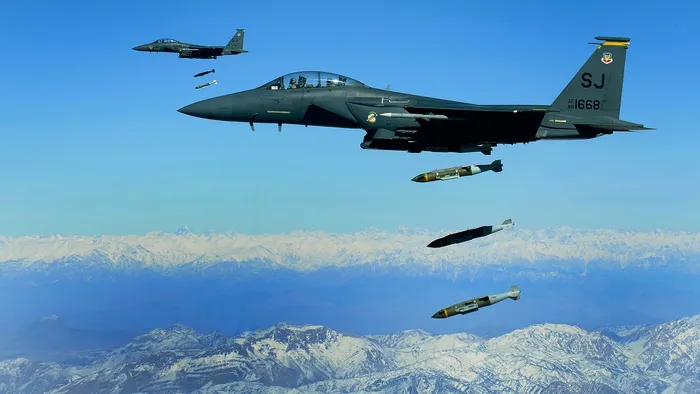
To understand what happened near Tel Aviv, you have to understand the specific, cruel physics of a cluster bomb. Imagine a single container, sleek and indifferent, falling through the air. At a predetermined altitude, it doesn't just explode. It opens. It births hundreds of smaller explosives, often called "submunitions" or "bomblets."
These bomblets are roughly the size of a soda can. They are designed to saturate an area, ensuring that nothing—and no one—within a specific footprint survives. In military theory, this is "area denial." In human terms, it is a lottery where every ticket is a losing one. As extensively documented in recent coverage by Associated Press, the results are notable.
When these canisters open over a civilian area, the math of survival changes. A standard missile gives you a single point of impact. You can run away from a point. You cannot run away from a footprint the size of three football fields. The air becomes a solid wall of shrapnel.
A Tuesday Like Any Other
They weren't soldiers. They were a couple whose biggest concern that morning had likely been the rising cost of groceries or a leaking faucet. They were part of the invisible fabric of the city—the people who keep the gears turning, who walk their dogs at dusk, who argue over which radio station to play in the car.
The siren didn't give them enough time. In the central districts, the "Iron Dome" usually provides a sense of reinforced glass safety. You hear the boom, you see the white streak in the sky, and you go back to your lunch. But cluster munitions are a different breed of terror. Even when intercepted, the "mother ship" may break apart, raining its lethal children down on whoever happens to be standing beneath the debris cloud.
They were caught in the open.
There is a specific kind of silence that follows a cluster strike. It isn't the ringing ears of a large blast. It is a punctuated silence, broken by the small, secondary pops of submunitions that didn't detonate on impact. These are the "duds." They sit in the grass, shiny and curious, waiting for a child to pick them up or a gardener to hit them with a mower. They turn a backyard into a minefield in a matter of seconds.
The Invisible Stakes of "Area Denial"
We treat these events as headlines, but they are actually shifts in the human psyche. When a city is hit by such a weapon, the geography of home is rewritten. The sidewalk is no longer a path; it is a threat. The park is no longer a sanctuary; it is a grid of potential lethality.
The international community has spent decades debating the ethics of these weapons. Over 100 countries have signed a convention banning them because of their "indiscriminate" nature. To be indiscriminate is to admit that you do not care who dies, as long as enough things die in a certain area. It is the ultimate expression of the dehumanization of conflict.
When we look at the statistics—the number of rockets fired, the percentage of successful interceptions—we miss the emotional core. We miss the fact that for every "successful" interception of a cluster-bearing rocket, a thousand pieces of jagged steel still have to land somewhere. Gravity is the one law that war cannot repeal.
The Residual Terror
The tragedy in Tel Aviv isn't just about the loss of two lives, though that loss is infinite to those who loved them. It is about the lingering poison left in the ground.
Consider the "dud rate." Even the most sophisticated cluster bombs have a failure rate. Some estimates suggest up to 20% of the bomblets don't explode on impact. They sink into the soft earth of a flower bed. They lodge themselves in the branches of a lemon tree. They wait.
This means the attack doesn't end when the sirens stop. The attack continues for years. It waits for the war to be over. It waits for the reconstruction crews. It waits for the grandkids to come over and play in the yard.
Beyond the Blast Radius
The world watches the footage from drones and cell phones, seeing the plumes of smoke rise from the outskirts of the city. We analyze the geopolitics. We discuss the "proportionality" of the response. We talk about the "deterrence" factor.
But none of those words mean anything to the woman who lived next door, who now stares at a scorched patch of pavement where her neighbors used to stand. She doesn't see a geopolitical shift. She sees a pair of shoes left by the door.
The horror of the cluster bomb is its efficiency. It is a weapon that turns the very air into a weapon. It treats a neighborhood like a ledger, and it seeks to balance that ledger with as much blood as possible in the shortest amount of time. It is a machine designed to ensure that there is no safe place to hide.
The sun set over the Mediterranean that evening, casting a long, golden light over a city that felt smaller, tighter, and more fragile than it had that morning. The mug of coffee was cold now. The patio was cordoned off with yellow tape that fluttered in the breeze.
Nearby, a small, metallic cylinder lay nestled in the roots of a rosebush, glinting in the twilight, waiting for someone to notice its shine.