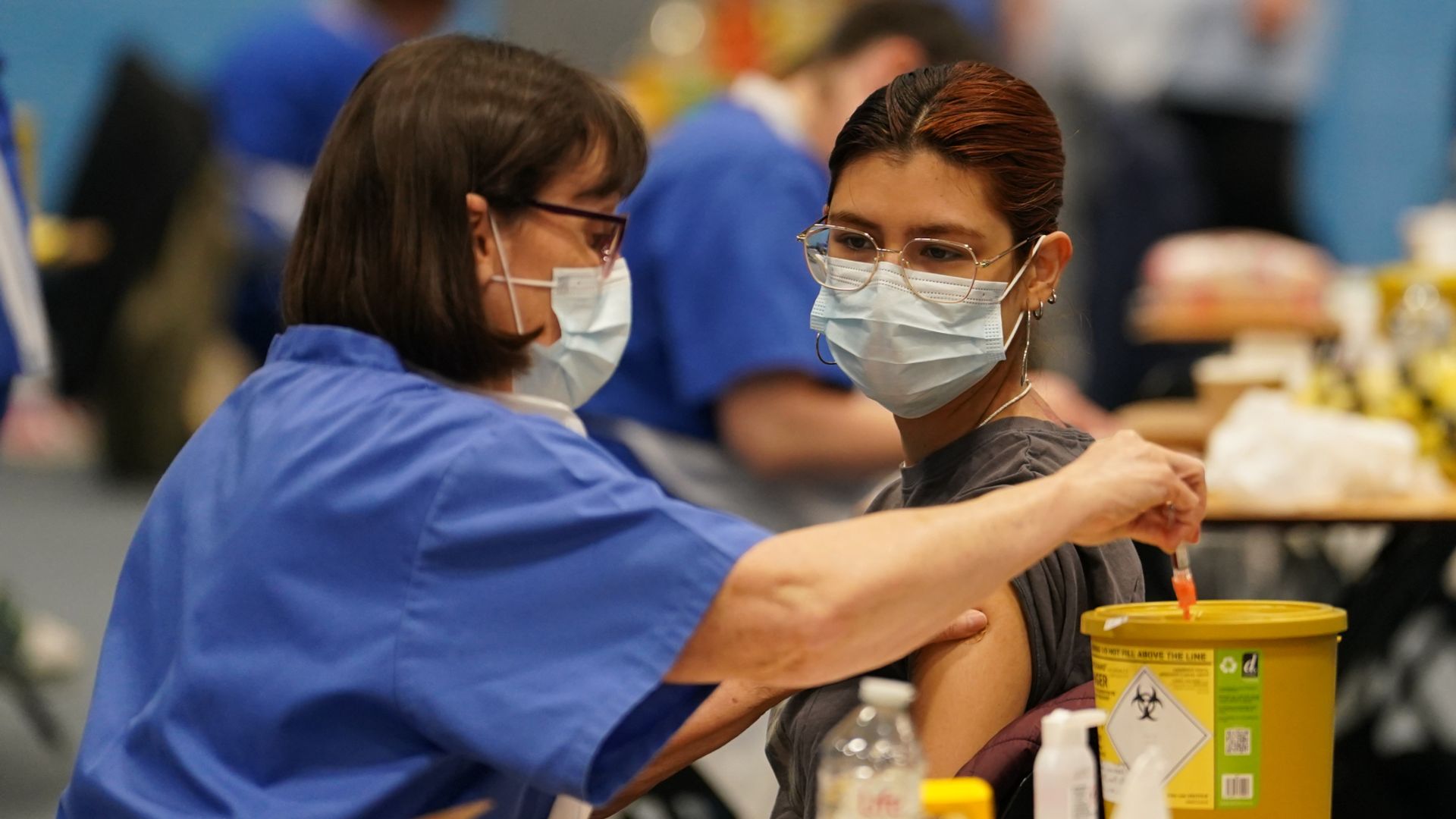
The room is dim, smelling of antiseptic and the primal, metallic scent of new life. Sarah holds her son, Leo, feeling the rhythmic hitch of his breathing against her chest. She is exhausted, her body vibrating with a cocktail of oxytocin and sheer terror. When the nurse enters with a small tray, Sarah feels a sudden, sharp tightening in her gut. It isn't the physical pain of recovery. It is the weight of a thousand internet threads, whispered warnings in Facebook groups, and a deep-seated, modern distrust that has followed her into this delivery suite.
The nurse reaches for a small tube of Erythromycin ointment, intended for Leo’s eyes. Sarah pulls him closer. "We’re skipping that," she says. Her voice is thin but steady. "And the Vitamin K shot. We want everything natural."
The nurse pauses. She doesn’t argue. She has seen this three times already this week. She simply makes a note on a digital chart, a silent data point in a rising national trend that is reshaping the first day of life for thousands of infants.
For decades, the immediate aftermath of birth followed a predictable, invisible choreography. A quick swipe of ointment to prevent blindness from unnoticed infections. A single injection of Vitamin K to ensure the blood can clot. A tiny prick on the heel to screen for rare, devastating metabolic disorders. These were the quiet sentinels of the newborn nursery. They were so effective they became boring. They became invisible.
Now, that invisibility is being mistaken for irrelevance.
The Luxury of Forgetting
We are living through a strange paradox of success. We have become so good at preventing catastrophe that we have forgotten what catastrophe looks like. This is the "prevention paradox." When a public health intervention works perfectly, nothing happens. No one goes blind. No babies bleed into their brains. Because "nothing" is the result, we begin to wonder if the intervention was ever necessary to begin with.
Consider the Vitamin K shot. It is not a vaccine. It is a nutrient. Humans are born naturally low in Vitamin K because it doesn't cross the placenta well. Without it, a small but significant number of babies develop Vitamin K Deficiency Bleeding (VKDB). It is a haunting condition where a seemingly healthy infant suddenly begins to bleed internally—often into the brain—weeks after leaving the hospital.
In the 1940s, before the routine shot, this was a known shadow hanging over every nursery. Today, because of a 0.5-milligram injection, it is a medical rarity. But in the current information ecosystem, that rarity is interpreted as "low risk," and "low risk" is being weighed against a vague, heightened fear of "toxins" or "interference."
The refusal of these baseline treatments isn't happening in a vacuum. It is a spillover effect. What started as a focused skepticism toward the childhood vaccine schedule has liquefied and leaked into every corner of preventative medicine. We are no longer just debating complex immunology; we are debating the very building blocks of neonatal safety.
The Anatomy of Doubt
Sarah’s decision wasn’t born of malice. It was born of a desire to protect. In the digital age, protection often looks like rejection. To say "no" feels like an act of high-agency parenting. It feels like standing between your child and a "system" that many have come to view as cold, profit-driven, or or careless.
When a parent scrolls through a forum and reads a harrowing, albeit anecdotal, story about a "reaction" to a heel stick, that story carries more emotional weight than a thousand pages of peer-reviewed data. Our brains are hardwired for narrative, not statistics. We are moved by the image of a crying baby, not by the absence of a disease we’ve never seen.
The heel stick, or the newborn screening, is perhaps the most tragic of the refused services. It tests for conditions like Phenylketonuria (PKU) or Maple Syrup Urine Disease. These are names that sound like abstractions until they aren't. Left undetected, these conditions cause permanent, irreversible brain damage within weeks. Detected early, they are often managed with something as simple as a specific diet.
By refusing the screen, parents aren't choosing "natural." They are choosing a blindfold. They are gambling that their child isn't the one-in-a-thousand case where the invisible clock is already ticking.
The Weight of the "Natural"
There is a seductive power in the word "natural." It implies a state of grace, a biological perfection that shouldn't be touched. But nature is a neutral force. Nature is the Vitamin K deficiency. Nature is the bacteria in the birth canal that can scar a newborn's corneas.
In the mid-20th century, we used science to bridge the gaps where nature was indifferent to human survival. Now, we are seeing a reversal. There is a growing sentiment that any intervention is an interruption of the "sacred" bonding process.
"I just wanted his first hour to be peaceful," Sarah explains later. "I didn't want him poked and prodded. I wanted him to just be."
It is a beautiful sentiment. It is also a dangerous one when it ignores the reality that these "pokes" are the result of a century of trial and error, of mourning parents, and of doctors who grew tired of watching babies die from things that were easily fixable. The peace of that first hour is a gift of the modern age, but it is a fragile one.
The Ripple Effect
The consequences of these refusals don't stay within the hospital walls. They create a new class of "at-risk" children who are invisible to the healthcare system until they arrive in an Emergency Room.
When a baby who didn't receive Vitamin K is brought to the ER with a brain bleed, the tragedy is compounded by the fact that it was entirely preventable. The doctors must perform invasive surgeries, provide blood transfusions, and often deliver devastating news to parents who thought they were making the "safer" choice. The irony is bitter. In an attempt to avoid a tiny needle, the child ends up under a scalpels.
This isn't just a story about medicine. It’s a story about the breakdown of the social contract. We rely on a shared understanding of reality to keep our most vulnerable safe. When that reality fractures—when a nutrient is viewed as a poison and a diagnostic test is viewed as a violation—the safety net begins to fray.
The Quiet Return to the Past
The data is subtle but stubborn. In various pockets across the country, refusal rates for the Vitamin K shot have climbed into the double digits. Newborn screening refusals, once almost non-existent, are creeping upward. We are seeing the return of "old world" problems in a "new world" setting.
We are entering an era where a child’s safety in their first week of life depends less on the quality of the hospital and more on the specific algorithm of their parent’s social media feed. That is a terrifying shift. It moves the goalposts of pediatric care from the bedside to the browser.
Sarah sits in her living room two weeks later. Leo is sleeping. He is fine. He is lucky. He is part of the majority who bypass the risks of deficiency and infection through pure, statistical fortune. To Sarah, this is proof she was right. "See?" she says to her husband. "He didn't need any of it."
She doesn't see the thousands of other babies whose parents made the same choice, only to find themselves in a different, darker story. She doesn't see the silent work that prevention does every day. She only sees the peace of her own home, unaware that she is standing on a bridge she helped dismantle, marveling at how well she can still walk on air.
The danger isn't a sudden explosion. It is a slow, quiet erosion. It is the steady disappearance of the small, mundane miracles that keep us whole. We are trading our hard-won protections for the illusion of purity, and the cost of that trade will be paid by those who have no say in the matter.
Leo stirs in his sleep, his tiny fists curled tight. He is a blank slate, a new beginning, and a passenger in a world that is slowly forgetting how to protect its own.