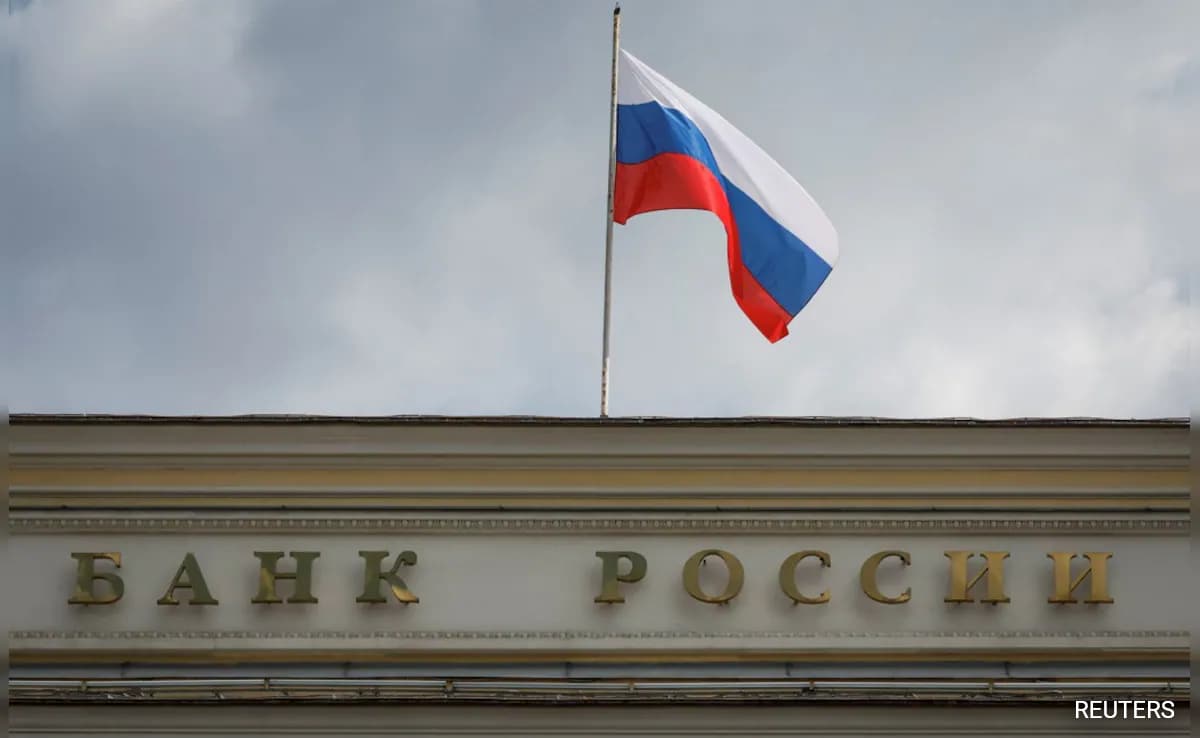
Vladimir Putin is running out of other people's money. After two years of burning through cash to keep his invasion of Ukraine alive, the Kremlin is no longer just asking for "patriotic" contributions from the ultra-wealthy. It's demanding them. The era of the Russian oligarch living a quiet, lavish life in London or Saint Tropez is dead. Now, if you're a billionaire in Russia, you're an ATM for the state.
The Russian economy looks stable on the surface, but that's a mirage built on massive military spending. It's a "war Keynesianism" model where the government prints and spends to keep factories running. But you can't eat tanks. While the GDP might show growth, the actual fiscal health of the country is cratering. Inflation is rampant, the ruble is a joke on international markets, and the labor shortage is reaching catastrophic levels because the men who should be working are either dead, wounded, or hiding from recruiters.
The end of the old deal with the oligarchs
For decades, the deal was simple. Putin told the oligarchs they could keep their money as long as they stayed out of politics. That social contract is gone. Today, the deal is different. You give the state your money, or you lose your company—and maybe your freedom. We've seen a wave of "deprivatization" where the Kremlin seizes assets from businessmen who aren't seen as sufficiently loyal or generous.
According to data from the Russian Union of Industrialists and Entrepreneurs, the government has been pushing for "voluntary" windfall taxes. Last year, this brought in roughly 300 billion rubles. That sounds like a lot until you realize the war is costing Russia an estimated $300 million every single day. The math doesn't add up. Putin is effectively cannibalizing the very industrial base he needs to survive long-term.
Why the windfall tax is just the beginning
The 2023 windfall tax was a warning shot. Now, the Kremlin is looking at permanent corporate tax hikes. They're moving the rate from 20% to 25%. For a struggling business, that's a death sentence. For a billionaire, it's a massive drain on the capital needed to modernize aging Soviet-era equipment.
The Russian government's budget deficit is widening. They’ve already drained a significant portion of the National Wealth Fund. When the rainy-day fund starts looking empty, you go after the biggest pockets in the room. This isn't just about money, though. It's about control. By forcing these titans of industry to fund the war, Putin makes them complicit. They can't turn back. They're strapped to the mast of a sinking ship.
A war of attrition against his own elite
Putin isn't just begging. He's leveraging fear. Look at the "accidental" deaths of high-ranking executives since 2022. Falls from windows, mysterious heart attacks, and "suicides" have become a trend in the Russian energy and tech sectors. It sends a message.
- Total loyalty is the minimum requirement.
- Resources belong to the front line, not the boardroom.
- Dissent is treated as treason.
The billionaire class is trapped. Their Western assets are frozen by sanctions, and their domestic assets are being bled dry by the Kremlin. They have nowhere to go. Most of them are basically glorified middle managers for the state now. They run the mines, the mills, and the oil fields, but the profits belong to the war machine.
The hidden cost of a war-ravaged economy
Russia is currently experiencing a massive brain drain. More than 800,000 highly skilled professionals left the country since the invasion began. You can't replace an IT specialist or a senior engineer with a prisoner or a conscript. The oligarchs are screaming about this behind closed doors because their factories are breaking down and there's no one to fix them.
Western sanctions have cut off the flow of high-tech components. While China is stepping in to provide some alternatives, it's not a perfect fit. Russian industry is becoming a "Frankenstein" of old Soviet parts and cheap Chinese knockoffs. This lowers efficiency and hikes up costs. When Putin asks for cash, he's asking for money to patch a hull that has thousands of tiny leaks.
The central bank is fighting a losing battle
Elvira Nabiullina, the head of Russia's Central Bank, is widely considered a technocratic genius, but even she can't perform miracles forever. She has hiked interest rates to 16% and higher to stop the ruble from collapsing. High interest rates make it nearly impossible for businesses to borrow money for expansion.
If you're a Russian business owner, you're hit from three sides. The government takes your cash via taxes. The bank makes loans unaffordable. And the military takes your workers. It's a pincer movement on the private sector. The "cash" Putin is begging for is the last bit of liquidity keeping these companies afloat. Taking it might fund a few more months of artillery fire, but it guarantees a decade of industrial stagnation.
What happens when the cash runs out
History shows that authoritarian regimes usually collapse from the inside when the elite realize the leader can no longer protect their interests. We aren't there yet. The oligarchs are still too scared. But the pressure is building.
Russia's reliance on oil and gas revenue is a double-edged sword. With the G7 price cap and Europe shifting away from Russian energy, the Kremlin has to sell to India and China at deep discounts. This narrows the profit margins that the oligarchs used to enjoy. When the "pie" gets smaller, the fighting over the crumbs gets much more violent.
Identifying the next stage of the squeeze
Expect to see more "nationalization" of key industries. If a billionaire hesitates to pivot their factory to produce drone parts or tank treads, the state will simply take the factory. We've already seen this with companies like Rolf (Russia's largest car dealer) and various food production giants.
The term "oligarch" is actually becoming outdated. An oligarch implies someone who has political influence through wealth. Today, Russia has "state-dependent billionaires." They have no influence. They have only obligations. Putin is essentially running a protection racket on a national scale.
To understand where this goes, watch the domestic bond market. The Kremlin is trying to force Russian citizens and companies to buy government debt. It's another way of vacuuming up every spare ruble in the system. If you see a sudden "surge" in corporate bond purchases, know that it wasn't a choice made by savvy investors. It was an order from the top.
The reality is that Russia is transitioning into a total command economy. The "market" is a memory. If you're looking at the Russian economy from an investment or geopolitical perspective, don't be fooled by the high-level GDP numbers. Look at the depletion of the National Wealth Fund and the increasing frequency of state seizures.
If you want to track the actual stability of the regime, stop watching the front lines for a moment and start watching the balance sheets of Russia's 100 richest people. When they start losing their companies to the state at an accelerated rate, you'll know the bottom is falling out. Monitor the Russian Ministry of Finance's monthly reports on the National Wealth Fund—that's the real clock ticking for Putin's war chest.