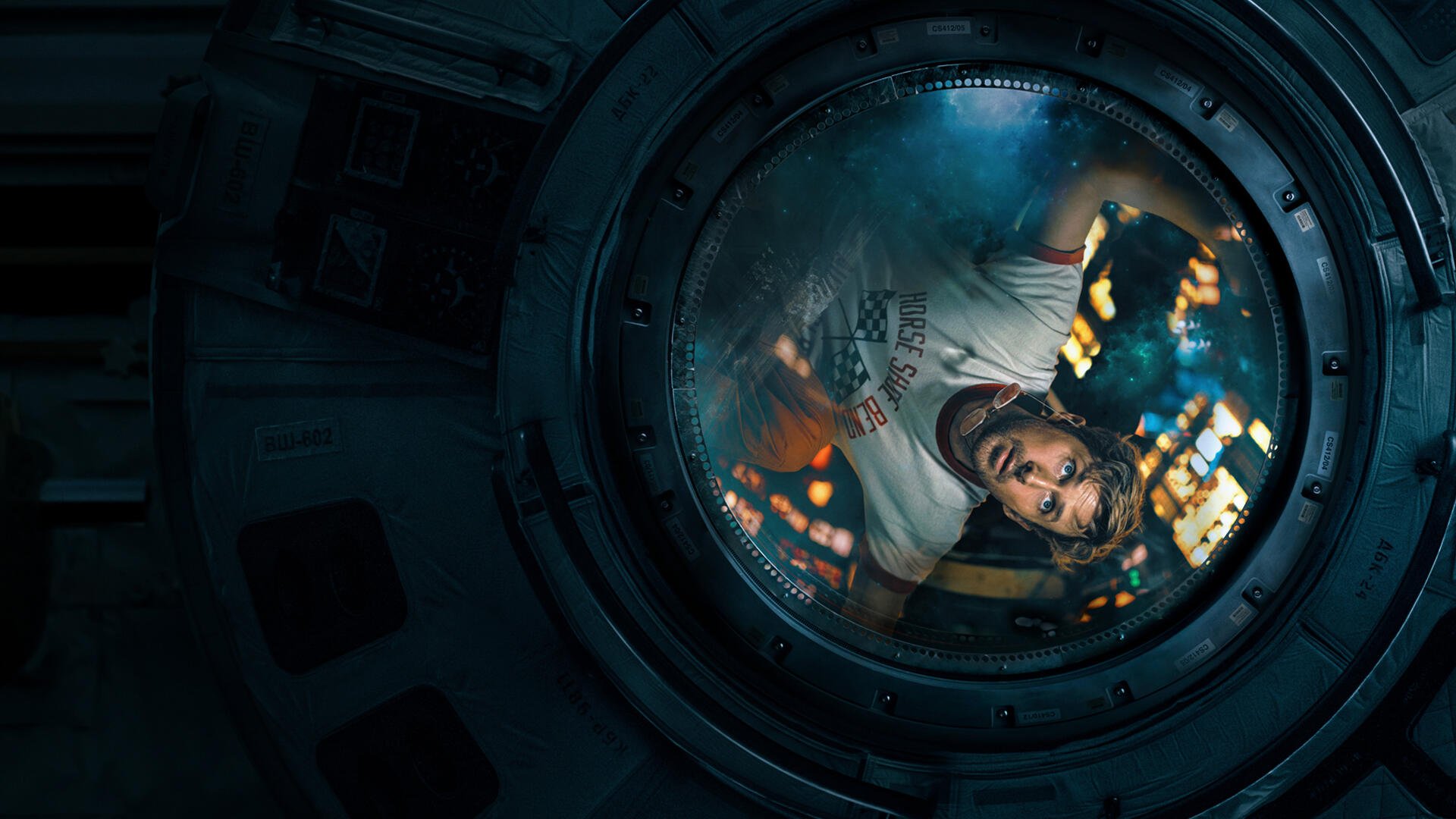
Hollywood is high on its own supply again. The trades are screaming about the "triumph" of Amazon MGM Studios' Project Hail Mary. They see a massive opening weekend and a surge in Prime subscriptions and think they’ve found the holy grail of mid-budget genre filmmaking.
They are dead wrong. Recently making headlines in this space: Why Point Break is the Only Action Movie That Actually Matters.
What we are witnessing isn't the rebirth of smart sci-fi. It’s the final, expensive gasp of a dying distribution model that relies on "intellectual" property to mask a fundamental lack of creative risk. The industry is patting itself on the back for a box office win that, when adjusted for the sheer gravity of Amazon’s marketing spend and the cannibalization of theatrical windows, looks less like a rocket launch and more like a controlled demolition.
The Math of a Paper Tiger
The "consensus" is that a $100 million-plus opening for a film about a guy doing physics in a tin can is a miracle. It’s not a miracle. It’s an inevitability when you control the storefront. More information on this are detailed by GQ.
Amazon didn't just market a movie; they weaponized an ecosystem. When every person buying dish soap or Kindle books is force-fed a trailer, the "organic" interest the trades talk about is actually manufactured saturation.
Let’s look at the true cost of this "hit":
- The Talent Tax: Ryan Gosling and the production team didn't come cheap. We’re talking about a budget that likely ballooned past $200 million once you factor in the "back-end" buyouts required for a hybrid streaming release.
- The Marketing Void: Standard studio math suggests you double the production budget for marketing. For Amazon, the cost is hidden in lost opportunity. Every pixel devoted to Project Hail Mary on the Amazon homepage is a pixel not selling high-margin consumer goods.
- The Longevity Lie: Unlike Interstellar or The Martian, which had long theatrical tails, Project Hail Mary is designed to be a "churn reducer." Its value isn't in tickets sold; it’s in preventing people from canceling Prime in October. That’s not cinema. That’s a retention tactic.
Ryan Gosling Cannot Save the Nerd
The competitor articles are obsessed with the "Star Power" of Gosling. They claim he makes the science "accessible."
In reality, the casting of a major A-lister for Ryland Grace proves that the studios don't trust the source material. Andy Weir’s book worked because Grace was an everyman—a dork with a chalkboard. By putting the world's most charismatic man in the cockpit, the film strips away the very thing that made the book a hit: the relatability of being outmatched by the universe.
When you cast a god to play a teacher, the stakes vanish. We don't worry about the physics because we know the movie star survives. I’ve sat in rooms where executives trade "relatability" for "bankability," and it kills the tension every single time. This isn't a film about solving problems; it's a $200 million exercise in watching a handsome man look stressed.
The "Hard Science" Delusion
The "People Also Ask" sections of the internet are currently flooded with queries like "How accurate is the science in Project Hail Mary?" and "Could Astrophage exist?"
This is the wrong question. The right question is: "Why are we pretending this is hard science?"
Weir’s "science" in the film is used as a narrative cheat code. In the book, the math is the protagonist. In the movie, the math is a montage. You cannot translate the internal logic of a 500-page physics-heavy novel into a two-hour visual medium without losing the soul of the work.
The film utilizes "Science™" as an aesthetic—a coat of paint to make the audience feel smart while they consume a standard hero’s journey. If you actually look at the thermal dynamics required for the ship’s propulsion, the equations fall apart.
$$F = \dot{m} v_e + (p_e - p_a) A_e$$
The thrust-to-weight ratio needed for the Hail Mary to achieve relativistic speeds without liquefying the pilot is hand-waved away by "magic space algae." By praising the film for its "accuracy," critics are lowering the bar for what constitutes actual speculative fiction. We are rewarding the appearance of intelligence rather than intelligence itself.
The Streaming Trap: Why the Box Office Numbers are a Lie
The most dangerous misconception is that these box office numbers mean the "theatrical experience is back."
It’s the opposite. Amazon MGM is using the theater as a high-priced billboard for the Prime Video app. They don't care if the theater owners make money on popcorn. They care about the "Prestige Halo."
By giving the film a wide release, they ensure it gets reviewed by "real" critics and qualifies for awards, which in turn makes the thumbnail look better when it hits the streaming service three weeks later. This is a predatory cycle. It starves independent films of screens and trains the audience to wait for the "free" version.
I’ve watched studios burn through $50 million in P&A (Prints and Advertising) just to "win" a weekend, knowing they’ll lose $100 million on the total theatrical run. It’s vanity math.
The Rocky Problem
The introduction of Rocky, the alien companion, is being hailed as a triumph of VFX. It’s actually the moment the film becomes a Disney movie.
In the book, the communication barrier is a grueling, multi-month linguistic grind. In the film, it’s a "cute" buddy-cop dynamic that feels suspiciously like it was designed by a committee thinking about toy sales and "heartwarming" social media clips.
The "contrarian" truth? The alien should have been terrifying. The universe is cold, indifferent, and weird. By making the first contact experience "whimsical," the film fails to capture the true horror of being the last human alive in a vacuum. It opts for comfort over truth.
Stop Asking if it’s "Faithful"
The standard critique asks: "Is it like the book?"
That is a loser’s question. A better question: "Does this film justify its own existence as a piece of cinema?"
The answer is no. It is a visual audiobook. It adds nothing to the visual language of film that 2001: A Space Odyssey didn't do better sixty years ago with a fraction of the computing power. We are in an era of "Competent Cinema"—movies that are perfectly lit, perfectly acted, and perfectly boring. There is no grit. There is no risk. Even the "mistakes" the characters make feel scripted to lead to a third-act payoff.
The Actual Lesson for the Industry
If you want to actually "disrupt" the genre, stop trying to find the next Andy Weir. Stop looking for "safe" IP that appeals to the "I F***ing Love Science" crowd.
Real sci-fi should be dangerous. It should be alienating.
Project Hail Mary is a warm blanket for people who want to feel like they’re doing homework while they eat Raisinets. It’s a massive success for Amazon’s data scientists, but it’s a failure for anyone who actually cares about the evolution of the medium.
The next time you see a "record-breaking" opening weekend for a streamer-backed blockbuster, don't look at the dollar signs. Look at the terms of the deal. Look at the screen count. Look at how much of that money is just Amazon moving cash from its left pocket to its right pocket.
The box office isn't screaming. It’s flatlining.
Stop celebrating the spectacle and start mourning the soul of the genre. If this is the peak of sci-fi in 2026, we are drifting in deep space without a compass.


