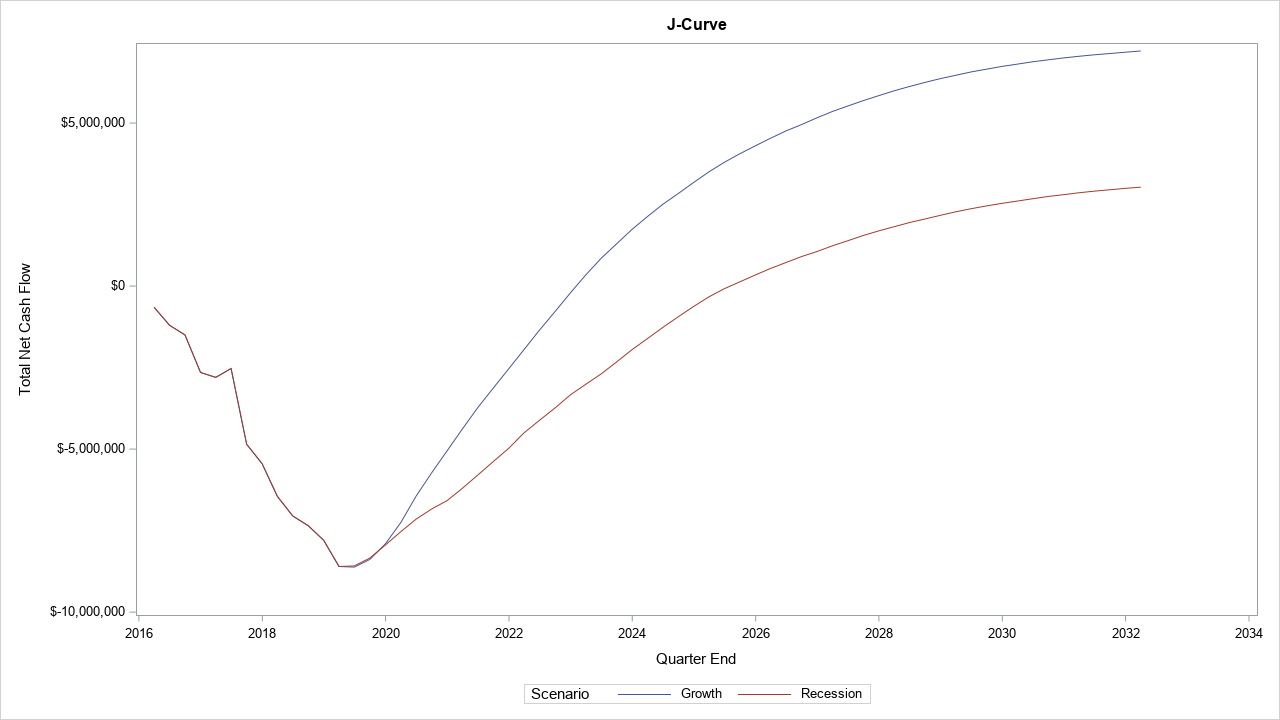
The financial press is currently obsessed with a "stress test" for private capital that doesn't actually exist. They look at rising interest rates, stagnant exit markets, and the denominator effect, then conclude that the industry is facing a reckoning. This narrative is comfortable. It suggests that the market is a rational machine that eventually punishes the bold.
It is also completely wrong.
The real "stress" isn't being felt by the general partners (GPs) managing these billions. It is being felt by the limited partners (LPs) who are trapped in a feedback loop of their own making. What we are witnessing isn't the collapse of private equity; it is the final evolution of "extend and pretend" on a global, institutional scale.
The Myth of the Valuation Reckoning
Every analyst from London to New York is waiting for a massive write-down in private asset valuations. They point to the public markets—where tech multiples compressed and volatility spiked—and ask why private portfolios haven't followed suit. They call it "valuation lag."
I call it a feature, not a bug.
In the public markets, price discovery is a daily cage match. In private equity, valuation is an accounting exercise performed in a darkened room. GPs have zero incentive to mark their assets to market because their fees are tied to those very valuations. If a fund manager marks an asset down by 30%, they aren't just reporting a loss; they are admitting they overpaid with their LPs' money, which kills their ability to raise the next fund.
The industry hasn't survived this long by being honest about pricing. It has survived by being patient. By the time a private equity firm is "forced" to sell, they have usually waited out the cycle. The stress test assumes a ticking clock that isn't actually there. As long as the debt can be serviced—even if it's through predatory PIK (Payment-in-Kind) toggles—the asset stays on the books at "cost" or "fair value," which is whatever the auditor can be convinced to sign off on.
Why Higher Rates are a Gift, Not a Curse
The "lazy consensus" says that because private equity relies on leverage, high interest rates will kill the golden goose.
Let's look at the math. In a zero-rate environment, everyone was a genius. You could buy a mediocre company at 12x EBITDA, slap some debt on it, and sell it for 14x because there was a wall of cheap money chasing any yield. That’s not private equity; that’s just a carry trade with better marketing.
Higher rates are the best thing to happen to the top-tier firms in a decade. Why? Because it kills the tourists.
When capital is expensive, the "zombie" firms—the ones that lived on refinancing rather than operational improvement—evaporate. The elite firms, the ones with actual operational groups that know how to cut fat and optimize supply chains, can now buy assets at a discount because the competition has been sidelined. If you are a GP with $20 billion in dry powder, you aren't mourning the end of cheap debt. You are salivating at the prospect of a market where cash is king again.
The Second-Hand Smoke of GP-Led Secondaries
If you want to see where the real rot is, look at the rise of "continuation funds."
The industry calls this "liquidity solutions." I call it selling your own car to yourself to avoid admitting you can't find a buyer. A GP has an asset they can't sell in a depressed market. Instead of taking the hit, they create a new fund, move the asset into it, and "sell" it from Fund IV to the Continuation Fund.
This isn't a stress test. This is a shell game.
It keeps the Management Fee stream alive and pushes the day of reckoning another five years down the road. LPs are often forced to choose: take a "liquidity" payout at a discount or roll their interest into the new fund. Most roll. They have to. If they exit, they have to record a lackluster return, which hurts their own internal performance metrics.
We have created a system where the pension funds and the private equity firms are in a suicide pact to keep valuations high, regardless of what the underlying companies are actually worth.
Stop Asking About "Exits"
The most common question I hear is: "When will the IPO window open so these firms can exit?"
You're asking the wrong question. The goal of modern private capital isn't to exit; it's to stay private forever. We are moving toward a world of "permanent capital."
The largest firms—Blackstone, Apollo, KKR—are no longer just buyout shops. They are massive asset management utilities. They are moving into private credit, insurance, and retail wealth. They don't need an IPO to get paid. They can recapitalize, issue more debt, or sell pieces of the portfolio to other private players.
The "exit" is for the small players. The giants are building a parallel financial system that operates outside the reach of public scrutiny and SEC-mandated transparency. If you're waiting for a wave of IPOs to validate the industry, you're looking at a 2010 playbook.
The Brutal Truth for LPs
If you are an institutional investor, you aren't a partner; you are a captive audience.
You’ve been told that private equity provides a "premium" over public markets to compensate for illiquidity. But once you strip out the fees, the carried interest, and the creative accounting, many of these funds are just levered versions of the S&P 500.
I’ve seen endowments keep 40% of their capital in private assets because they literally cannot afford to move it. They are "over-allocated" because the public markets grew faster than their private exits. If they try to sell on the secondary market, they take a 20% haircut. So they sit. They wait. They pray that the "stress test" is just a passing storm rather than a climate change.
The Next Move: Stop Chasing the "Average"
Most private equity is mediocre. Most GPs will underperform a simple index fund over the next ten years. If you want to survive the current shift, you have to stop looking at "Private Equity" as a monolithic asset class.
- Demand Operational Proof: If a firm can’t show exactly how they grew EBITDA without just cutting R&D or playing accounting games, walk away.
- Focus on Private Credit (Cautiously): The banks have retreated. The vacuum is being filled by private lenders who can demand 12-15% yields with senior secured status. That is where the actual "stress" is being monetized.
- Kill the 2-and-20: The fee structure is a relic of a high-growth era. In a 4% inflation world, paying 2% off the top for a GP to "manage" your money into a continuation fund is a dereliction of duty.
The industry isn't failing the stress test. It is simply rewriting the grading rubric while the proctors aren't looking.
Stop waiting for the crash. The crash is already here; it’s just being amortized over the next fifteen years. If you’re still looking for a "return to normal," you’ve already lost the game. Buy the operators, ignore the financial engineers, and for heaven's sake, stop believing the marks.