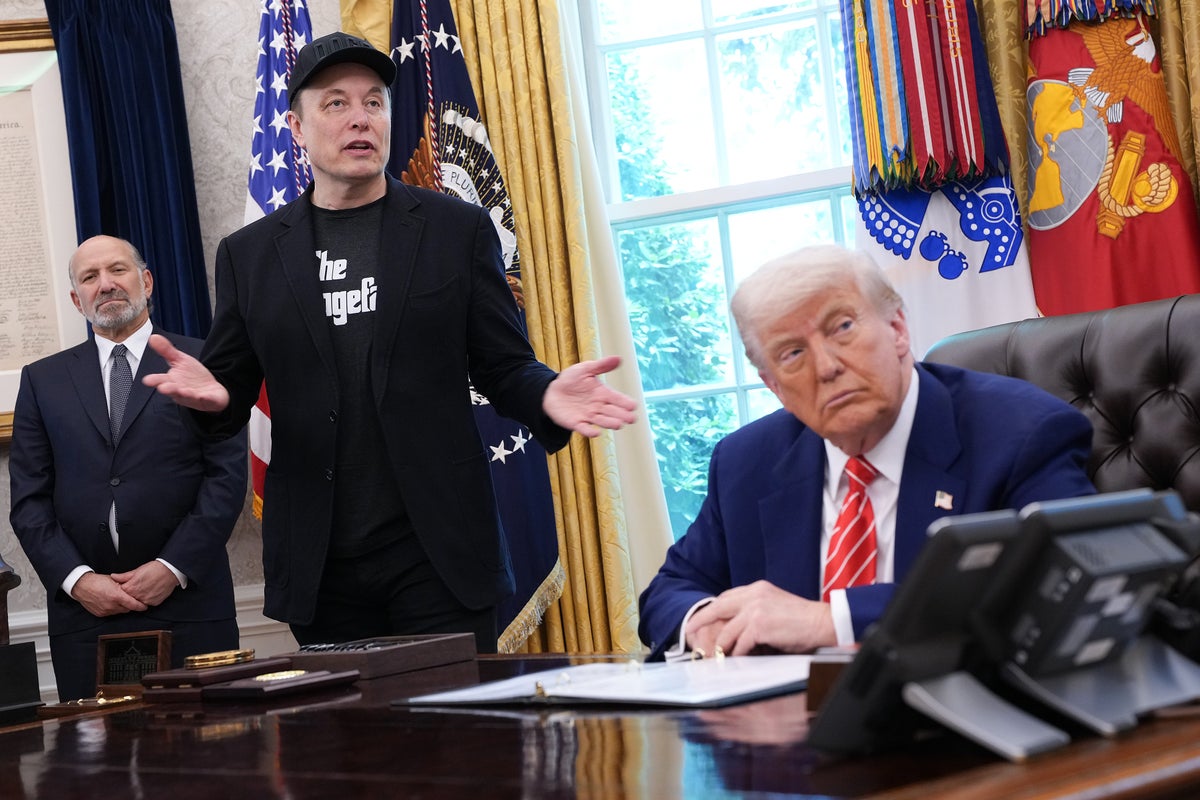
Elon Musk’s presence on a Tuesday diplomatic call between President Donald Trump and Indian Prime Minister Narendra Modi confirms that the world’s wealthiest private citizen has moved beyond the role of a political donor. He is now a functional, if unofficial, shadow envoy in the middle of an active shooting war. While the White House describes the conversation as a routine exchange on the "situation in West Asia," the reality is far more complex. Musk’s inclusion was not a social courtesy. It was a strategic move driven by the collapse of traditional state-run intelligence sharing and the urgent need to secure the Strait of Hormuz—a chokepoint currently holding the global economy hostage.
The call took place as the conflict enters its fourth week, following the joint US-Israeli strikes on Iran that began February 28. With six Indian nationals already killed in the crossfire and global oil markets reeling, Modi’s primary concern is the "safe commutation" of vessels through the Strait. However, the traditional mechanisms for such guarantees—the Department of State and the Department of Defense—are currently hollowed out by the very "government efficiency" mandates Musk himself pioneered during his brief, official tenure in early 2025. You might also find this related story interesting: The $2 Billion Pause and the High Stakes of Silence.
The infrastructure of a shadow diplomacy
Critics often point to Musk’s business interests as the reason for his seat at the table. It is true that Middle Eastern sovereign wealth funds are deeply entwined with the financing of his various ventures, and he has spent years lobbying the Modi government for Tesla and Starlink entry into the Indian market. But the "why" goes deeper than a simple quid pro quo for market access.
Musk provides the Trump administration with something the current, lean federal government lacks: independent technical infrastructure. As discussed in detailed coverage by Al Jazeera, the results are worth noting.
The war has seen massive internet blackouts across Iran as the regime attempts to stifle internal dissent. Trump publicly stated in January that he intended to use Musk’s SpaceX to "get the internet going" via Starlink. By bringing Musk into the conversation with Modi, Trump is signaling to India—and by extension, to Tehran—that the US possesses a "private sector" capability to bypass traditional sovereign controls. This isn't just about providing internet to protesters; it's about establishing a redundant communication network that the US government can no longer maintain on its own after massive budget cuts to agencies like CISA and the DHS.
The Hormuz dilemma and the billionaire's leverage
The Strait of Hormuz is the world's most sensitive energy artery. Iran has repeatedly threatened to close it, and recent reports suggest they have begun blocking "hostile" vessels. India, which has historically maintained a delicate balance between Washington and Tehran, is now in a position where it must choose between joining a US-led naval coalition or relying on back-channel deals.
Musk’s presence on the call suggests the "back-channel" is now the primary channel.
Consider the variables at play:
- India’s Energy Security: Modi recently warned Parliament that the war poses "unprecedented challenges" to supply chains.
- The Trump Peace Plan: Trump reportedly sent a peace proposal to Tehran on the same day as the call, offering a five-day pause on strikes against Iranian power plants.
- The Musk Factor: Musk's companies are heavily reliant on the same global supply chains that the Hormuz crisis is currently strangling.
By involving Musk, Trump is leveraging a man who speaks the language of "deal-making" and "efficiency" that resonates with the current administration’s disdain for career diplomats. It is a high-stakes gamble. If Musk can use his personal relationships with Gulf investors and his technical assets to provide a "civilian" solution to the Hormuz blockade, he becomes indispensable.
The risk of the unaccredited envoy
There is a brutal truth that neither the White House nor X (formerly Twitter) will acknowledge. When a private citizen participates in wartime negotiations, the line between national interest and corporate profit vanishes. Musk is not bound by the Logan Act, nor is he subject to congressional oversight or the Freedom of Information Act.
If a deal is struck that ensures safe passage for Indian tankers in exchange for Starlink ground stations or Tesla tax breaks, who is the primary beneficiary?
The traditional diplomatic corps, or what remains of it, views this as a dangerous precedent. Foreign policy experts argue that hollowing out the State Department to save money, only to replace it with a billionaire’s personal network, creates a vacuum that Russia and China are already filling. While Vice President JD Vance is reportedly being dispatched to Pakistan for formal talks, the "real" work appears to be happening on speakerphone with a man who owns the satellites overhead.
A thaw in the inner circle
Beyond the geopolitical implications, the call marks a definitive end to the reported June 2025 fallout between Trump and Musk. After Musk left his government role amidst disagreements over tax legislation and spending cuts, the two spent months in a public freeze. That ice has clearly melted.
The reconciliation wasn't born of friendship, but of mutual necessity. Trump needs the "Starlink shield" and the optics of a world-class innovator by his side to distract from the mounting casualties and economic friction of the Iran war. Musk needs a president who will clear the regulatory brush for his Mars ambitions and emerging market expansions.
This is not a return to the "First Buddy" era of the 2024 campaign. It is a more clinical, transactional partnership. In the new Washington, efficiency isn't just about cutting headcount; it's about outsourcing the most sensitive functions of the state to those who have the hardware to execute them.
The question for India, and for the world, is no longer whether Elon Musk has influence. The question is whether any head of state can afford to ignore him when the lights go out in the Middle East.
Would you like me to investigate the specific investment ties between the Middle Eastern wealth funds and Musk’s current defense contracts?