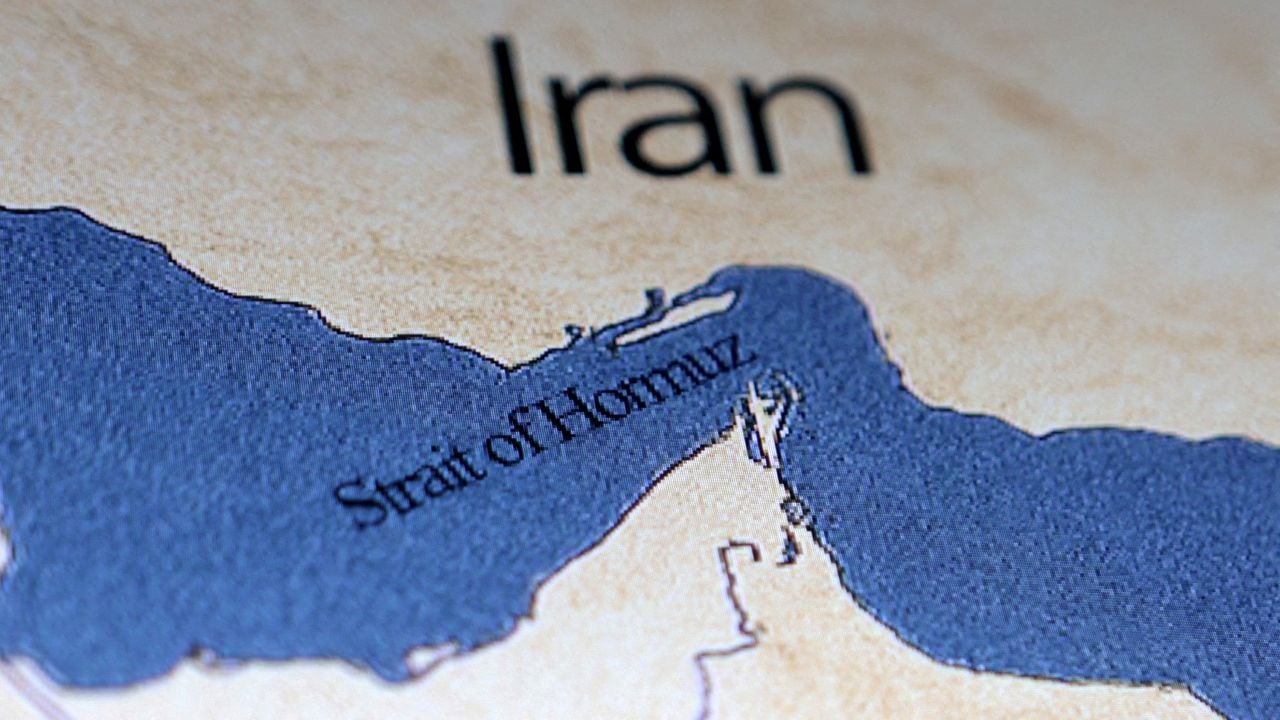
A single steel container sits on a dock in Dubai, baking under a sun that doesn't care about geopolitics. Inside that box are medical supplies—insulin, perhaps, or components for a water filtration system. If that box doesn't move, someone’s world gets smaller, darker, and more dangerous. This isn't a story about ships and maps. It is a story about the fragile thread that connects your morning coffee to a sailor’s heartbeat and a president’s signature.
For decades, the Strait of Hormuz has been the world’s carotid artery. Twenty percent of the planet’s petroleum pulses through this narrow strip of water. We have been told, repeatedly and with great solemnity, that if this artery is ever severed, the global economy dies on the table. But a new signal has emerged from Washington, one that suggests the impossible: America might be willing to walk away from the pulse.
Donald Trump has signaled a willingness to end the long-standing friction with Iran, even if that means leaving the Strait of Hormuz effectively shuttered or contested. This isn't just a policy shift. It is a fundamental rewriting of the American identity on the high seas.
The Ghost of 1988
To understand why this feels like a tremor in the earth, you have to look back at the salt-crusted history of the Persian Gulf. Consider a young sailor in the late eighties, standing on the deck of a destroyer during Operation Praying Mantis. Back then, the mission was clear: the oil must flow. We spent blood and billions to ensure that no regional power could put a thumb on the scale of global energy.
The doctrine was simple. If you mess with the tankers, you mess with the United States. It was an expensive promise, kept by a rotating cast of aircraft carriers and thousands of service members living in a pressure cooker of heat and humidity.
Now, that promise is fraying. The logic of "energy independence" has changed the math. When the United States became a net exporter of oil and gas, the strategic value of the Strait shifted from a survival necessity to a secondary concern. The billionaire in the Oval Office is looking at the ledger, and the numbers for a permanent naval presence no longer seem to add up in his eyes. He is betting that the pain of a closed Strait is a price the world can pay—as long as American boots aren't on the ground to pay it first.
The Invisible Toll at the Pump and the Port
Hypothetically, let’s look at a truck driver in Ohio named Elias. Elias doesn't know where the Strait of Hormuz is. He shouldn't have to. But if the "Trump Signal" becomes a reality and the Strait closes without a U.S. military response to reopen it, Elias feels it within seventy-two hours.
The price of crude doesn't just go up; it leaps. It isn't just about the gas in his tank. It’s the cost of the plastic in his kids' toys, the fertilizer for the crops he hauls, and the electricity that keeps his lights on. When we talk about "ending wars," we often forget that peace has its own invoice. If the U.S. stops being the policeman of the Gulf, the cost of insurance for every cargo ship on the water skyrockets.
A closed Strait is a tax on every human being who consumes anything moved by a motor. Yet, the narrative coming out of the administration suggests that this economic shock is preferable to the "forever war" of containment. It is a brutal, cold-blooded trade: financial instability in exchange for military absence.
The Room Where the Map Changes
The reports indicate that Trump is willing to find a "deal" with Tehran that prioritizes a full exit over maritime security. Imagine the tension in a room where a general explains the tactical necessity of a choke point, only to be met by a commander-in-chief who views that choke point as a distraction from domestic priorities.
The friction is palpable. On one side, you have the institutional memory of the Pentagon, which views the freedom of navigation as a sacred pillar of global order. On the other, you have a populist movement that asks: "Why are we dying for someone else’s oil?"
Both sides have a point. That is what makes this so terrifying.
If the U.S. moves to end the conflict with Iran by essentially saying, "Keep the water, we’re going home," a vacuum is created. Nature hates a vacuum, and so does geopolitics. China, which relies far more heavily on Middle Eastern oil than the United States, would be forced to step in. The sight of Chinese warships patrolling the Gulf while American flags retreat is a visual that would have been unthinkable ten years ago. Now, it is a whispered probability.
The Sailor’s Choice
There is a human cost to the "peace" being proposed. For the men and women currently stationed in the Fifth Fleet, the signal is confusing. They are trained for a mission that may no longer exist. They are the human shield between a global depression and a stable market.
What happens to the morale of a force when the mission is declared a "waste"?
Consider the logistics of a shutdown. If Iran decides to mine the Strait—a task that can be done with low-tech equipment and high-impact results—the world expects the U.S. Navy to sweep them. It is a slow, dangerous, and thankless job. By signaling that he is willing to walk away even if the Strait remains shut, Trump is telling the world that the "American Umbrella" has been folded up and put in the closet.
The Ripple in the Glass
We are living through the death of a consensus. For nearly eighty years, the consensus was that the oceans belong to everyone, and the U.S. would ensure that stayed true. This kept the cost of living low and the scale of global trade high.
If we move toward a world where a major power can close a global waterway without a superpower response, the world becomes a smaller, more fractured place. Every nation will have to fend for itself. Alliances will shift. The "deal" with Iran might stop the drones and the missiles, but it might also stop the heartbeat of the global market.
The tragedy of this policy shift is that it is being framed as a win for the average citizen. "No more wars" is a powerful slogan. It resonates in the VFW halls and at the kitchen tables of families who have sent sons and daughters to the desert for three generations. But the "invisible war" of economic collapse can be just as devastating as a kinetic one.
You can stop a war with a signature. You cannot stop a global recession with one.
The container in Dubai is still sitting there. The sun is still hot. The ship that was supposed to pick it up is idling in the Indian Ocean, waiting for a signal from a capital thousands of miles away. The captain is looking at the horizon, wondering if the horizon still belongs to the rules he was taught.
We are watching the end of an era of certainty. The new era is one of calculated abandonment. It is a world where the price of peace might be the very thing that kept the world running. Whether that trade is worth it depends entirely on how much you are willing to pay for your neighbor's silence.
The water in the Strait is deep, dark, and increasingly lonely. For the first time in a century, the horizon doesn't have an American silhouette. It is just the waves, the heat, and the quiet realization that the rules have changed while we were sleeping.