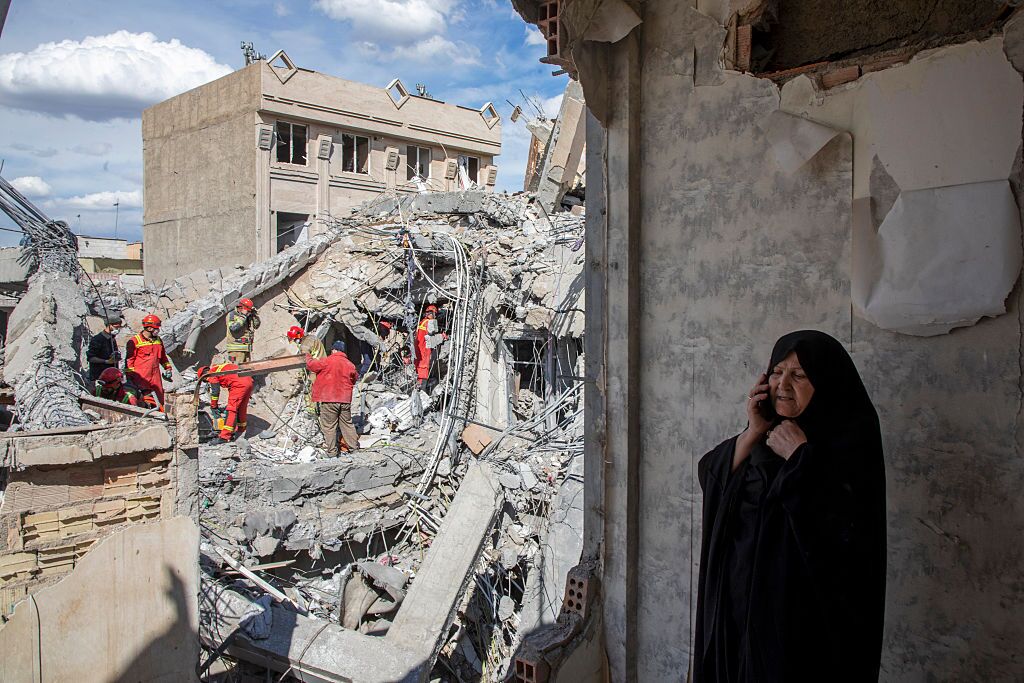
A single steel container, chipped and salt-crusted, sits atop a stack in the Port of Savannah. Inside are components for a local factory—valves, gaskets, sensors. To the workers on the dock, it is just another Wednesday. But four thousand miles away, in the air-conditioned silence of a Senate briefing room, that container is a hostage to geography.
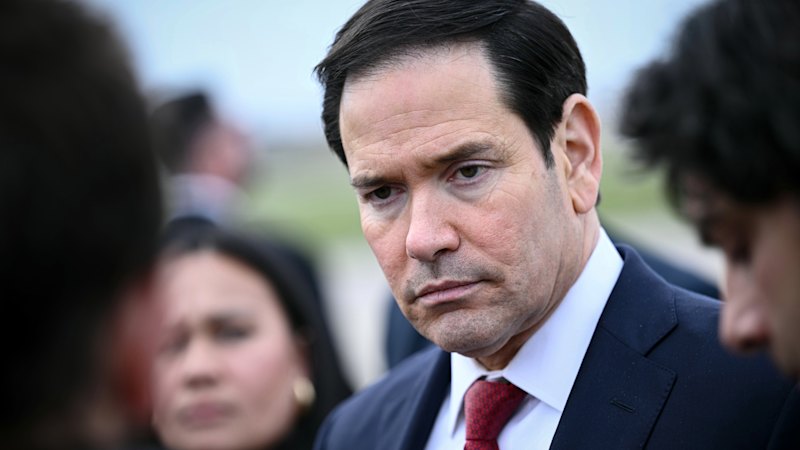
Marco Rubio, Vice Chairman of the Senate Intelligence Committee, recently articulated a reality that most Americans only feel when they swipe a credit card at a gas station or wait six months for a dishwasher part. The conflict currently boiling in the Middle East is not a sprint. It is a marathon. And the finish line just moved.
According to Rubio, we are no longer looking at a matter of days or even a couple of weeks to resolve the immediate maritime threats. We are looking at a timeline that stretches well into the future, a reality where "weeks" is the optimistic baseline. But the true shadow hanging over the global economy isn't just the duration of a specific skirmish. It is the Strait of Hormuz.
The Chokepoint in the Sand
If you look at a map, the Strait of Hormuz looks like a pinched nerve. At its narrowest, the shipping lane is only two miles wide. Through this needle’s eye passes twenty percent of the world’s liquid petroleum. It is the jugular vein of the global energy market.
Imagine a world where that vein is permanently constricted.
Rubio’s warning centers on a terrifying shift in Iranian strategy. For decades, the threat to the Strait was treated as a "break glass in case of emergency" option—a temporary blockade that would trigger a massive, decisive military response. But the paradigm has shifted. Iran is no longer just threatening to close the door. They are suggesting they might charge a permanent toll.
This isn't about a one-time spike in oil prices. It is about the fundamental restructuring of how things move across the planet. If a hostile power can unilaterally decide who passes through the world's most vital waterway, the "free" in free trade disappears.
The Invisible Toll
Think back to that container in Savannah.
When maritime insurance companies see a "forever war" scenario or a permanent threat in the Middle East, they don't just raise their eyebrows. They raise their rates. Dramatically. Those costs do not evaporate into the salt air. They trickle down. They find their way into the price of a gallon of milk, the cost of heating a home in Maine, and the interest rates set by central banks trying to outrun a new wave of inflation.
We often talk about war in terms of hardware—missiles, drones, and naval destroyers. But the most effective weapon in this theater isn't a kinetic one. It is uncertainty.
When Rubio speaks of the conflict lasting "weeks longer," he is signaling to the markets that the "return to normal" is a mirage. There is no old normal to return to. We are witnessing the birth of a world where geography is once again destiny, and the oceans are no longer a guaranteed highway.
The Strategy of Attrition
The logic of the adversary is simple: exhaustion.
By keeping the conflict at a low but constant boil, they force the United States and its allies into an expensive, defensive crouch. Every interceptor missile fired to take down a cheap drone costs millions of dollars. Over weeks and months, that math becomes unsustainable. It is a war of balance sheets as much as it is a war of ballistics.
Rubio’s assessment suggests that Iran sees the current chaos as an opportunity to establish a new status quo. If they can normalize the idea that they "own" the passage through Hormuz, they gain a permanent seat at the head of the global economic table. They aren't looking for a total victory in a single battle. They are looking for a permanent shift in the rules of the game.
Consider the human element for the sailors currently manned on the destroyers in the Red Sea and the Gulf of Oman. These are twenty-year-old kids from Ohio and Florida, living in a state of high-alert tension for months on end. The "weeks" Rubio mentions are felt in the bags under their eyes and the missed birthdays at home. The longer this stretches, the thinner the line of stability becomes.
The Weight of Policy
The political fallout is equally heavy.
There is a tension in Washington between the desire to avoid a wider regional war and the necessity of maintaining the freedom of navigation. Every day the conflict drags on, that needle becomes harder to thread. If the U.S. leans too hard into a military solution, it risks the very escalation it seeks to avoid. If it remains too passive, the "toll" on the Strait becomes a permanent fixture of the 21st century.
Rubio is positioning this as a moment of clarity. The United States cannot afford to look at these events as isolated incidents. They are chapters in a much longer book about the decline of the post-WWII maritime order.
We have lived through eighty years where the ocean was a neutral territory, governed by law and protected by the sheer presence of the U.S. Navy. That era is being tested. If the test lasts long enough—if "weeks" turns into months, and months into years—the world starts to look very different.
Supply chains shorten. Nations become more insular. The global village starts putting up fences.
The Cost of Silence
The real danger isn't just the price of oil. It’s the erosion of the belief that the world is a predictable place.
When a Senator with access to classified briefings tells the public that the timeline has extended, he is telling us to prepare for a different kind of life. A life where the friction of the world is higher. Where things are harder to get, more expensive to move, and more dangerous to protect.
The container in Savannah isn't moving today. The cranes are still. The paperwork is tied up in a legal dispute over insurance premiums that were updated three hours ago.
This is the reality of a world where a narrow strip of water becomes a political pawn. We aren't just waiting for the end of a conflict; we are waiting to see if the map of the world still means what we thought it did.
The lights in the briefing room flick off, but the satellites keep watching the Strait. Below them, the water is dark, deep, and increasingly crowded with the ghosts of a stability we once took for granted.