A child’s hunger is not a quiet thing. It is a physical presence. It begins as a dull, insistent gnawing in the pit of the stomach and evolves into a fog that settles over the brain, making the simplest arithmetic or the lightest game of tag feel like climbing a mountain in a vacuum. In the time it takes to read this sentence, that fog is settling over another pair of eyes somewhere in the world.
We often treat global hunger as an abstract mathematical problem. We look at maps, we see shaded regions of "food insecurity," and we move on because the numbers are too vast to feel. But numbers don't feel. People do. Meanwhile, you can explore related stories here: The Cold Truth About Russias Crumbling Power Grid.
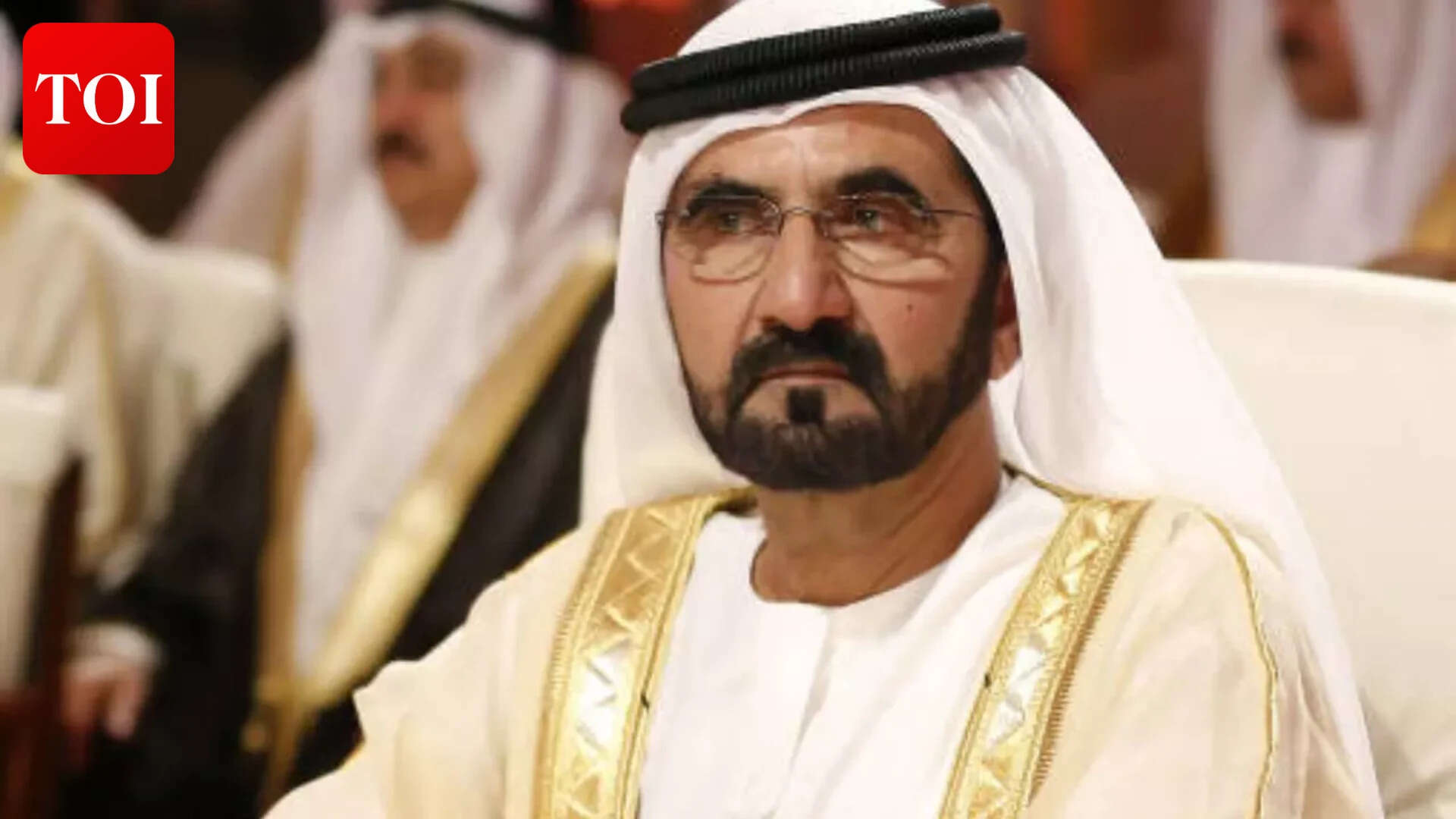
In the corridors of power in Dubai, a city often associated with the shimmer of glass and the ambition of reaching the clouds, a different kind of architecture was recently completed. It wasn't made of steel. It was built with AED 2.822 billion.
The Weight of an Empty Hand
Consider a hypothetical boy named Omar. He lives in a displacement camp or a struggling rural village thousands of miles away from the Burj Khalifa. Omar doesn't know what a billion looks like. He only knows what "nothing" looks like. It looks like his mother’s apologetic smile when the pot stays off the stove. It looks like the water he drinks to trick his belly into feeling full for twenty minutes. To explore the complete picture, check out the recent analysis by The Guardian.
When the "Edge of Life" campaign was launched by Sheikh Mohammed bin Rashid Al Maktoum, the goal wasn't just to move currency from one account to another. The goal was to reach Omar before the fog became permanent. Malnutrition in the first thousand days of a child’s life isn't just a temporary hardship; it is a structural theft. It steals height. It steals cognitive potential. It steals the future's doctors, poets, and engineers before they have a chance to hold a pencil.
The campaign set a target that many whispered was too ambitious. They underestimated the momentum of collective empathy.
Beyond the Ledger
Money is usually a cold medium. In the business world, we track ROI and dividends. But when AED 2.822 billion is raised for the "Edge of Life" initiative, the return on investment isn't measured in percentages. It is measured in heartbeats.
This wasn't a solitary act of state-sponsored charity. It was a mobilization. Large-scale developers, supermarket chains, and everyday citizens contributing what they could spare joined a singular movement. The campaign surpassed its goal because it tapped into a universal human anxiety: the unbearable thought of a child being let down by the world they were born into.
The logistics of turning two point eight billion dirhams into actual calories is a feat of modern engineering. It requires supply chains that penetrate conflict zones and arid plains. It means establishing sustainable food systems that don't just provide a meal today, but ensure the soil can provide one tomorrow.
We often think of aid as a handout. That is a mistake. It is a floor. Without a floor, no one can stand, let alone walk toward a better life. The "Edge of Life" campaign provides that floor for millions who were previously suspended over a void.
The Invisible Stakes
Why does a city like Dubai care? Some might say it’s about soft power or international standing. That’s the cynical view. The more grounded truth is that in a hyper-connected world, hunger is a contagion of instability. A world where half the population is fed and the other half is starving is a world that cannot hold.
There is a specific kind of dignity that comes with knowing where your next meal is coming from. It allows a parent to look their child in the eye without shame. It allows a student to focus on the chalkboard instead of the cramping in their gut. When the campaign reached its milestone, surpassing the billion-dirham marks with startling speed, it signaled that the "edge" in "Edge of Life" wasn't just a clever name. It was a boundary line. On one side is the abyss of neglect. On the other is the possibility of a life lived.
The sheer scale of the funds raised—roughly 768 million dollars—means that the intervention is not a drop in the ocean. It is a tide. It is enough to change the nutritional trajectory of entire communities.
The Rhythm of the City
Walking through the streets of Dubai during the height of this campaign, you could feel the pulse. It wasn't just the flashy digital billboards or the high-profile announcements. It was the sense of a mission. The city’s ruler didn't just sign a check; he invited the world to witness a standard. He gambled on the idea that people, when given a clear and urgent cause, will choose to be their brother’s keeper.
The facts are now etched into the record: the goal was met, and then it was shattered. The funds are being deployed. The trucks are moving. The grain is being bagged. But the story doesn't end with a headline about a billion dirhams.
The story ends—or rather, truly begins—when Omar sits down to a bowl of porridge that he didn't have to beg for. It begins when the fog in his mind clears and he realizes he can solve that math problem. It begins when his mother stops wearing that apologetic smile and starts planning for a future that actually exists.
We are often told that the world is becoming more fractured, more selfish, and more insulated. This achievement suggests we might be wrong. It suggests that underneath the noise of our disagreements, there is a quiet, powerful consensus that no child should have to negotiate with hunger.
The money is spent. The food is delivered. But the real achievement is the silence that follows—the silence of a belly that is no longer screaming for help. That silence is the most expensive thing in the world, and it is worth every single fil.