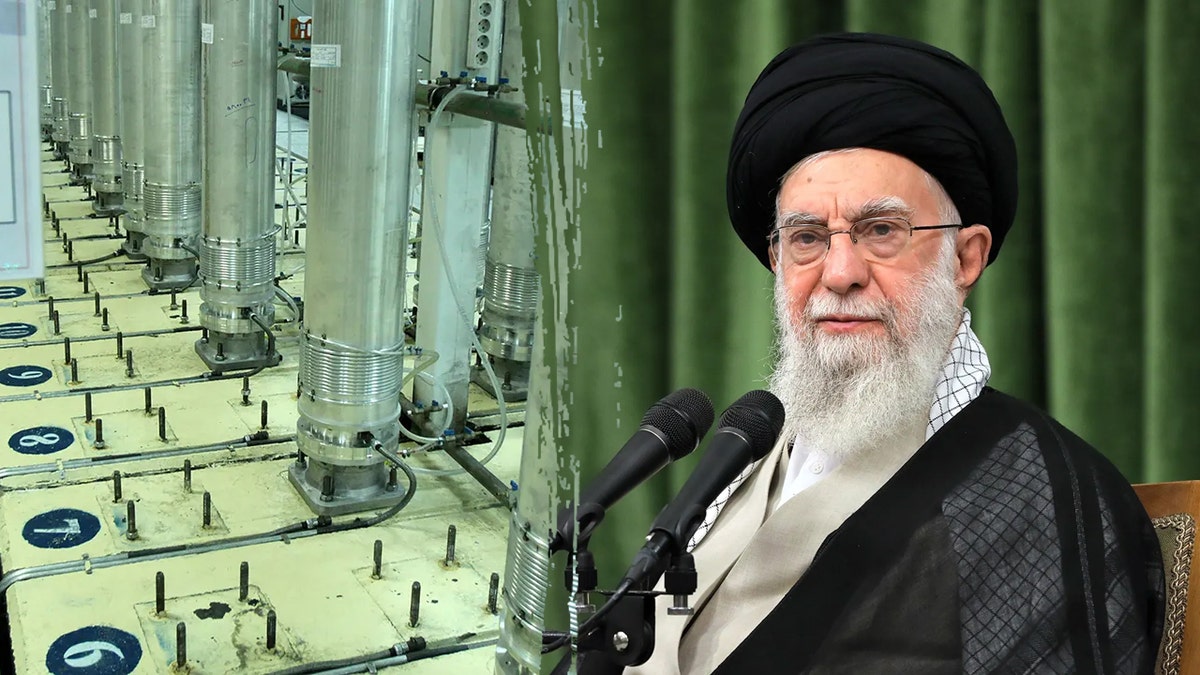
The death of Ali Khamenei transforms Iran from a controlled autocracy into a high-volatility theater of institutional friction. While media narratives focus on the binary of public "celebration vs. grief," this dichotomy ignores the structural reality: the immediate future of the Iranian state depends not on public sentiment, but on the resolution of a multi-variable power struggle between the Office of the Supreme Leader (the Beyt), the Islamic Revolutionary Guard Corps (IRGC), and the clerical establishment in Qom. The stability of the transition is governed by the speed at which a successor can achieve "legitimacy equilibrium"—a state where the IRGC’s coercive power aligns with the Assembly of Experts' constitutional stamp.
The Tripartite Power Architecture
To analyze the transition, we must categorize the Iranian state into three distinct functional layers. Each layer operates with a different objective function and risk tolerance. If you enjoyed this post, you might want to check out: this related article.
- The Ideological Layer (The Assembly of Experts): This body holds the constitutional mandate to select the next Supreme Leader. Their primary constraint is maintaining the concept of Velayat-e Faqih (Guardianship of the Jurist). If they select a candidate lacking scholarly credentials, they risk delegitimizing the very office they exist to protect.
- The Operational Layer (The IRGC): The Guard is the primary stakeholder in the status quo. Their objective is to ensure that the next leader does not pivot toward a "normalization" of foreign policy that would threaten their sprawling economic empire, which controls an estimated 30% to 50% of the Iranian economy.
- The Civil-Bureaucratic Layer (The Presidency and Parliament): While subordinate, these entities manage the optics of the transition. Their role is to mitigate the "Succession Penalty"—the economic paralysis that occurs when bureaucratic actors freeze decision-making during a leadership void.
The Successor Profiles and Strategic Constraints
The selection of a successor is a process of elimination rather than a meritocratic choice. Current analysis identifies two primary archetypes for the next leader, each presenting different systemic risks.
The Continuity Candidate (Mojtaba Khamenei)
Selecting Khamenei’s son offers the path of least resistance for the Beyt’s internal bureaucracy. It ensures the preservation of the current patronage networks. However, this choice creates a fundamental ideological paradox. The 1979 Revolution was explicitly anti-monarchical; establishing a hereditary line risks a "rejection crisis" among both the traditional clergy and the republican-leaning segments of the population. The cost of this choice is a permanent reliance on IRGC violence to suppress the inevitable accusations of "Neo-Pahlavism." For another angle on this story, check out the latest coverage from TIME.
The Consensus Puppet
The Assembly may opt for a senior, low-profile cleric. This candidate provides a façade of religious legitimacy while allowing the IRGC to transition into a de facto military junta. The mechanism here is "Shadow Governance," where the Supreme Leader becomes a figurehead, and the National Security Council dictates policy. The risk is a fragmentation of authority; if the leader lacks a personal power base, competing factions within the IRGC may engage in internecine conflict over resources.
The Mechanics of Public Dissent
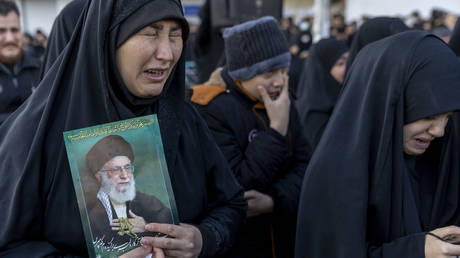
The polarized reactions witnessed in the streets—clandestine celebrations versus state-mandated mourning—serve as leading indicators of the "Compliance Gap." This gap measures the distance between the state’s ideological demands and the population’s willingness to perform them.
The state manages this gap through a three-stage suppression cycle:
- Preventative Throttling: Digital infrastructure is downgraded to prevent the organization of protests via encrypted platforms.
- Kinetic Deterrence: The deployment of the Basij paramilitary to high-density urban nodes creates a physical barrier to assembly.
- Performative Legitimacy: Mass funerals are utilized as a data-gathering exercise to identify loyalist concentrations and project an image of national unity to the international community.
Economic Volatility and the Rial’s Floor
Leadership transitions in sanctioned economies trigger immediate "uncertainty premiums." The Iranian Rial reacts not to the death itself, but to the perceived likelihood of a hardline vs. pragmatist shift.
A hardline succession accelerates capital flight as the merchant class (the Bazaaris) anticipates further isolation. Conversely, a prolonged vacancy in the office of the Supreme Leader creates a "Policy Vacuum," where central bank interventions lose efficacy because the underlying political mandate is unclear. The critical metric to watch is the spread between the official exchange rate and the open-market rate; a widening spread indicates a total loss of confidence in the transition's stability.
Geopolitical Realignment and the Proxy Network
Iran’s "Forward Defense" strategy—the funding and coordination of the Axis of Resistance—is highly dependent on the personal networks managed by the Supreme Leader’s office and the IRGC-Quds Force.
A transition period creates a "Command and Control Lag." Proxy groups in Lebanon, Iraq, and Yemen may experience a temporary reduction in strategic guidance. This lag provides an opening for regional rivals to test Iranian "red lines." If the new leader fails to authorize a decisive military or proxy action within the first 90 days, the perceived deterrence capability of the Iranian state will degrade, potentially inviting direct external pressure.
The Strategic Path Forward
The survival of the Iranian state post-Khamenei depends on the IRGC's ability to maintain internal cohesion. If the Guard splits into factions supporting different candidates, the probability of a "Systemic Collapse" increases from a low-probability tail risk to a central scenario.
Observers should monitor the "Institutional Velocity" of the Assembly of Experts. A rapid appointment (within 72 hours) signals a pre-negotiated deal with the military, suggesting a period of intense, unified repression. A delayed appointment (exceeding 7 days) signals a breakdown in the consensus-building mechanism, opening the door for civil unrest to convert into a revolutionary movement.
The primary strategic move for the regime is the immediate declaration of a "National Security Emergency" to bypass constitutional requirements for the successor's religious rank. This allows for the installation of a candidate optimized for security over scholarship. For the international community, the play is to monitor the movements of the 15th and 27th Divisions of the IRGC; their deployment to Tehran is the definitive signal that the state has prioritized survival over legitimacy.