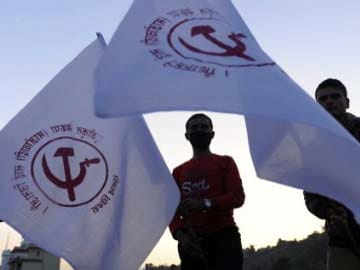
The transition from a decade-long armed insurgency to a federal democratic republic in Nepal serves as a primary case study in the failure of "negative peace"—the absence of active violence without the resolution of underlying structural grievances. While the 2006 Comprehensive Peace Accord (CPA) successfully decommissioned the People’s Liberation Army (PLA) and dismantled the absolute monarchy, it failed to address the Triple Deficit of the Nepali state: the fiscal gap in federalization, the judicial vacuum in transitional justice, and the persistence of extractive political institutions. The current stability is not an evolution toward prosperity but a high-entropy deadlock where the mechanisms of the "People’s War" have been repurposed into a competitive clientelism that captures state resources.
The Political Economy of the Comprehensive Peace Accord
The CPA functioned less as a transformative social contract and more as a Market-Sharing Agreement between the traditional parliamentary parties and the insurgent leadership. By integrating the Maoists into the democratic mainstream, the agreement created a "cartelized" political system. In this model, power is not contested through policy differentiation but through the distribution of patronage.
The integration of nearly 20,000 PLA fighters into the Nepal Army or through voluntary retirement packages represented a significant de-escalation of kinetic force, yet it introduced a permanent fiscal burden. The cost of "buying the peace" redirected capital from infrastructure and industrialization toward the maintenance of an oversized security apparatus and a bloated administrative bureaucracy necessitated by the new seven-province federal structure. This shift has resulted in a recurring expenditure profile that consistently exceeds 70% of the national budget, leaving minimal fiscal space for capital formation.
The Federalization Bottleneck: Devolved Responsibility without Devolved Power
Nepal’s 2015 Constitution was marketed as a panacea for the ethnic and regional marginalization that fueled the 10-year conflict. However, the execution of federalism has encountered a Principal-Agent Problem where the central government (the Principal) remains reluctant to cede control over revenue collection and civil service deployment to the provincial and local levels (the Agents).
The current federal model suffers from three primary inefficiencies:
- Vertical Fiscal Imbalance: Local and provincial governments are responsible for over 60% of service delivery (education, health, local infrastructure) but control less than 20% of total tax revenue. This forces a reliance on conditional grants from the center, maintaining the very hierarchy the 2015 Constitution sought to dismantle.
- Administrative Duplication: The transition did not result in a reduction of central ministry staff. Instead, it added two new layers of governance, creating a "bureaucratic multiplier" effect that increases the transaction costs of doing business and navigating public services.
- Regulatory Fragmentation: The lack of clarity in the "Concurrent List" of powers (powers shared by Federal, Provincial, and Local levels) has led to legislative gridlock. Investors face conflicting environmental and land-use laws, resulting in a "Wait-and-See" capital flight.
The Transitional Justice Vacuum: Institutionalized Impunity
A critical failure in the post-insurgency era is the paralysis of the Truth and Reconciliation Commission (TRC) and the Commission of Investigation on Enforced Disappeared Persons (CIEDP). These bodies have collected over 60,000 complaints, yet prosecutions remain statistically negligible.
The delay is not a matter of technical incapacity but a Mutual Immunity Pact among the political elite. Since leaders from both the state forces and the former insurgents now rotate through the halls of power, any rigorous prosecution of war crimes or human rights violations threatens the survival of the current coalition. This creates a "Rule of Law Paradox": the laws exist to punish the crimes of the past, but the enforcement of those laws would destabilize the political actors required to maintain the peace.
The psychological legacy of the insurgency is thus perpetuated through a sense of systemic unfairness. When the state fails to provide justice for the 17,000 dead and thousands disappeared, it erodes the "Social License to Operate" for the government, fueling the rise of populist, anti-system movements that seek to capitalize on the public’s disillusionment with the post-2006 order.
Labor Export as a Pressure Valve: The Remittance Trap
The insurgency accelerated a massive demographic shift: the exodus of working-age males from the agrarian interior to the Gulf Cooperation Council (GCC) countries and Malaysia. This migration has created a Remittance-Driven Equilibrium that prevents total economic collapse while simultaneously hollowing out the country's productive capacity.
Remittances account for approximately 22-25% of Nepal's GDP. While these inflows have dramatically reduced absolute poverty—falling from 42% in 1995 to below 15% today—the capital is primarily used for non-productive consumption, specifically imported food and luxury goods. This creates a "Dutch Disease" effect where the influx of foreign currency strengthens the real exchange rate, making Nepali exports uncompetitive and further entrenching the trade deficit.
The strategic danger of this model is its vulnerability to external shocks. If a regional conflict or global recession were to halt migration, Nepal lacks the domestic industrial base to absorb the returning labor force. The state has essentially outsourced its social stability to foreign labor markets, trading long-term industrial growth for short-term poverty alleviation.
The Geopolitical Squeeze: Sovereignty in the Age of Strategic Competition
The legacy of the "People's War" also fundamentally altered Nepal’s foreign policy, shifting it from a "Yam between two boulders" (India and China) to a focal point of the US-China-India strategic triangle. The insurgency weakened the traditional monarchy, which served as a consistent, if autocratic, interlocutor for foreign powers. In its place is a volatile multi-party system where foreign policy is often used as a tool for domestic political leverage.
- The Infrastructure Arms Race: The competition between China’s Belt and Road Initiative (BRI) and the US-led Millennium Challenge Corporation (MCC) compact has forced Nepal into a difficult balancing act. Every major infrastructure project is now viewed through a security lens, leading to delays and diplomatic friction.
- The Security Dilemma: India remains wary of the former Maoist insurgents' ideological ties to China, while China fears that a democratic, unstable Nepal could be used as a base for anti-China activities. This leads to constant "Micro-Management" by regional powers in Nepal’s internal politics, further undermining the sovereignty of its institutions.
Operational Constraints on Growth
For an analyst or an investor, the "legacy" of the insurgency is best measured in the Risk Premium attached to Nepali assets. The conflict-era mindset of "extortion as taxation" has evolved into a sophisticated system of "Bureaucratic Rent-Seeking."
- Property Rights: Land remains a contentious issue. The "land reforms" promised during the war were never fully codified, leaving a legacy of disputed titles that makes large-scale agricultural or industrial projects legally precarious.
- Labor Relations: The politicization of labor unions, a direct carryover from the insurgency’s mobilization tactics, leads to frequent disruptions in the manufacturing sector.
- Energy Inconsistency: Despite having massive hydroelectric potential, the sector is plagued by a lack of long-term Power Purchase Agreements (PPAs) and a politicized grid management system.
Strategic Realignment: The Necessary Pivot
The current trajectory indicates a state in a "Low-Level Equilibrium Trap." To break this cycle, the following structural shifts are mandatory:
- Decoupling the Civil Service from Political Patronage: The implementation of an autonomous, merit-based bureaucracy is the only way to solve the federalization bottleneck. Without a professional administrative layer that exists independently of party cycles, service delivery will remain a tool of electioneering.
- The Transition from Consumption to Production: Fiscal policy must pivot toward incentivizing domestic manufacturing. This includes the creation of "Special Economic Zones" (SEZs) with guaranteed labor stability and a "Single-Window" regulatory environment to bypass the fragmented federal bureaucracy.
- Closing the Transitional Justice Loop: The state must accept a "Compromise Model" of justice that includes reparations and public truth-telling, even if full criminal prosecutions are politically unfeasible. Lingering grievances are a latent combustible that populist actors will continue to exploit.
- Leveraging Hydropower as a Geopolitical Asset: Rather than viewing energy as a domestic commodity, Nepal must treat it as its primary diplomatic lever. Exporting clean energy to India and Bangladesh provides the only realistic path to balancing the trade deficit and securing long-term foreign exchange reserves.
The legacy of the People's War is not a closed chapter of history; it is the operating system of the modern Nepali state. Until the "War Economy" of patronage and labor export is replaced by a "Production Economy" of institutional transparency and industrial output, the country will remain a fragile entity, stable in its stagnation but incapable of genuine transformation.


