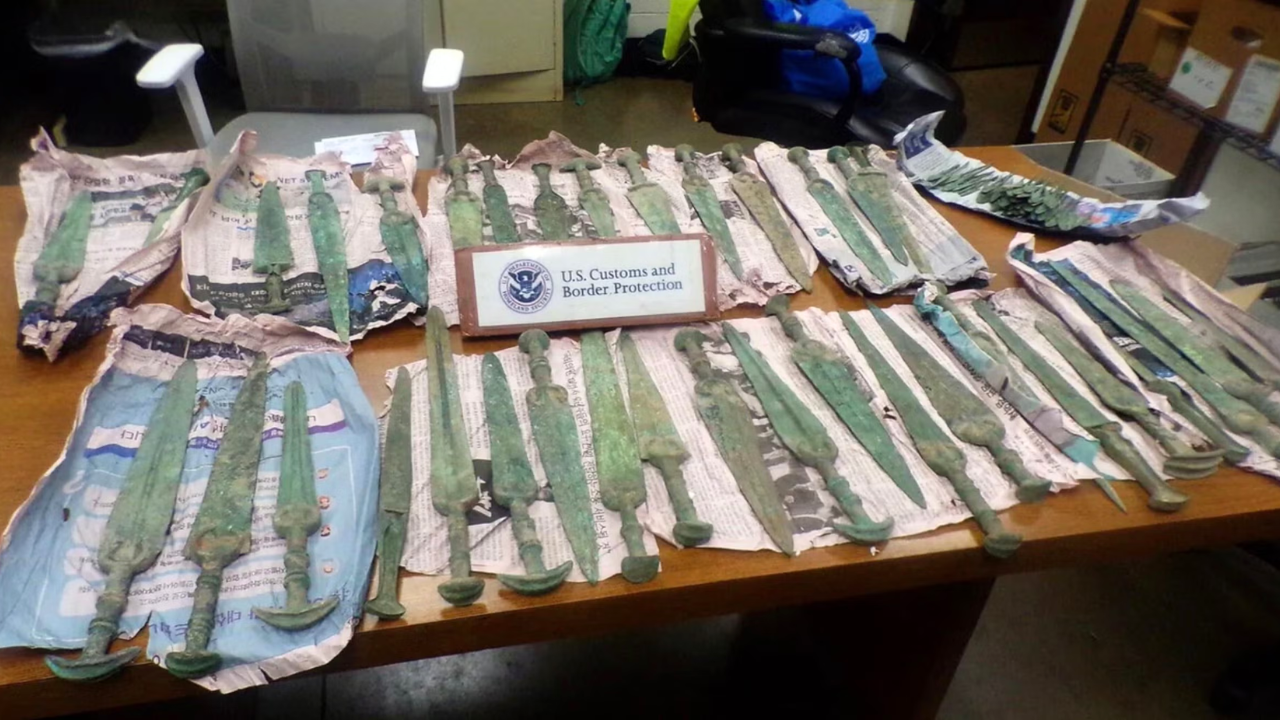
Customs and Border Protection (CBP) just "saved" 36 Bronze Age swords from the clutches of the black market in Philadelphia. The media is celebrating. The bureaucrats are polishing their plaques.
They are all wrong.
The seizure of these 4,000-year-old artifacts isn't a victory for history. It is a textbook example of how rigid border enforcement and outdated provenance laws are actually erasing the very heritage they claim to protect. While the headlines scream about "bizarre smuggling," the real story is the systemic failure of an antiquities market that forces history into the shadows, where it eventually dies in a evidence locker or a private basement.
The Myth of the Heroic Seizure
Every time a crate of "loot" is cracked open at a port, the narrative is the same: brave agents stopped a criminal from stripping a nation of its soul.
Here is the cold reality: seizures don't preserve history; they freeze it.
When artifacts like these 36 swords are "liberated," they enter a legal purgatory. They are stripped of their context—what archaeologists call provenance. Without knowing exactly which soil they were pulled from, which stratum they occupied, or what other items were buried alongside them, they aren't "history." They are just old pieces of metal.
By the time the CBP gets their hands on these items, the archaeological damage is already done. The "smuggling" isn't the crime against history; the unscientific extraction is. Yet, our current global strategy focuses almost entirely on the tail end of the process—the shipping—while doing nothing to incentivize the legal, documented flow of artifacts.
Your Definition of Smuggling is Lazy
The term "smuggling" suggests a shadowy figure in a trench coat. In reality, the antiquities trade is often a desperate scramble by local populations in conflict zones or impoverished regions to monetize the only capital they have: the dirt beneath their feet.
The competitor articles on this Philadelphia bust want you to believe this was a heist. It wasn't. It was likely a failure of paperwork. Many of these items circulate through "grey markets" for decades. A sword might sit in a family collection in Europe for sixty years, lacking the specific "export permit" required by modern, retroactive laws. When that family tries to sell it to a US collector, it becomes "contraband."
We are criminalizing the movement of objects rather than the destruction of sites.
If we actually cared about these 4,000-year-old blades, we would create a "Safe Harbor" for undocumented artifacts. Imagine a system where a possessor could come forward, have the item scanned, carbon-dated, and digitally logged into a global database in exchange for legal title or a finders fee. Instead, we threaten them with jail time, ensuring that if they can’t sneak it past a scanner in Philadelphia, they’ll simply melt it down or bury it deeper to avoid the FBI.
The Data Gap: Why 36 Swords Matter (and Don't)
The Philadelphia shipment originated from the UAE. Does anyone actually think 36 Bronze Age swords originated in Dubai? Of course not. They are likely from the Levant or the broader Fertile Crescent.
By seizing them without a path to trace their origin, we lose the chance to map ancient trade routes. The metallurgical composition of these blades could tell us if the tin came from Cornwall or Afghanistan. But once they are tagged as "evidence" in a criminal case, that research is deprioritized. They will sit in a climate-controlled box for a decade while lawyers argue over jurisdiction.
The True Cost of "Protection"
| Stakeholder | Official Narrative | The Harsh Reality |
|---|---|---|
| CBP / Government | Protecting cultural property. | Padding seizure stats for budget season. |
| Academia | Stopping the illicit trade. | Losing access to 90% of found artifacts. |
| The Public | History is being saved. | History is being locked in a warehouse. |
I’ve seen this play out in the private sector for years. When you over-regulate a commodity, you don't stop the trade; you just remove the ethical players from the room. By making it nearly impossible to legally import ancient artifacts, we’ve ensured that only the most ruthless, least careful actors remain in the game.
The Fallacy of Repatriation
The "next step" in the standard PR playbook is repatriation. "Send them back to their country of origin!"
Which country? The borders of 2000 BC don't align with the borders of 2026. If a sword was found in a region currently occupied by a terrorist group or a collapsing state, "repatriation" is a death sentence for the artifact. We saw this with the looting of the Mosul Museum and the destruction of Palmyra.
The obsession with national ownership of 4,000-year-old items is a modern nationalist ego trip. These swords belong to the human story, not to a specific modern ministry of culture that might not have the budget to keep the lights on in its national museum.
Stop Asking "How Do We Stop Smuggling?"
That is the wrong question. It’s a low-level, tactical question that leads to more scanners and more dogs at ports.
The real question is: How do we make the legal market more attractive than the black market?
- Digital Decoupling: We need to use high-resolution 3D scanning and blockchain-backed "digital twins" for every artifact. If an object is registered, its value increases because its history is verified.
- Licit Market Incentives: Allow private collectors to own items if and only if they provide public access for researchers.
- Site Subsidy: Pay local populations to protect and scientifically excavate sites rather than hoping they'll do it for free while they're starving.
The Philadelphia seizure isn't a win. It’s a symptom of a broken, adversarial system that treats history like a kilo of cocaine. Until we stop treating ancient bronze as a controlled substance and start treating it as data that needs to be shared, we are just watching the past disappear one crate at a time.
Stop clapping for the cops and start demanding a system that actually values the information these objects hold.
Get the swords out of the evidence locker and into a lab, or get out of the way.