Nowruz is not merely a calendar event or a relic of ancient Persia. It is a three-thousand-year-old act of defiance. While empires crumble and ideologies shift with the winds of the Middle East, this festival of the vernal equinox remains the singular cultural anchor for over 300 million people across the Silk Road. It survives because it is rooted in the literal, physical reality of the earth’s tilt rather than the whims of a central authority. On March 20, 2026, as the sun crosses the celestial equator, the celebration will once again signal a renewal that no political or religious entity has ever successfully managed to suppress.
To understand why Nowruz outlasts the regimes that try to tame it, one must look at the mechanics of the Haft-Sin table and the sheer stubbornness of the Iranian plateau. This is not just about sprouts and painted eggs. It is about a civilization that refuses to let its pre-Islamic identity be erased by the pressures of modern geopolitical strife or historical conquest.
The Geography of Survival
Nowruz began with the Zoroastrians, but its longevity is a result of its adaptability. It is a secular holiday with a spiritual soul. It traveled from the high peaks of the Alborz mountains to the steppes of Central Asia and the valleys of the Caucasus. When the Arab conquests of the 7th century brought Islam to the region, the new rulers found a population that would rather die than give up their spring fire.
The survival of the festival provides a masterclass in cultural preservation. Instead of fighting the new religious framework, Nowruz integrated with it. It became the "Persian New Year" in a way that felt compatible with the new faith while retaining its pagan, elemental roots. This wasn’t a compromise. It was a tactical retreat that allowed the culture to remain intact under the surface.
Today, we see the same pattern. Governments in various eras have viewed Nowruz with suspicion, seeing it as a competitor to state-mandated narratives. Yet, every March, the streets of Tehran, Kabul, and Dushanbe fill with the smell of burning rue and the sound of firecrackers. The people choose the sun over the state. Every single time.
Decoding the Haft Sin Table
The centerpiece of the celebration is the Haft-Sin, a collection of seven items starting with the Persian letter "S." To the casual observer, it looks like a curated dinner party. To those who live it, it is a symbolic blueprint for a life well-lived.
- Sabzeh: Wheat or lentil sprouts representing rebirth. It is a reminder that even after the harshest winter, growth is inevitable.
- Samanu: A sweet pudding made from wheat germ, symbolizing power and bravery.
- Senjed: The dried fruit of the oleaster tree, representing love and wisdom.
- Seer: Garlic, used as a medicinal symbol for health and protection against evil.
- Seeb: Apples, the universal symbol of beauty and vitality.
- Somāq: Sumac berries, the color of the sunrise, symbolizing the triumph of light over darkness.
- Serkeh: Vinegar, representing age, patience, and the acceptance of life’s bitterness.
When a family gathers around this table, they aren't just eating. They are performing a ritual that connects them to their ancestors from the Achaemenid Empire. The inclusion of a mirror—representing reflection—and a bowl of goldfish—representing life—turns the living room into a microcosm of the universe.
The Economic Engine of the Vernal Equinox
Beyond the symbolism lies a massive, often overlooked economic shift. In the weeks leading up to March 20, the markets of the Middle East undergo a transformation. This is the busiest shopping season of the year, dwarfing any other holiday in terms of retail volume and domestic travel.
In 2026, the economic impact is particularly pronounced. In Iran, despite crippling sanctions and currency fluctuations, the "New Day" triggers a surge in local consumption. People buy new clothes (No-nowari), purchase intricate sweets, and engage in the massive logistics of "shaking the house" (Khaneh-tekani). This deep cleaning is more than a chore. It is a total reset of the domestic space, requiring the purchase of everything from new rugs to industrial cleaning supplies.
The travel industry also sees its highest peak. Millions of people move across borders and provinces to visit elders. In a region often characterized by its struggles, this massive movement of people and capital is a testament to the underlying strength of the social fabric. It is the one time of year when the economy is driven by joy and tradition rather than necessity or fear.
Fire Jumping and the Rejection of Fear
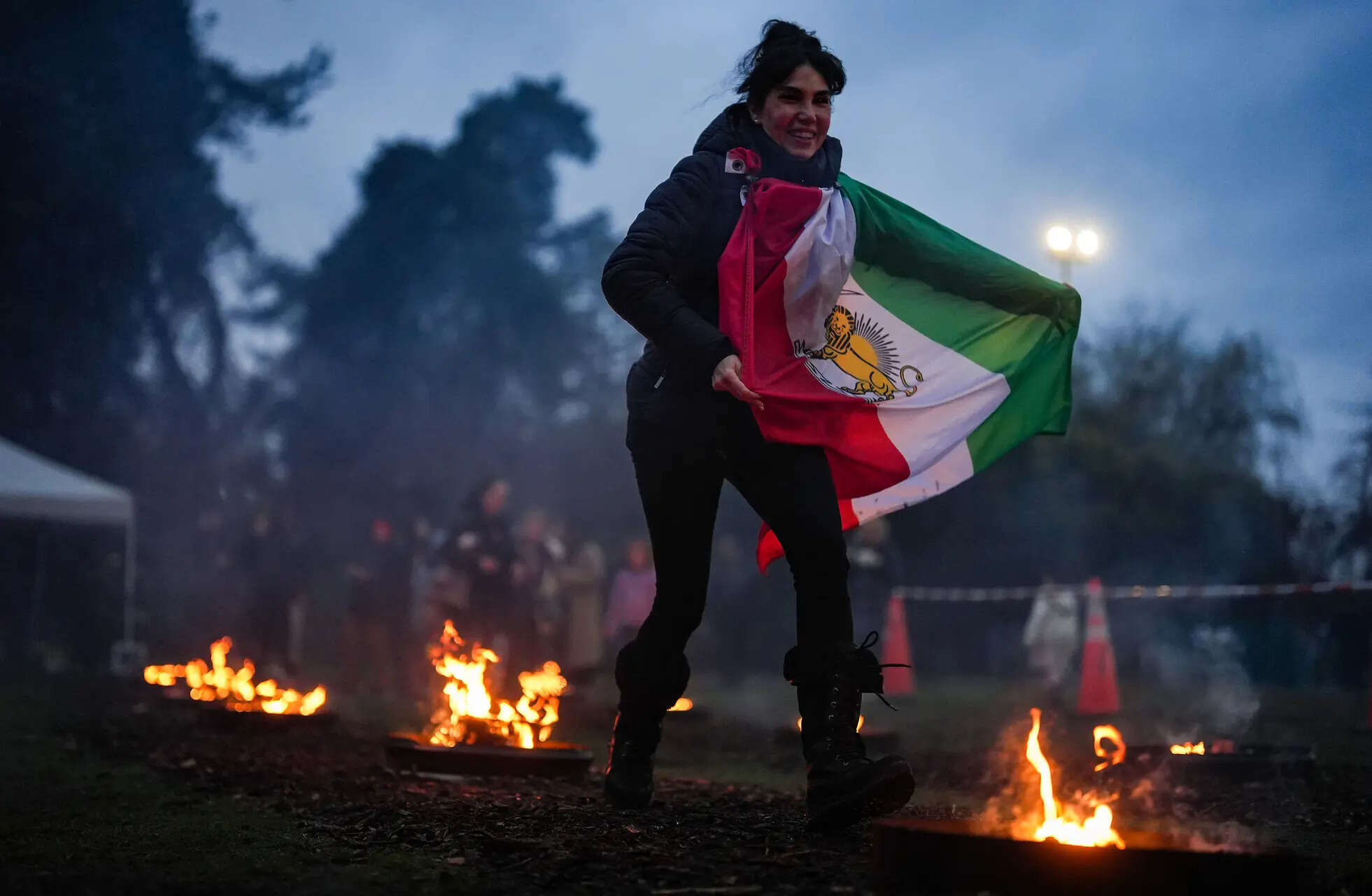
The prelude to the New Year is Chaharshanbe Suri, the Festival of Fire. On the eve of the last Wednesday of the year, people light bonfires in the streets and jump over them. As they leap, they chant: "Zardi-ye man az to, sorkhi-ye to az man." This translates to: "Give me your beautiful red color, and take back my sickly yellow pallor."
It is a literal purification. In an era where public gatherings are often scrutinized or restricted, Chaharshanbe Suri represents a moment of unvarnished public agency. It is loud, it is dangerous, and it is impossible to police. The fire represents the light of God in the Zoroastrian tradition, but for the modern youth, it represents the heat of life. Jumping over the flames is an act of courage. It tells the world that the individual is still in control of their own spirit, regardless of the political climate.
The Struggle for a Shared Identity
Nowruz is not without its controversies. Different nations often claim it as their own, leading to "cultural heritage" disputes at the UN. Is it Iranian? Is it Kurdish? Is it Afghan?
The reality is that Nowruz belongs to the geography, not the borders. The Kurds celebrate it as Newroz, often tying it to the legend of Kaveh the Blacksmith, who defeated a tyrant. For them, the holiday is explicitly political—a symbol of resistance and the hope for a homeland. In Afghanistan, despite various bans and restrictions over the decades, the Guli Surkh festival in Mazar-i-Sharif remains a focal point of national pride.
These variations don't weaken the holiday; they prove its necessity. It is a rare "big tent" event that allows people of different ethnicities, languages, and religions to share a single moment of alignment. When the clock hits the exact second of the equinox—the Tahvil—the entire region exhales at once.
The Environmental Subtext
In the 21st century, Nowruz has taken on a new layer of meaning: environmental preservation. The festival is built on the veneration of water, soil, and plants. As the region faces unprecedented droughts and climate challenges, the rituals of Nowruz are being reclaimed by activists.
The Sabzeh (the sprouts) are eventually released into running water on the thirteenth day, Sizdah Bedar. This day is spent entirely outdoors to avoid the "bad luck" of staying inside. It is a forced communion with nature. In 2026, this tradition serves as a stark reminder of what is at stake. You cannot celebrate the rebirth of spring if the springs are running dry. The holiday is transitioning from a celebration of nature to a desperate plea for its survival.
Why the World Should Watch
Global observers often view the Middle East through a lens of conflict and oil. Nowruz offers a different data point. It shows a population that is deeply invested in beauty, family, and the cycles of the natural world.
It is a holiday that requires no centralized church or state funding to exist. It happens in the kitchen, in the street, and in the heart. It survived the Mongols. It survived the silk-road shifts. It will survive the current digital fragmentation of society because it offers something the internet cannot: a physical, sensory connection to the turning of the earth.
The persistence of Nowruz is a reminder that the oldest things are often the most resilient. While we obsess over the latest technological shifts or political polls, a significant portion of the human race is preparing to jump over a fire to leave their sorrows behind. That isn't just a tradition. It is a survival strategy.
Go out and buy a single hyacinth. Place it by a window. Understand that for millions of people, that flower is a flag of defiance against the cold.