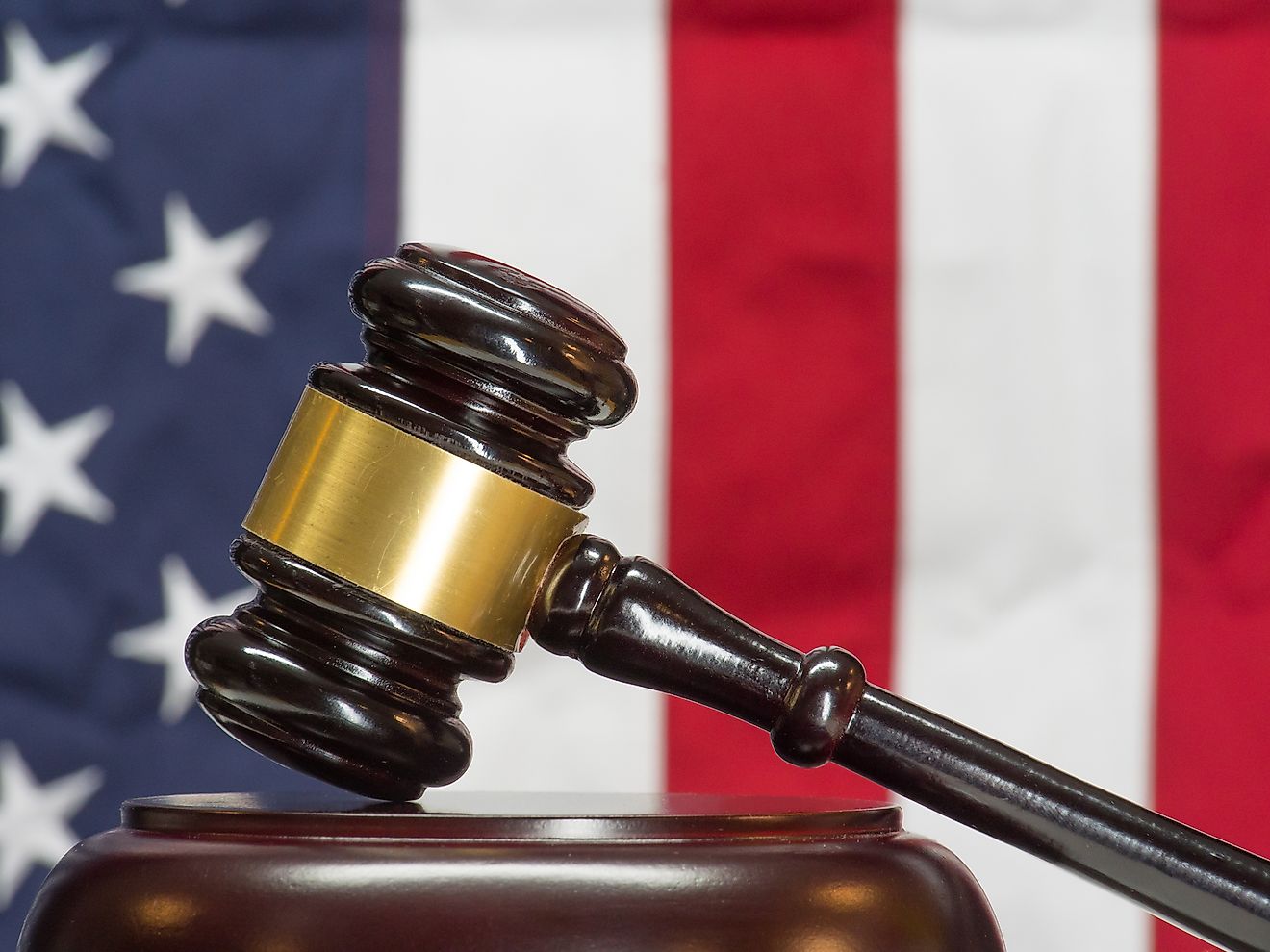
The Department of Defense just hit a massive legal wall in its attempt to blacklist Anthropic. A federal judge issued a temporary restraining order this week, halting the Pentagon’s designation of the AI firm as a "supply chain risk." This ruling does more than just pause a bureaucratic label; it exposes a fundamental disconnect between national security hawks and the reality of the domestic software industry. For months, rumors swirled that the Pentagon’s Defense Counterintelligence and Security Agency (DCSA) was preparing to squeeze Anthropic out of the federal ecosystem. When they finally moved, the justification was thin. The court agreed, signaling that the government cannot simply invoke "security" as a magic word to bypass due process and factual evidence.
The core of the dispute centers on Section 1260H of the National Defense Authorization Act. This is a powerful tool designed to prevent Chinese military companies from infiltrating the American defense industrial base. However, applying it to a San Francisco-based firm founded by former OpenAI executives—and backed by billions in American venture capital—requires a level of mental gymnastics that the court found unconvincing. The Pentagon's lawyers argued that Anthropic's data centers or specific international partnerships created a backdoor for foreign influence. Anthropic countered that the designation was arbitrary, capricious, and lacked a shred of specific evidence. They won the first round.
The Flawed Logic of Blanket Security Designations
Bureaucracies crave simplicity. In the current geopolitical climate, "supply chain integrity" has become the catch-all phrase for any action the Department of Defense wants to take against a company it cannot fully control. By labeling Anthropic a risk, the Pentagon wasn't just warning off military buyers; they were effectively radioactive-tagging the company for the entire private sector. No Fortune 500 board wants to explain to shareholders why they signed a nine-figure contract with a company the Pentagon considers a threat.
The government’s primary mistake was treating a software architecture like a physical shipment of steel or microchips. In the physical world, you can track a crate from a port in Shanghai to a warehouse in Virginia. In the world of Large Language Models (LLMs), risk is theoretical and distributed. The DCSA attempted to use the same blunt instruments on Anthropic that it used on Huawei. It didn't work. The judge noted that the government failed to provide the company with a meaningful opportunity to respond to the allegations before the "risk" label was leaked to the press. This is a procedural failure that hints at a deeper lack of expertise within the Pentagon’s vetting offices. They are trying to police the 21st-century frontier with a 20th-century map.
Behind the Curtain of the 1260H List
Being placed on the 1260H list is a death sentence for federal contracting. While it is not a total trade ban like the Entity List managed by the Commerce Department, it serves as a massive "Keep Out" sign for any agency head or prime contractor. If Raytheon or Lockheed Martin sees a company on that list, they scrub them from their bids immediately to avoid complications during the auditing process.
The investigation into Anthropic likely stemmed from its heavy reliance on massive compute clusters. These clusters are the lifeblood of AI development. To train models like Claude, Anthropic needs staggering amounts of GPU power. Some of that infrastructure is shared, and some of the investment comes from multinational corporations with global footprints. The Pentagon’s logic appears to be that any point of contact with an international entity—no matter how insulated—constitutes a "nexus" for foreign interference. This is a standard so high that no major tech company in the United States could meet it. If the Pentagon applied this logic consistently, they would have to blacklist half of Silicon Valley.
The Problem with Secret Evidence
One of the most jarring aspects of this case is the government's reliance on "classified summaries." During the initial proceedings, the Pentagon attempted to justify the designation by pointing to information that Anthropic’s legal team wasn't even allowed to see in full. This "trust us, we’re the government" approach rarely sits well with federal judges when a company's survival is on the line.
The court's intervention highlights a growing frustration with the lack of transparency in the DCSA's decision-making process. If a company is a risk, the government should be able to point to a specific vulnerability, a specific investor with documented ties to a hostile intelligence service, or a specific breach of protocol. General anxieties about the "nature of AI" are not a legal basis for destroying a company’s market value. Anthropic argued that the designation caused immediate and irreparable harm, citing canceled pilot programs and a chilling effect on a planned funding round. The judge found these claims credible.
A Warning to the Broader AI Sector
This case is a flare in the night for the rest of the industry. OpenAI, Google, and Meta are all watching this closely. If the Pentagon had succeeded in making the Anthropic designation stick without a rigorous public defense, a precedent would have been set. Every AI developer would be one bureaucratic whim away from being cut off from the massive federal market.
We are seeing a turf war between different arms of the American government. On one side, you have the Department of Commerce and the White House, which want to promote American AI leadership to stay ahead of global competitors. On the other, you have the defense and intelligence communities, which are inherently suspicious of any technology they didn't build themselves. This friction creates a volatile environment for innovation. When the Pentagon acts as a rogue regulator, it undermines the very national security it claims to protect by starving American companies of the revenue they need to out-innovate the rest of the world.
The Infrastructure Argument
The government's obsession with the supply chain often misses the point of how modern AI functions. Anthropic doesn't just buy "parts" from a vendor. It builds integrated software systems that run on rented infrastructure. The risk isn't in the hardware; it's in the weights of the model and the data used for fine-tuning. By focusing on the 1260H designation, the Pentagon is looking at the plumbing when they should be looking at the water.
If there is a genuine concern about foreign influence, the solution is rigorous auditing and clear compliance standards—not a sudden, unexplained blacklisting. The industry wants a set of rules it can follow. Currently, the rules are being written in pencil and erased whenever a new general takes over a subcommittee. This instability is the real supply chain risk.
Why This Temporary Block Matters Now
The timing of this ruling is critical. Anthropic is currently in the middle of a massive push to integrate its models into sensitive government workflows, ranging from logistics optimization to intelligence analysis. A "risk" designation would have frozen those projects in their tracks. By securing this injunction, Anthropic has bought itself time to force the Pentagon to put its cards on the table.
This is not just a win for one company; it is a demand for a higher standard of evidence. The judge’s order forces the Pentagon to go back and actually do the work. They have to prove that the risk is real, not just a theoretical possibility discussed in a PowerPoint presentation at the Pentagon. For the first time in years, the "national security" excuse has been challenged and found wanting in a court of law.
The Strategy Moving Forward
Anthropic’s legal team is likely preparing for a full-scale discovery process. They want to see the internal memos that led to this designation. They want to know who initiated the "risk" review and what specific data points were used. If it turns out—as many industry insiders suspect—that the designation was pushed by competitors or based on outdated intelligence, the Pentagon will face a massive PR nightmare.
The government has two choices. They can double down, declassify more evidence, and try to make a stronger case for why Anthropic is a danger. Or, they can quietly retreat, "reevaluate" the designation, and allow the company to continue its work while saving face. Given the judge's skeptical tone, the latter seems more likely. The Pentagon doesn't like losing, but they hate being forced to show their hand even more.
The next time you hear a government official talk about "protecting the supply chain," remember this case. It is a reminder that in the rush to secure the nation, the government often trips over its own feet. The Anthropic injunction is a necessary check on an executive branch that has grown too comfortable using secret lists to pick winners and losers in the tech sector.
You should audit your own federal contracts for any mention of Section 1260H compliance. If the Pentagon can move against a high-profile player like Anthropic with this little evidence, smaller firms are even more vulnerable. Start by identifying any international cloud providers or minority investors in your cap table that could be used as a pretext for a "risk" designation. Be ready to litigate the moment a notification arrives.