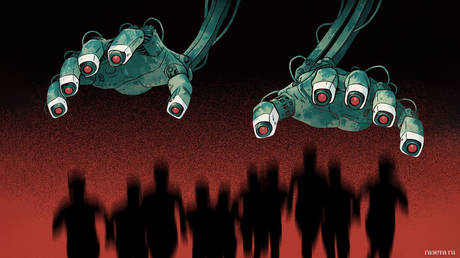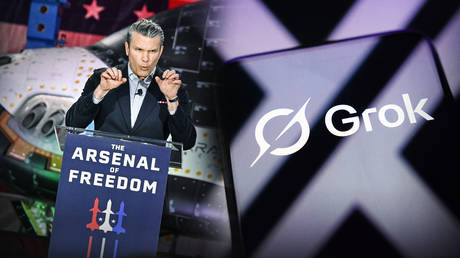
The headlines are screaming about a "merger of minds" between Elon Musk’s xAI and the Department of Defense. They paint a picture of Grok—the rebellious, "anti-woke" chatbot—donning a digital flak jacket to overhaul classified military intelligence. The mainstream narrative is obsessed with the optics: Musk’s proximity to power, the speed of Grok’s development, and the supposed shift toward silicon-valley-style warfare.
They are all looking at the wrong map.
Integrating Grok into classified systems isn't about giving the military a smarter brain. It is about a desperate, trillion-dollar institution trying to fix its catastrophic data-entry problem while pretending it's "innovating." If you think Grok is going to be suggesting tactical maneuvers in the South China Sea next Tuesday, you haven't spent enough time inside the windowless rooms where real procurement happens.
The LLM is a Janitor Not a General
The prevailing "lazy consensus" suggests that Grok will act as a strategic layer. Pundits fear a "Skynet" scenario or hope for a "super-analyst." Both are wrong.
In the world of classified intelligence, the bottleneck isn't a lack of brilliant minds; it’s the sheer volume of unstructured, messy data. We have decades of hand-written logs, fragmented sensor data, and siloed SIGINT (Signals Intelligence) that no human can realistically cross-reference in real-time.
The military isn't buying Grok for its "personality" or its real-time access to X. They are buying a high-speed filing clerk.
Large Language Models (LLMs) are, at their core, statistical engines for predicting the next token. In a classified environment, the primary utility of Grok will be entity extraction and summarization. It’s about taking a thousand pages of mundane logistics reports and finding the one line that mentions a specific serial number. That isn't "strategy." It’s digital janitorial work.
I’ve watched defense contractors burn $500 million on "predictive analytics" suites that couldn't tell a tank from a tractor because the underlying data was a disaster. Grok is being brought in to scrub the floors of the Pentagon’s data lake.
The Security Paradox of "Open" Intelligence
The irony of using Grok—a model touted for its "unfiltered" access to public sentiment—inside a SCIF (Sensitive Compartmented Information Facility) is palpable.
When you move a model into a classified environment, you perform what is known as air-gapping. The moment Grok enters that space, it loses its greatest asset: its connection to the live pulse of the internet. A Grok that cannot scrape X (formerly Twitter) in real-time is just another transformer model.
The Pentagon faces a brutal trade-off:
- The Static Model: They use a version of Grok frozen in time. It stays secure, but its "intelligence" begins to decay the moment it’s installed.
- The Updated Model: They attempt to feed live data into a classified environment. This creates a massive attack surface for data poisoning.
Imagine a scenario where an adversary learns the specific training cadence of the military’s internal LLM. By flooding public channels with specific, subtle misinformation, they could theoretically "tilt" the model’s internal weights, causing it to misinterpret tactical signals once the weights are updated inside the secure bubble.
The media focuses on whether Grok is "too biased." The real experts are worried about whether it’s a Trojan horse for sophisticated adversarial machine learning.
The Musk Factor is a Distraction
Everyone wants to talk about Elon. Is he too close to the government? Is he a liability?
This conversation is a pivot away from the actual failure of the traditional defense industrial complex. The "Big Five" (Lockheed, Raytheon, Boeing, Northrop Grumman, General Dynamics) have proven themselves fundamentally incapable of writing modern software. They are hardware companies that treat code as an afterthought, leading to disasters like the F-35’s ALIS system.
The Pentagon isn't choosing Grok because it’s the best AI; they are choosing it because xAI operates at a velocity that makes traditional contractors look like they’re moving through molasses.
But there is a catch. Musk’s companies operate on the "fail fast" principle. In the military, "failing fast" results in a congressional hearing or a body count. The cultural friction here won't be about "wokeism" or "free speech." It will be about determinism.
Military systems require predictable outputs. If you press a button, $A$ must happen every single time. LLMs are inherently probabilistic. They are "hallucination-prone" by design because that is how they remain flexible. Trying to fit a probabilistic engine into a deterministic command structure is like trying to use a poem to calculate a ballistic trajectory. It sounds beautiful until you miss the target by three miles.
The Myth of the "Classified Advantage"
There is a pervasive belief that the military has "secret" AI that is years ahead of the public.
Having worked adjacent to these systems, I can tell you: the opposite is often true. The overhead of security clearances, procurement cycles, and legacy hardware means the "classified" version of a tool is almost always a bloated, slower, and dumber version of what you can run on your laptop.
By the time Grok is fully integrated, vetted for "Red Team" vulnerabilities, and cleared for use on Top Secret networks, the civilian world will be two generations ahead. The military isn't gaining an edge; it’s desperately trying to close a gap that is widening every day.
Stop Asking if Grok is "Smart"
The question "Is Grok smart enough for the military?" is the wrong question. It assumes the military is a monolith of high-level thinking.
The right question is: "Can Grok handle the sheer stupidity of military bureaucracy?"
We are talking about an organization that still relies on COBOL for certain financial systems and physical floppy disks for others. The "integration" of Grok will likely look like this:
- A shiny web interface that sits on top of a 20-year-old database.
- Officers using it to write performance reviews (OPRs) and emails because they’re tired of the paperwork.
- A massive expenditure on "prompt engineering" consultants who are just 23-year-olds with a clearance.
The real danger isn't that Grok becomes too powerful. The danger is that we trust it to automate the boring stuff, and it does so with just enough confidence to hide its errors. In a civilian setting, an AI hallucination is a funny tweet. In a classified military system, an AI hallucination is a misidentified convoy.
The Cost of the "Anti-Woke" Marketing
Musk marketed Grok as the "truth-seeking" AI. In a military context, "truth" is a luxury; verifiability is the requirement.
The Pentagon doesn't need an AI with an attitude or a "rebellious streak." They need an AI that provides a mathematical confidence interval for every claim it makes. Current LLM architectures are notoriously bad at "knowing what they don't know."
If the military buys into the marketing and treats Grok as a source of objective truth rather than a flawed, probabilistic text-generator, they are inviting a new era of high-tech incompetence. We saw this with "body counts" in Vietnam—quantifiable data used to mask a lack of qualitative understanding. Grok provides the ultimate mask: high-speed, authoritative-sounding gibberish that satisfies the desire for "data-driven" decision-making without the burden of actual proof.
Tactical Advice for the Skeptic
If you are an investor, a policy-maker, or a citizen watching this unfold, ignore the "Musk vs. The World" drama. Look at the infrastructure.
- Watch the hardware: The real winners aren't the software providers; they are the companies providing the ruggedized GPU clusters capable of running these models at the "edge" (on ships, in planes, in forward bases).
- Question the "Real-Time" claims: Ask how the data is being scrubbed before it hits the model. If the cleaning process is manual, the AI speed is an illusion.
- Demand the "Confidence Score": Any integration that doesn't force the AI to show its work (via RAG - Retrieval-Augmented Generation) is a catastrophic failure waiting to happen.
The military is not being "disrupted" by Musk. It is using Musk to distract from the fact that it has lost the ability to build its own tools. This isn't the dawn of the super-soldier. It’s the expensive realization that the Pentagon’s filing system is so broken it needs a billionaire’s chatbot to find the keys.
Stop looking for a revolution. This is just a very expensive upgrade to the world’s largest search bar.
The "classified" Grok won't be a warrior. It will be a bureaucrat with better branding.
And that is the most dangerous thing it could possibly be.