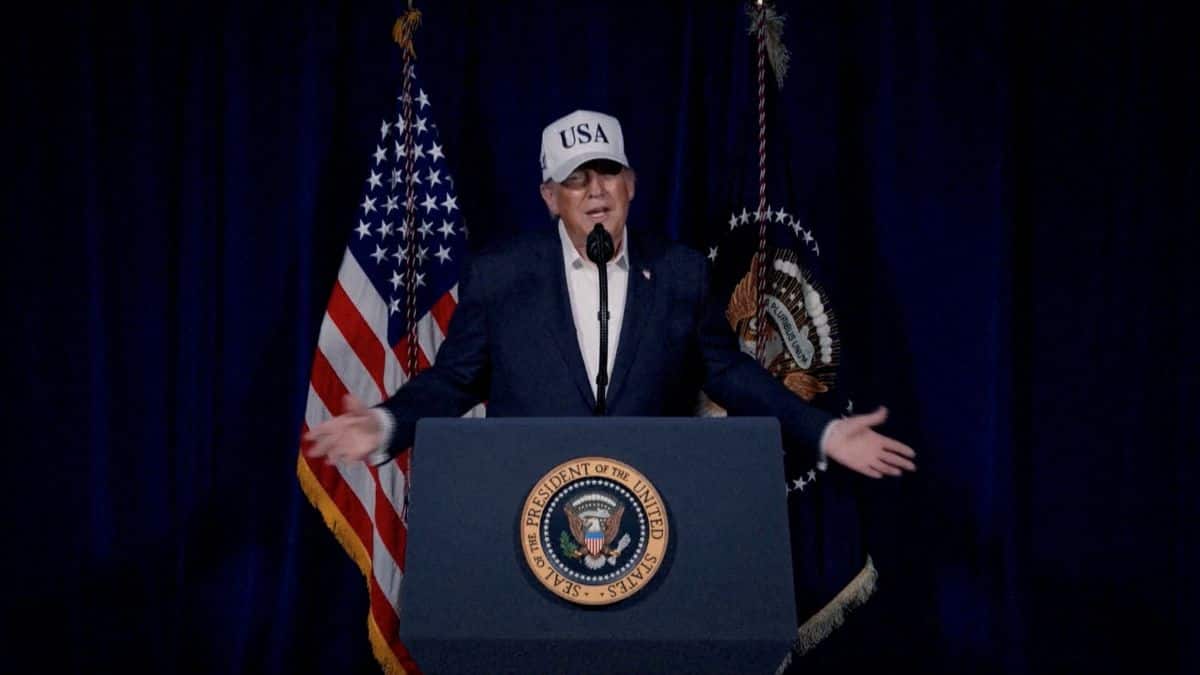
The media loves a neat, hypocritical narrative. The prevailing "lazy consensus" regarding Donald Trump’s foreign policy is a masterpiece of intellectual shortcuts. Critics point to his supposed thirst for a Nobel Peace Prize in one breath, then list his "seven wars"—trade wars, border wars, regulatory wars—as evidence of a chaotic, contradictory ego.
They are asking the wrong question. They want to know why a "man of peace" is so aggressive. The real question is: Why did you think peace meant passivity?
In the real world, peace isn't the absence of conflict. It’s the successful management of it. What the pundits call "wars" are actually surgical strikes against a decaying global status quo that was bleeding the American economy dry. If you aren't disrupting the equilibrium, you're dying in it.
The Trade War Myth: It’s Not About Tariffs, It’s About Sovereignty
The most exhausted trope is that the "Trade War" with China was a failure because soybean exports dipped or prices at Walmart ticked up by three percent. This is small-time thinking.
When you look at the macro data, the trade war wasn't an attempt to close the deficit overnight. It was a decoupling maneuver. For decades, the US operated under the "engagement" theory—the idea that if we bought enough cheap plastic from Shenzhen, China would magically transform into a liberal democracy. It didn't. Instead, we funded the buildup of a systemic rival while hollowing out our own industrial base.
I’ve seen boardrooms in the Midwest where "efficiency" was just a euphemism for "moving the factory to a country with no environmental laws." Trump’s trade war forced a reassessment of risk. It made the C-suite realize that a supply chain built entirely on a geopolitical fault line is a liability, not an asset.
- Misconception: Tariffs are a tax on the consumer.
- Reality: Tariffs are a strategic toll for access to the world’s most lucrative market. If you want to sell here, you play by our rules.
The Regulatory War: Dismantling the Administrative State
The "War on Regulation" is often framed as a gift to "Big Oil" or "Dark Money." This ignores the sheer, suffocating weight of the Federal Register. By the time Trump took office, the cost of regulatory compliance in the US had reached an estimated $1.9 trillion annually. That is nearly 10% of the GDP vanishing into a black hole of paperwork and "compliance officers" who produce exactly zero units of value.
The "two-for-one" executive order—requiring two regulations be cut for every new one added—wasn't just a gimmick. It was a stress test for bureaucracy. It forced agencies to justify their existence. In my experience auditing supply chains, the most dangerous thing isn't a lack of rules; it's a layer of conflicting, obsolete rules that make it impossible to innovate without a team of fifty lawyers.
Critics call it a war on the environment. I call it a war on stagnation. You cannot build a 21st-century infrastructure using a 1970s permit process.
The Border War: Labor Markets and the Great Reset
Let’s talk about the "Border War" without the emotional performativity. From a cold, hard economic perspective, an open border is a subsidy for corporations that want to suppress wages.
If you increase the supply of low-skilled labor indefinitely, the price of that labor—wages—will stay flat. This isn't "xenophobia"; it's Supply and Demand 101. By tightening the border, you force the market to actually compete for domestic workers. You force automation. You force productivity gains.
The "war" at the border was a move to shift the American economy from a high-volume, low-wage model to a high-value, high-productivity model. If you can’t get cheap labor, you have to get smart. You have to invest in technology. You have to train the people you already have.
The Nobel Prize vs. The Art of the Leverage
Why chase a Nobel Peace Prize while engaging in these "wars"? Because the prize is a byproduct of strength, not a reward for being nice.
Look at the Abraham Accords. For thirty years, the "experts" at the State Department told us that peace in the Middle East was impossible without a specific sequence of concessions. They were wrong. Trump bypassed the old guard, ignored the "pivotal" consensus, and treated the region like a real estate deal. He used leverage. He traded recognition for security.
This is where the critics lose the plot. They see the aggression—the "fire and fury" rhetoric with North Korea, the sanctions on Iran—as a departure from peace. In reality, it was the prerequisite for it. You don't get a seat at the table by asking politely. You get it by making the alternative too expensive for your opponent to ignore.
The Energy War: Ending the Era of Geopolitical Blackmail
The "War on Green Energy" is another favorite headline. This is a fundamental misunderstanding of energy density and national security.
By aggressively pursuing energy dominance—opening up federal lands, fast-tracking pipelines, and leaning into fracking—the US became a net exporter of oil and gas. This didn't just help the economy; it destroyed the leverage of OPEC and Russia.
- The Old Way: Begging petrostates to keep prices low while funding their destabilizing agendas.
- The New Way: Flooding the market with American supply to cap global prices.
If you want to talk about "peace," look at what happens when the US is energy independent. We no longer have to fight wars for access to oil because the oil is in the Permian Basin, not the Persian Gulf. This is the ultimate "anti-war" policy, yet the "peace" activists hate it because it involves a drill bit.
The Cognitive Dissonance of the "Seven Wars"
The reason people struggle with this is that they are stuck in a binary mindset. They think you are either a "globalist" or an "isolationist." Trump’s seven wars prove there is a third way: The Mercantilist Realist.
This approach views every interaction—diplomatic, economic, or social—as a negotiation. There are no "allies," only partners with overlapping interests. There are no "norms," only habits that need to be broken if they no longer serve the national interest.
Is there a downside? Absolutely. This style of "warfare" burns bridges. It creates volatility. It makes the world less "seamless" for multinational corporations that want to operate without borders. But for the American worker and the American taxpayer, that volatility is a feature, not a bug. It’s the sound of the engine restarting after decades of idling.
Stop Asking if it’s "Peaceful"
Stop falling for the "war" framing. These aren't wars of destruction; they are wars of recalibration.
The competitor's article wants you to feel outraged at the inconsistency of a man seeking a peace prize while "launching wars." But the inconsistency is in your definition of peace. If your version of peace requires the slow, steady decline of your own country’s influence and economic power, then your version of peace is just a quiet surrender.
Real peace is earned through the friction of these "seven wars." It’s earned by being the most difficult person at the negotiating table. It’s earned by recognizing that the "international community" is often just a collection of interests designed to keep you from using your own strength.
The next time you see a headline about a new "war" being launched, don't look for the bombs. Look for the ledger. Look for the leverage. Look for the way the status quo is being dismantled to make room for something that actually works.
If you want the prize, you have to be willing to fight the wars that matter.
Quit looking for a "return to normalcy." Normalcy was the problem. The "wars" are the cure.