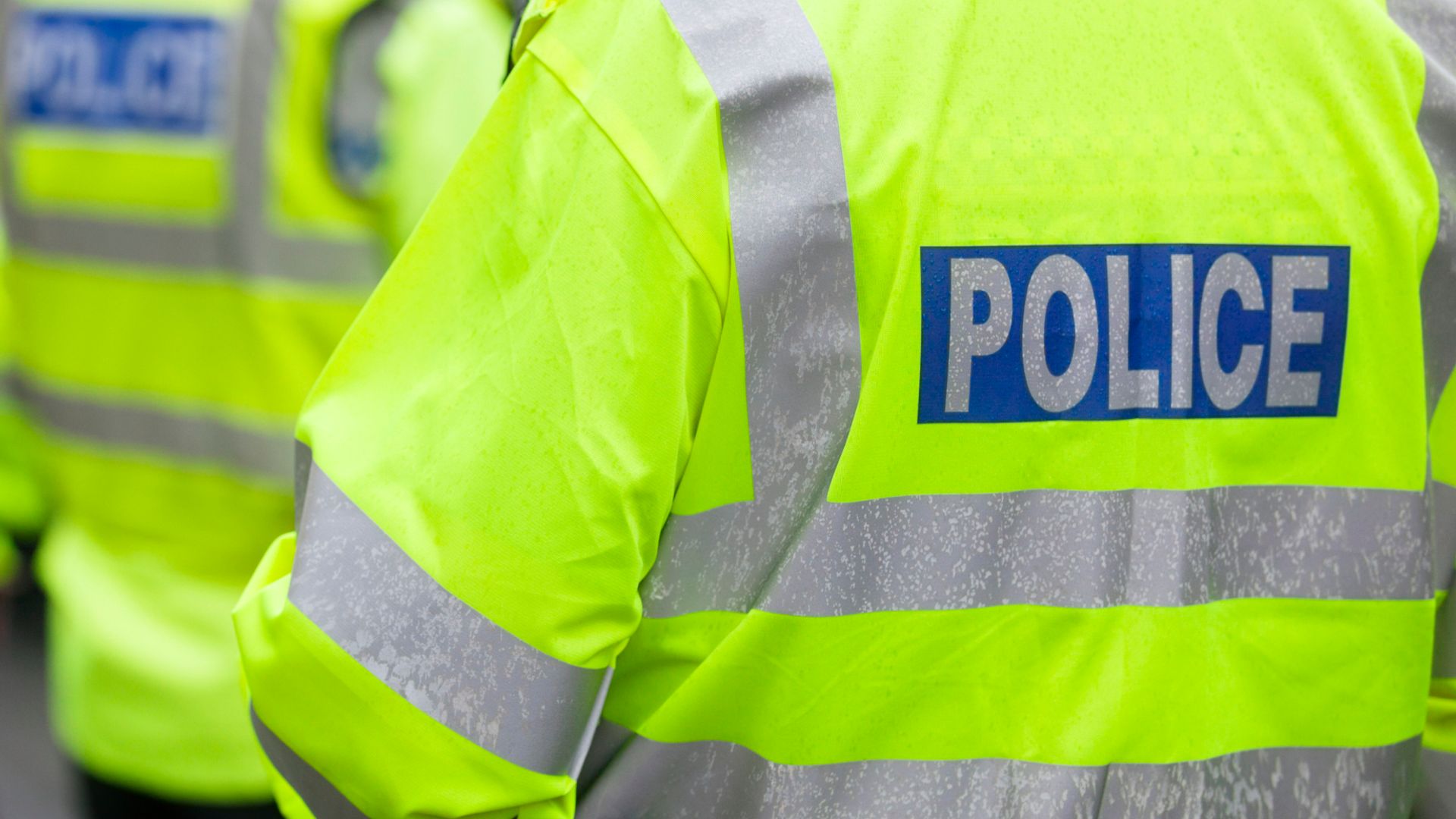
A man lies unresponsive on the grass of a public park, the morning dew still fresh on his clothes. By the time emergency services arrive, the scene has shifted from a medical emergency to a cordoned-off crime scene. Within hours, a woman is taken into custody. These are the skeletal facts of a homicide investigation that has gripped the local community, but the dry police bulletins hide a much grittier reality about the state of modern urban policing and the systemic failures that lead to such violent outbursts in broad daylight.
Public parks are supposed to be the "lungs" of a city, neutral ground where the social contract remains intact. When that contract is shredded by a fatal encounter, it isn't just a tragedy for the victim and the accused. It is a loud, ringing alarm for a public safety infrastructure that is currently redlining. This specific arrest underscores a disturbing trend in violent crime statistics where the proximity of the suspect to the victim—and the lack of intervention prior to the fatal moment—points to a breakdown in local surveillance and community-based mental health support.
The Illusion of Surveillance and the Reality of Response
We are told we live in the most watched era of human history. Between doorbell cameras, municipal CCTV, and the ubiquitous smartphone, the idea of a "dark corner" in a public park seems like a relic of the 1970s. Yet, this man was found unresponsive in a space that should have been under constant, if passive, observation. The arrest of a female suspect shortly after the discovery suggests that while technology may help close a case, it is doing very little to prevent the initial act of violence.
The gap between a crime occurring and an arrest being made is narrowing, thanks to digital footprints. However, the deterrent effect of these tools is cratering. Investigations now rely heavily on forensic data recovery and backtrack mapping of mobile devices. If a suspect is apprehended within hours, it usually means they were already "in the system" or their movements were so unrefined that they remained within the geofence of the crime. This isn't high-level criminal mastermind work. It is the raw, messy, and often impulsive fallout of individuals living on the edge of society.
Gender Dynamics and the Profile of Modern Homicide
Standard crime reporting often glosses over the statistical anomalies of a female suspect in a violent murder case. While the vast majority of homicides are committed by men, when a woman is arrested in connection with a body found in a public space, the investigative focus usually shifts toward domestic ties or long-term disputes. Law enforcement sources, speaking on the condition of anonymity due to the ongoing nature of the case, indicate that "crimes of passion" or "interpersonal volatility" are the primary drivers in these specific scenarios.
The man found in the park was not a random target of a predatory mugging. In these instances, the suspect and the victim are almost always known to each other. The park becomes the venue not because it is a hunting ground, but because it is a place where people who lack private spaces—due to housing instability or social displacement—conduct their lives. When a private argument moves into a public park, the results can be fatal because there are no walls to contain the escalation.
The Mechanics of an Arrest
Making an arrest in a murder investigation is a delicate surgical operation. It requires more than just a hunch. Investigators had to secure enough probable cause to deprive a citizen of their liberty, which in this case likely involved a combination of witness testimony, biological evidence found at the scene, and perhaps most crucially, the suspect’s own movements captured on local transit or business cameras.
The speed of the arrest in this case points to a high degree of confidence from the District Attorney’s office. They aren't just looking for a person of interest; they are building a narrative of intent. To prove murder, the state must demonstrate that the act was not an accident or a legitimate case of self-defense. This is where the forensic details of the "unresponsive" state of the victim become paramount. The specific nature of the injuries will dictate whether this was a momentary lapse into violence or a premeditated act.
Municipal Negligence and the Death of Local Patrols
There is a hard truth that city officials rarely want to discuss. The "broken windows" theory of policing has been replaced by a "reactive only" model. Officers are no longer walking beats in parks; they are responding to 911 calls from their cruisers. This creates a vacuum. When law enforcement is only present after the tape is up and the body bag is zipped, the park ceases to be a safe public square and becomes a high-risk zone for the vulnerable.
The man found in the park is a symptom of a larger municipal rot. If the local government cannot guarantee safety in its most visible communal spaces, the entire concept of urban living begins to sour. We see an increase in private security firms being hired by wealthy neighborhood associations to patrol the perimeter of public parks—a privatization of safety that leaves those who cannot afford it at the mercy of the elements and the impulsive.
Resource Allocation vs. Public Outcry
Following an arrest like this, the typical political response is a temporary surge in patrols. This is "performative policing." It lasts for two weeks, calms the local news cycle, and then the resources are diverted back to the downtown core or the high-revenue traffic corridors. It does nothing to address the underlying reasons why a man ended up dead and a woman ended up in handcuffs on a Tuesday morning.
The investigation will now move into the discovery phase. Lawyers will argue over the admissibility of evidence, and the media will move on to the next tragedy. But the residents who live near that park are left with the knowledge that their backyard was the site of a life-ending struggle. They are left wondering if the "unresponsive" man could have been saved if a single person of authority had been present ten minutes earlier.
The Biological Reality of the Crime Scene
When a person is described as "unresponsive," it is often a sanitized term for a gruesome reality. Forensics teams must determine the exact time of death to verify the suspect’s alibi. In an outdoor environment, this involves calculating ambient temperature, insect activity, and the rate of lividity. It is a cold, hard science that strips away the emotion of the event to provide a timeline that can withstand a cross-examination in court.
The woman currently in custody is facing the full weight of this scientific scrutiny. If her DNA was found under the victim's fingernails, or if his blood was found on her clothing, the "investigation" becomes a formality. The real work then shifts to the motive. Was this a case of a relationship turned sour, or is there a darker undercurrent of narcotics and mental health abandonment at play?
The Cost of Silence
In many of these cases, someone saw something. A loud argument at 3:00 AM. A figure running toward the street. The "bystander effect" remains a potent force in urban environments. People are often too afraid to call the police, fearing they will be drawn into a lengthy legal process or face retaliation. This silence is what allows violence to reach its terminal point.
The arrest is a victory for the police department’s clearance rate, but it is a failure for the community's safety net. Every time a body is found in a park, it represents a moment where the system could have intervened but chose to look the other way.
High Stakes in the Courtroom
The transition from a police investigation to a criminal prosecution is where the cracks in the case usually appear. The defense will likely lean into the lack of direct eyewitnesses to the act itself, especially if the arrest was based on circumstantial evidence. They will paint the suspect as a victim of circumstances or suggest that the victim’s own actions precipitated the tragedy.
This is the standard playbook. However, the prosecution has the advantage of the physical scene. Public parks are rarely cleaned with the clinical precision required to hide a murder. There is always a stray fiber, a dropped item, or a digital trail that binds the suspect to the location. The arrest was the first step in a very long march toward a verdict that will likely satisfy no one.
The man is still dead. The park is still there. The woman is behind bars. The fundamental issues of how we manage our public spaces and protect the people within them remain entirely unaddressed, waiting for the next headline to break.
Demand a full audit of your local park’s security protocols and lighting infrastructure before the next "unresponsive" person is found in your neighborhood.