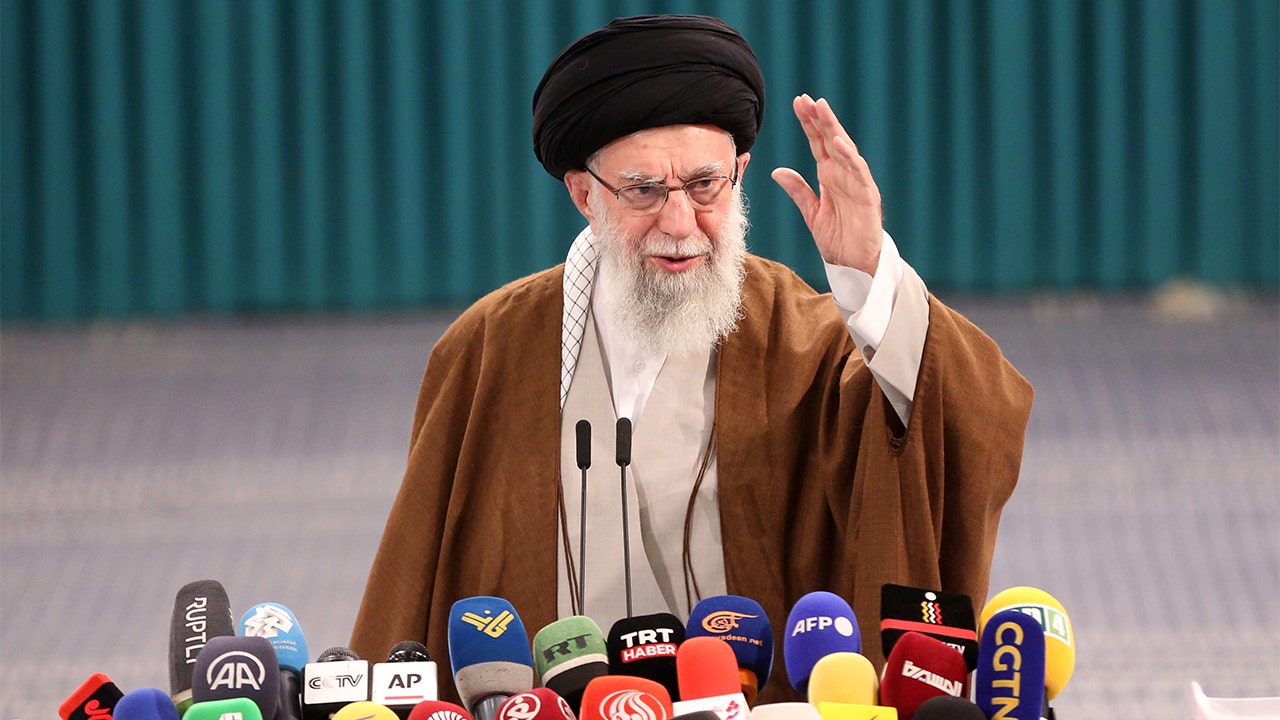
The headlines are screaming about a regional conflagration. They tell you that Iran hitting a Saudi airbase and the Houthis launching drones at Israel marks a terrifying new era of Persian hegemony. They want you to believe we are witnessing a coordinated, unstoppable "Axis of Resistance" flexing its muscles to redraw the map of the Middle East.
They are wrong. For a different look, see: this related article.
What we are actually seeing is a desperate, cash-strapped regime in Tehran playing its last few cards because the table is about to be flipped. This isn't a show of power. It’s a high-stakes distraction. When a regional power starts activating every proxy simultaneously, it isn't because they are winning the long game; it’s because they’ve realized the long game is already lost.
The Myth of the Strategic Masterstroke
Mainstream analysis treats every Houthi drone or IRGC missile as part of a grand, decades-long chess match. This "lazy consensus" presumes that Tehran is a rational, unified actor with a clear, linear path to regional dominance. Similar analysis on the subject has been shared by The Washington Post.
If you’ve spent any time tracking the actual internal dynamics of the Iranian state, you know the truth is far messier. The "Axis of Resistance" is not a disciplined army; it’s a loose collection of militias with competing local interests. When the Houthis target Israel, they aren't doing it just for the sake of the Palestinian cause. They are doing it because their domestic legitimacy in Yemen is cratering. They need a foreign enemy to justify their continued, brutal occupation of Sana'a.
Tehran is not a mastermind pulling strings. It’s a weary bankroller of regional chaos that can no longer afford the bills.
- The Economic Reality Check: Iran’s inflation rate has hovered near 40% for years. The rial is a joke. The "gray market" economy is the only thing keeping the lights on.
- The Demographic Ticking Bomb: Over 60% of the Iranian population is under 30. They don’t want a regional caliphate; they want high-speed internet, jobs, and a government that doesn't beat them for how they wear a scarf.
- The Saudi Pivot: While headlines fixate on the airbase strike, they ignore the fact that Riyadh and Tehran have been in a quiet, fragile rapprochement. This strike isn't a declaration of war; it’s a desperate attempt by hardliners in the IRGC to sabotage their own diplomats.
Why the Saudi Strike is a Tactical Blunder
The strike on a Saudi airbase is being framed as a show of force. I’ve seen this movie before. In 2019, when the Abqaiq–Khurais attack knocked out half of Saudi Arabia’s oil production, the world thought the House of Saud was finished. Instead, it accelerated the Kingdom's "Vision 2030" pivot.
Attacking Saudi soil in 2026 is the ultimate unforced error. It forces the Gulf Cooperation Council (GCC) back into the arms of the West just as they were starting to look toward China and Russia for a "post-American" security architecture. Tehran has just reminded every monarch in the Gulf why they need the U.S. Fifth Fleet and why the Abraham Accords—as much as the street might protest them—are a strategic necessity for the ruling elites.
The Houthi Israel Strategy is a Dead End
The Houthis entering the war to "target Israel" is the geopolitical equivalent of a Hail Mary pass.
- Distance and Tech: Yemen is over 1,000 miles from Israel. To hit anything meaningful, the Houthis have to bypass Saudi and Jordanian air defenses, U.S. Navy destroyers in the Red Sea, and the most sophisticated multi-layered missile defense system on the planet (Arrow, David’s Sling, Iron Dome).
- The Logistics of Failure: Every drone the Houthis fire is a drone they don't have for their own domestic insurgencies. They are burning through their inventory for a PR win that has zero impact on the actual military balance in the Levant.
- The Proxy Trap: By dragging the Houthis into a direct confrontation with Israel, Iran is exposing its most valuable southern asset to a level of Israeli intelligence and kinetic response they are not prepared for.
Dismantling the Premise of "Regional War"
People also ask: "Is this the start of World War III in the Middle East?"
The premise of the question is flawed. A "regional war" requires two sides capable of sustaining a multi-front, high-intensity conflict. Iran’s conventional military is a museum. Their air force is flying 1970s-era Phantoms and F-14s. Their navy is a collection of speedboats and aging frigates.
Tehran knows this. Their entire strategy is built on "gray zone" warfare because they cannot win a "red zone" war. They use proxies precisely because they cannot afford a direct confrontation. When you see them activating those proxies so aggressively, it’s a sign that the gray zone is shrinking.
The world isn't watching an expansion of Iranian power. We are watching the messy, violent contraction of a regime that has overextended itself.
The Business of Conflict Who Actually Profits?
While the media focuses on the "war," the smart money is looking at the energy and insurance markets.
- The Risk Premium Scam: Global oil prices often spike on these headlines. But notice how quickly they stabilize? The market has priced in Iranian aggression. It’s no longer a "black swan" event; it’s a Tuesday.
- The Defense Industry Boom: The real winners here aren't in Tehran or Riyadh. They are in the boardrooms of defense contractors. Every Houthi drone intercepted is a multi-million dollar paycheck for the West's military-industrial complex.
Imagine a scenario where Tehran actually succeeded in shutting down the Strait of Hormuz. They would commit economic suicide. 80% of their own meager exports would vanish overnight. They are holding a gun to their own head and telling the world to watch out.
The Unconventional Truth
Stop looking at the maps of missile trajectories and start looking at the maps of the Iranian Rial.
The Iranian leadership is terrified. They are terrified of a young, restless population that has lost its fear of the "morality police." They are terrified of a Saudi Arabia that is successfully diversifying its economy while Iran remains a pariah. They are terrified of an Israel that has shown it can strike anywhere, anytime, with surgical precision.
This regional escalation is a desperate "look over there!" tactic. It is designed to rally the domestic population around the flag and to force the international community back to the negotiating table to beg for a de-escalation that Tehran will then sell for sanctions relief.
Stop Asking if Iran will Win
The question isn't whether Iran will win. The question is how much damage they will do on their way down.
The "Axis of Resistance" is a house of cards held together by outdated ideology and dwindling oil wealth. The strike on the Saudi airbase wasn't a masterstroke; it was a scream for attention. The Houthi involvement isn't a game-changer; it’s a nuisance that will eventually lead to their own dismantling.
If you want to understand the Middle East, stop reading the "analysis" of people who think this is 1979. We are in 2026. The old rules are dead. The proxies are tired. The bank is empty.
Get out of the fear-mongering cycle. The real story isn't the war that's starting; it's the regime that's ending.
Don't buy the hype of a new regional hegemon. Iran is a sunset power fighting a losing battle against time, economics, and its own people. Every missile launched is just another brick falling off the wall.
Watch the Rial. Watch the protests in the provinces. Ignore the drones.