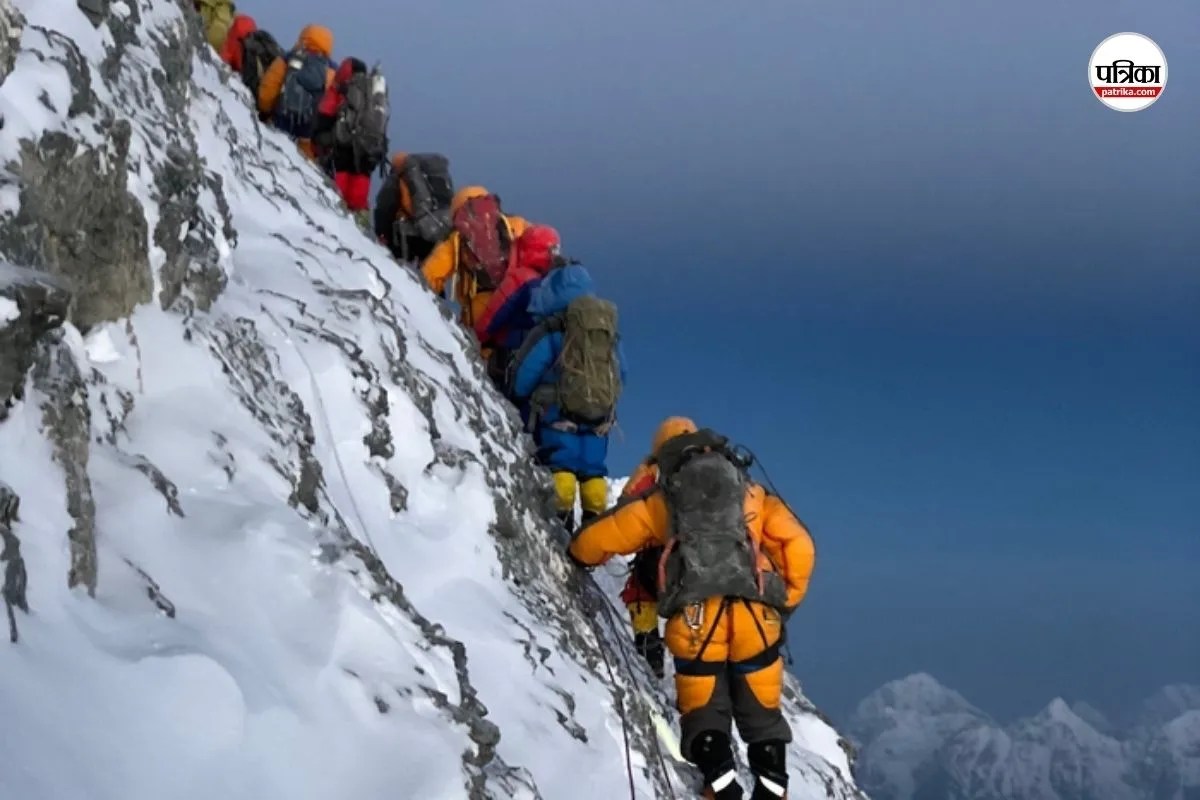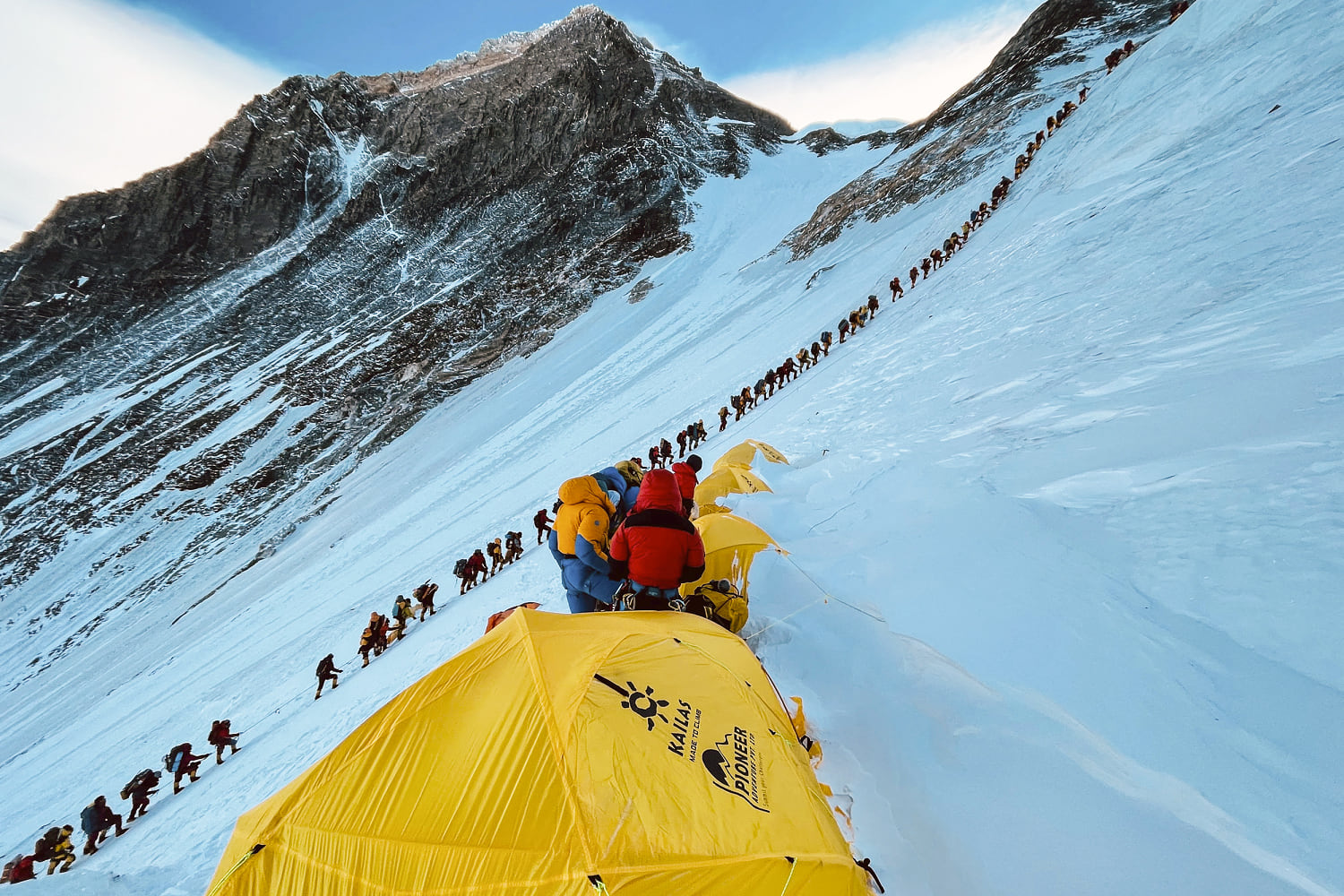
The air at 26,000 feet doesn't just lack oxygen; it lacks mercy. Your lungs scream for a substance that isn't there. Every step feels like dragging a concrete block through thick syrup. In this place, known as the Death Zone, the human body is literally dying, cell by cell. You are a ghost in waiting.
Imagine a young climber named Elias. He saved for six years, skipped weddings, and worked double shifts at a warehouse to afford his dream of standing on the roof of the world. He isn't an elite athlete; he is a man with a mortgage and a mountain-sized obsession. He paid his $11,000 permit fee, bought his gear, and secured a high-altitude insurance policy meant to be his ultimate safety net.
Then, the coughing starts.
It is a wet, rattling sound that signals the beginning of High Altitude Pulmonary Edema (HAPE). His guide looks at him, not with concern, but with a predatory calculation. The guide knows Elias is sick, but perhaps not sick enough to die—at least not yet. But the guide also knows that a helicopter evacuation from Base Camp or higher costs a fortune. And in the shadowy world of the Himalayas, that helicopter is a flying ATM.
The Invisible Architecture of the Heist
What Elias doesn't know is that he has walked into a $20 million web of corruption. This isn't just a story about a few dishonest guides. It is a vertical syndicate involving trekking agencies, helicopter charter companies, and even private hospitals in Kathmandu.
The scam is breathtakingly simple.
Trekking companies offer "budget" Everest climbs at prices that seem too good to be true. They make up the lost profit by overcharging insurance companies for emergency rescues. To do this, they need "victims."
Guides have been caught spiking the food of their clients with baking soda—a laxative that causes severe stomach distress—or even small amounts of contaminants to induce vomiting. Once the climber is weak, the guide insists on an immediate, life-saving helicopter evacuation. The climber, terrified and gasping for air, always says yes.
The Price of a Life
When that helicopter touches down, the meter starts running at a furious pace. A standard flight that should cost $3,000 is billed to the insurance provider at $15,000 or $20,000. These invoices are often padded with "ghost" passengers or exaggerated flight hours.
Consider the sheer scale of the graft. Investigators found that some agencies were billing for multiple rescues that occurred simultaneously using the same helicopter—a physical impossibility. Others were charging for high-altitude pickups that actually took place at much lower elevations where the cost is a fraction of the price.
Behind the polished desks of insurance firms in London and New York, the red flags began to pile up. Why were there more rescues on Everest than on all other 8,000-meter peaks combined? Why were certain hospitals in Kathmandu seeing an influx of patients who seemed remarkably healthy just hours after being "rescued" from the brink of death?
The hospitals are the final link in the chain. These facilities often provide kickbacks to the trekking agencies for every "patient" delivered to their doors. Once admitted, the climbers are subjected to unnecessary tests and prolonged stays, all billed back to the insurance company. It is a closed loop of greed where the climber is the product, not the client.
Trust is the First Casualty
For the genuine mountaineer, the stakes are higher than a bank account balance. Mountaineering relies on a sacred, unspoken contract: your guide is your lifeline. You trust them with your pulse. When that trust is commodified, the mountain becomes even more dangerous than the weather or the crevasses.
Think about the pilot.
Flying a helicopter in the thin, turbulent air of the Himalayas is one of the most dangerous jobs on Earth. Every unnecessary flight is a roll of the dice with the pilot's life and the lives of those on the ground. When the system is flooded with fraudulent calls, the pilots become exhausted. Maintenance schedules are pushed to the limit.
Then comes the boy who cried wolf.
When insurance companies begin to balk at the constant stream of high-dollar claims, they tighten the rules. They demand more proof. They delay approvals. Now, imagine a climber who is actually dying. A climber whose brain is swelling with High Altitude Cerebral Edema (HACE). They need a bird in the air now. But the underwriter in a climate-controlled office halfway across the globe is hesitating because the last ten claims from that agency were fraudulent.
The scam doesn't just steal money. It steals time. In the Death Zone, time is the only currency that matters.
The Cultural Cost of the Grift
Nepal is a country of immense beauty and profound poverty. The Everest industry is its crown jewel, providing thousands of jobs and millions in revenue. But this corruption threatens the very foundation of its tourism.
The local Sherpa community, known globally for their courage and integrity, finds its reputation tarnished by the actions of a few predatory operators. Most Sherpas are the heroes we imagine them to be, risking their lives to fix ropes and carry loads for strangers. They are the ones who suffer most when the world begins to view Himalayan trekking as a racket rather than a pilgrimage.
The Nepalese government has made several attempts to crack down on the "Rescue Mafia." They have issued directives, formed committees, and threatened to pull licenses. Yet, the money is so loud that the law often struggles to be heard. The lure of a $5,000 kickback is powerful in a region where the average annual income is a fraction of that.
The Moral Low Ground
We often talk about Everest as the ultimate test of human character. We look at the photos of the colorful tents at Base Camp and think of endurance, grit, and the pursuit of the sublime. We rarely talk about the spreadsheets.
The real tragedy isn't just the $20 million drained from insurance pools. It is the cynical exploitation of human vulnerability. When you are at your weakest, when you are most afraid, you are also most profitable.
Elias eventually made it home. He didn't reach the summit. He was whisked away in a helicopter he didn't strictly need, treated for an illness that might have passed with a few days of rest at a lower camp, and handed a bill that his insurance company fought for eighteen months. He felt a sense of shame, as if he had failed the mountain. He didn't realize the mountain hadn't failed him—the people on it had.
The insurance companies are now fighting back. Some have threatened to stop covering Nepal altogether. Others are requiring pre-approved lists of "trusted" providers. The wild west of high-altitude rescue is slowly being fenced in, but the scars remain.
The next time you see a photo of a climber silhouetted against the rising sun on the South Col, look past the Gore-Tex and the oxygen mask. Look at the invisible lines connecting that climber to a hospital in the city, to a helicopter hangar in the valley, and to a bank account in a tax haven.
The mountain remains indifferent to our presence. It doesn't care about our flags or our feats. It certainly doesn't care about our insurance policies. The wind still howls across the Lhotse Face, oblivious to the fact that, for some, the summit is just a backdrop for a heist.
The summit is optional. Getting down is mandatory. But in the modern era of Everest, the most dangerous part of the journey might not be the climb up, but the ride down.
The helicopter rotors begin to turn, slicing through the thin air, carrying another "rescue" toward a waiting invoice.