The primary failure in travel contingency planning during Middle Eastern geopolitical escalations is the reliance on "reactive" logic rather than "systemic" risk assessment. When kinetic conflict flares between regional state actors, the window for civilian extraction shrinks not linearly, but exponentially. For Hong Kong residents, this risk is compounded by a specific dependency on high-traffic transit hubs like Dubai (DXB), Doha (DOH), and Istanbul (IST), which serve as the primary arterial connectors to East Asia. Navigating these disruptions requires a shift from passive monitoring of news cycles to an active management of three critical variables: airspace sovereignty, financial liquidity in disrupted markets, and the legal hierarchy of consular protection.
The Tri-Lens Risk Matrix
Effective crisis management for travelers operates through three distinct layers of impact. Most travelers focus only on the immediate logistical layer, ignoring the structural and financial pressures that dictate whether they actually reach home.
1. The Kinetic Layer: Airspace and Infrastructure
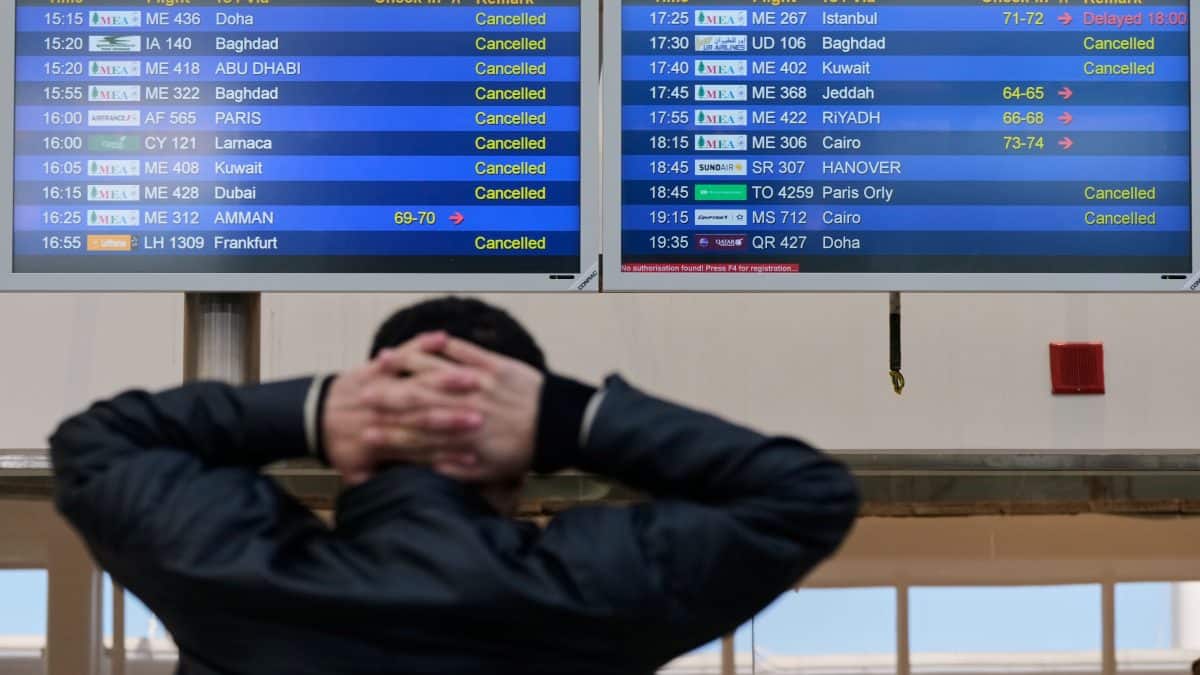
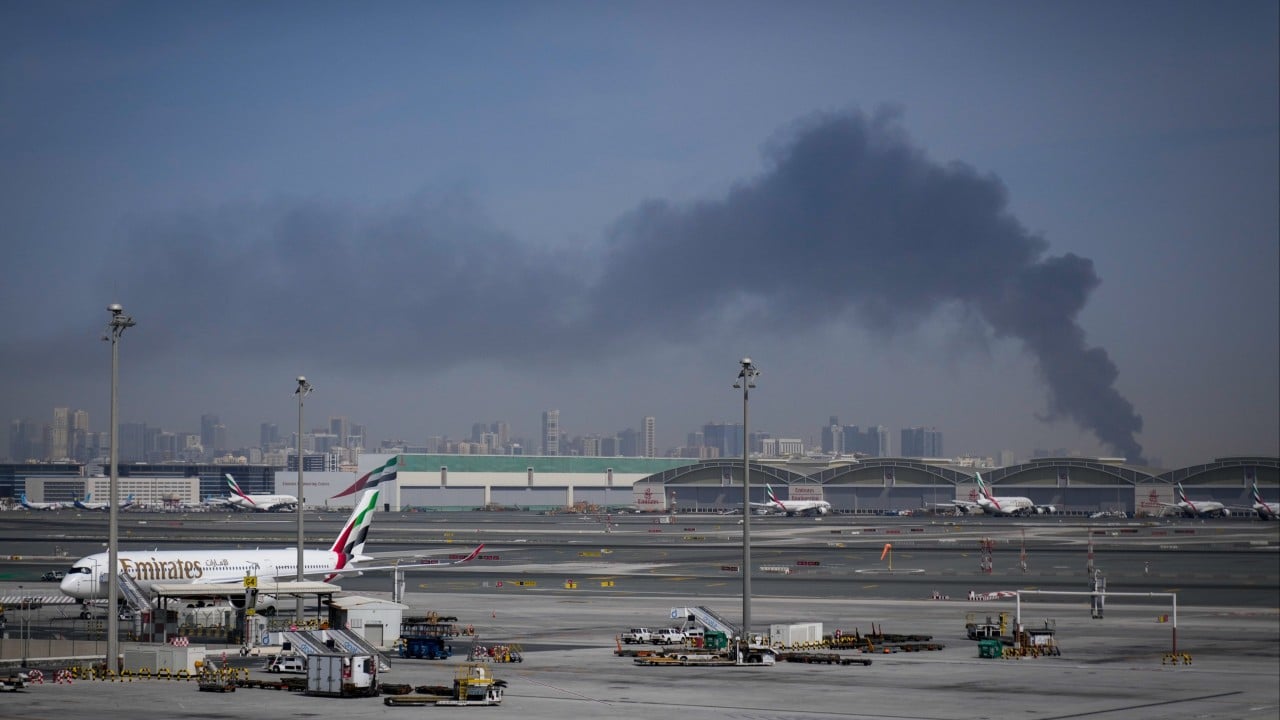
Airspace closures in the Middle East follow a "domino effect" pattern. If Iranian or Israeli airspace shuts down, the resulting congestion in "safe corridors" (such as those over Saudi Arabia or Egypt) creates a bottleneck that triggers mass cancellations far beyond the immediate conflict zone. Hong Kong travelers must calculate the Turnaround Vulnerability of their specific carrier.
Cathay Pacific, for instance, maintains different operational risk tolerances compared to Gulf carriers like Qatar Airways or Emirates. While a Gulf carrier might continue flying by rerouting, they are more susceptible to regional ground-stop orders. Conversely, an international carrier might preemptively cancel all flights to avoid the liability of its crew being stranded.
2. The Institutional Layer: Document and Consular Hierarchy
The "Hong Kong traveler" is not a monolithic legal entity. The speed of your extraction depends on the travel document held:
- HKSAR Passport Holders: Rely on the Chinese Embassy and the Immigration Department (ImmD) "1868" assistance system.
- BN(O) Holders: Fall into a complex diplomatic gray area where the UK may provide consular assistance, but the HKSAR and Chinese authorities do not recognize the document for official travel purposes.
- Dual Nationals: Often find that "Master Nationality" rules apply; if you are in a country where you hold citizenship, your other citizenship (and its embassy) may be unable to intervene.
3. The Liquidity Layer: The Failure of Digital Systems
In a high-intensity conflict, the first casualty is often the reliability of the SWIFT network and local point-of-sale (POS) systems. Travelers often find themselves "digitally stranded"—possessing wealth in a Hong Kong bank account that is inaccessible because local merchant infrastructure has defaulted to cash-only operations or has been severed from global gateways.
The Logistics of Extraction: Structural Bottlenecks
A common misconception is that a ticketed passenger has a "right" to a seat during a force majeure event. In reality, airlines operate under a hierarchy of priority during mass disruptions.
The Seat Allocation Priority Hierarchy
When capacity is slashed by 70% due to airspace restrictions, seat priority follows a rigid internal logic:
- Government-chartered evacuees: Often utilizing civilian hulls under emergency contracts.
- Full-fare Business/First Class passengers: High-yield customers receive the first available re-bookings.
- Elite Status Tier holders: Loyalty program ranking often outweighs the date of the original ticket.
- Economy Flex/Standard: Bulk passengers who are frequently bumped to later dates.
The Transit Hub Trap
For those connecting through Doha or Dubai, the risk is the "airside limbo." If a flight to Hong Kong is cancelled while you are in transit, you are effectively in a legal vacuum. Without a valid visa for the transit country, you cannot exit the airport to find a hotel if the airport lounges are at 300% capacity. Hong Kong travelers should prioritize direct flight paths or Western-hub connections (e.g., flying via London or Frankfurt) even at a 40% price premium, as these routes move away from the conflict epicenter rather than through it.
Financial Resilience and Insurance Gaps
Standard travel insurance policies often contain an "Act of War" or "Civil Commotion" exclusion clause. These clauses are the most misunderstood element of travel risk.
The Determinative Factor: The Red Outbound Travel Alert (OTA)
The Hong Kong Security Bureau’s OTA system acts as a binary switch for many insurance providers.
- Pre-existing Alert: If you purchase a policy after an Amber or Red alert is issued for a destination (e.g., Lebanon or Israel), the "known event" doctrine applies. The insurer will likely deny claims related to that specific conflict because the risk was not "unforeseen."
- Post-Departure Escalation: If an alert is upgraded while you are in-country, coverage for "curtailment" (cutting the trip short) typically kicks in. However, this coverage rarely covers the full cost of an emergency private charter or a $30,000 last-minute Business Class seat.
The Cash-on-Hand Requirement
Digital nomads and business travelers from Hong Kong frequently lack local currency (NIS, JOD, or AED). In an escalation, the exchange rate for the HKD or USD in local "black market" or informal kiosks will deviate sharply from the official mid-market rate. A strategic reserve of $1,000 USD in physical, small-denomination bills is a non-negotiable requirement for traversing these zones. It functions as a "friction reducer" for local transport, bribes, or securing private accommodation when digital platforms like Airbnb or Booking.com fail.
Tactical Communication Protocols
The Hong Kong Immigration Department's "Assistance to Hong Kong Residents Unit" (AHU) is the primary contact, but it is a reactive body. To maximize the efficiency of this resource, travelers must provide "data-ready" communications.
The Minimum Viable Information (MVI) Packet
When contacting the 1868 hotline or using the WhatsApp assistance number, the first message must contain:
- GPS coordinates or a precise street address.
- Passport number and expiry date.
- Current visa status (on-arrival, e-visa, or residence permit).
- Immediate medical requirements or life-safety threats.
- Evidence of a confirmed return ticket (PNR number).
Vague pleas for help are triaged lower than structured data packets that allow a desk officer to immediately slot the traveler into an extraction manifest.
Alternative Pathing: The "Reverse-West" Strategy
If the primary route to Hong Kong via the Middle Eastern hubs is severed, the logical move is not to wait for a resumption of service. The "Reverse-West" strategy involves flying in the opposite direction of the conflict, even if it adds 15 hours to the journey.
Primary Alternative Corridors:
- The Mediterranean Exit: Moving via ground or short-haul flight to Cyprus or Greece, then connecting to Hong Kong via a European hub (LHR, CDG, AMS).
- The Central Asian Pivot: Routing through Tashkent or Almaty. These hubs are increasingly serving as stable bypasses for Middle Eastern airspace, though frequency to Hong Kong is lower.
- The African Connection: Utilizing Ethiopian Airlines via Addis Ababa. While geographically counter-intuitive, ADD maintains high-frequency links to both the Middle East and East Asia, bypassing the Persian Gulf bottleneck entirely.
Strategic Recommendation for Immediate Deployment
For those currently in the Middle East or with imminent travel scheduled:
- Audit the "Exclusion" Clause: Contact your insurer and ask specifically: "Does this policy cover the cost of a new return ticket if the Security Bureau raises the OTA to Black after my arrival?" If the answer is no, secure a "cancel for any reason" (CFAR) policy immediately, though these are rare and expensive in the HK market.
- Dual-Track Booking: If a conflict appears imminent, hold a fully refundable "shadow ticket" on a carrier that does not use the same transit hub as your primary flight. For example, if your primary is Emirates (DXB), hold a refundable seat on Turkish Airlines (IST) or Lufthansa (FRA).
- Physical Document Redundancy: Keep high-resolution photocopies of your HKSAR passport and HKID on a non-cloud-dependent encrypted USB drive. Cloud services may be throttled or blocked during a state of emergency.
- The 72-Hour Rule: If the Security Bureau issues a Red Alert, you have a maximum of 72 hours before commercial capacity is completely absorbed by the market. The cost of a ticket at Hour 2 is $8,000 HKD; by Hour 48, it is $45,000 HKD, if it exists at all. Execute the exit strategy at the first sign of institutional warning, rather than waiting for physical signs of escalation.
The most effective extraction is the one that occurs via a standard commercial gate 24 hours before the military closure of the airport. Professional travelers treat travel alerts not as suggestions, but as the first data point in a terminal countdown.