The decision by Goldman Sachs and Citigroup to pivot their Paris-based workforces to remote operations following a security breach at a peer institution reveals a fundamental shift in the Risk-Adjusted Operational Cost of physical office space. This is not a reactive measure of convenience; it is a calculated hedging strategy against the systemic vulnerabilities of high-concentration financial hubs. When a physical threat targets the banking infrastructure of a global city, the immediate "security risk premium" for maintaining on-site staff increases to a point where the marginal productivity of in-person collaboration is outweighed by the potential for catastrophic human and data capital loss.
The Triad of Institutional Vulnerability
The shift to remote work in the wake of a foiled attack demonstrates three distinct categories of risk that modern financial institutions must mitigate simultaneously.
1. Physical Capital Risk
Large investment banks represent centralized nodes of economic power. These locations are symbolic targets for non-state actors or individuals seeking to disrupt global markets. The "foiled" nature of the attack in Paris suggests a persistent threat environment where the efficacy of local law enforcement becomes a primary variable in the bank’s internal safety audits. If the external security environment cannot guarantee a zero-breach probability, the institution must remove the target: the personnel.
2. Operational Continuity Risk
A successful or even attempted attack triggers a total shutdown of the physical site for forensic investigation and structural repair. By preemptively moving to remote work, Goldman and Citi are stress-testing their Distributed Resilience Model. They are ensuring that the business logic—trading, M&A advisory, and risk management—can function without a central physical heartbeat. This prevents a "double loss" where an institution suffers both physical damage and a total cessation of revenue-generating activities.
3. Human Capital Preservation
In the talent-sparse environment of high finance, the "Life-Safety Value" of an MD-level trader or a specialist analyst is immeasurable. The legal and reputational liability of requiring staff to commute into a zone with active, identified threats is a liability that no Chief Operating Officer (COO) is willing to carry. The decision to work from home is an act of Liability Offloading, transferring the safety responsibility from the corporate perimeter to the employee's domestic environment.
The Cost Function of Sudden Decoupling
Moving a banking operation to remote status within hours is not a friction-less process. It incurs a set of immediate and structural costs that vary based on the duration of the threat.
- Network Latency and Security Overheads: Remote access via VPN or virtual desktop infrastructure (VDI) introduces micro-latencies. In high-frequency trading or complex execution environments, a delay of 20 milliseconds can alter the execution price. Furthermore, the "Attack Surface" expands when employees access sensitive systems from home networks, necessitating a surge in cybersecurity monitoring.
- Knowledge Transfer Degradation: Information in banks often moves through "informal corridors." The loss of serendipitous data exchange—the verbal cues between desks—creates an immediate drop in situational awareness across the floor.
- Regulatory Compliance Friction: French and EU regulations regarding data privacy (GDPR) and financial auditing require strict controls over how data is viewed and stored. Moving to remote work requires a rapid audit of whether home setups meet the "Clean Desk" and "Secure Environment" standards mandated by the AMF (Autorité des marchés financiers).
The Proximity Paradox in Global Finance
For decades, the banking industry argued that physical proximity was the primary driver of market efficiency. The Paris incident forces a re-evaluation of this premise. We are witnessing the emergence of the Proximity Paradox: the very density that allows for high-speed information flow also creates a concentrated vector for physical and digital disruption.
Banks are now forced to quantify the Security-Efficiency Trade-off.
The Security-Efficiency Equation
The decision to remain on-site ($S_{on}$) can be modeled as a function of Productivity ($P$) minus the Risk of Disruption ($R$):
$$S_{on} = P_{in-person} - (Probability_{attack} \times Severity_{impact})$$
The decision to move remote ($S_{off}$) is:
$$S_{off} = P_{remote} - Cost_{transition}$$
Institutions trigger the remote-work protocol the moment $S_{off} > S_{on}$. The "foiled" attack in Paris served as the catalyst that spiked the $Probability_{attack}$ variable, making the on-site model mathematically untenable in the short term.
Structural Realignment of the Paris Financial District
The broader implications for the Paris financial district, particularly around the 8th and 9th arrondissements, involve a permanent reassessment of "Trophy Assets." If Goldman Sachs and Citi can successfully pivot to remote work with zero impact on deal flow, the necessity for high-density, high-rent office space in the city center comes under scrutiny.
The second-order effect is the Spatial Dispersion of Risk. We may see a shift toward "Satellite Hubs"—smaller, hardened offices scattered around the outskirts of Paris—rather than a single, massive headquarters. This "Hub and Spoke" model reduces the impact of a single-point failure while maintaining some level of physical presence.
Hard-Path Security vs. Soft-Path Resilience
Financial institutions have historically relied on "Hard-Path" security: bollards, armed guards, and biometric access. The Paris incident demonstrates the limitations of this approach. Hard-path security is reactive; it only works if the threat reaches the perimeter.
Remote work is a "Soft-Path" resilience strategy. It acknowledges that the perimeter is porous and instead focuses on the elasticity of the organization. The fact that Goldman and Citi could announce remote work immediately suggests that their IT infrastructures have been in a state of "warm standby" since the 2020 pandemic. The pandemic was the dry run; the security threat is the live deployment of the strategy.
The Geopolitical Context of Private Security
The targeting of a bank in Paris is a signal of the Financialization of Conflict. Banks are no longer viewed merely as commercial entities; they are viewed as proxies for the Western economic order. This places banks in a difficult position where they must maintain their own intelligence-gathering capabilities. Large banks now employ former intelligence officers to monitor local police scanners and geopolitical chatter. The pivot to remote work in Paris likely happened minutes after a "Threat Red" alert was issued by internal security teams, possibly ahead of official government public notices.
This creates a two-tier security environment. The "protected" class of workers at global firms can retreat to the safety of remote work, while the support staff—building maintenance, security guards, and local service workers—remain at the physical epicenter of the risk. This creates an internal cultural tension that COOs must manage: the "Safety Gap" between those who can work from anywhere and those who must defend the empty towers.
Strategic Imperatives for the Transition Period
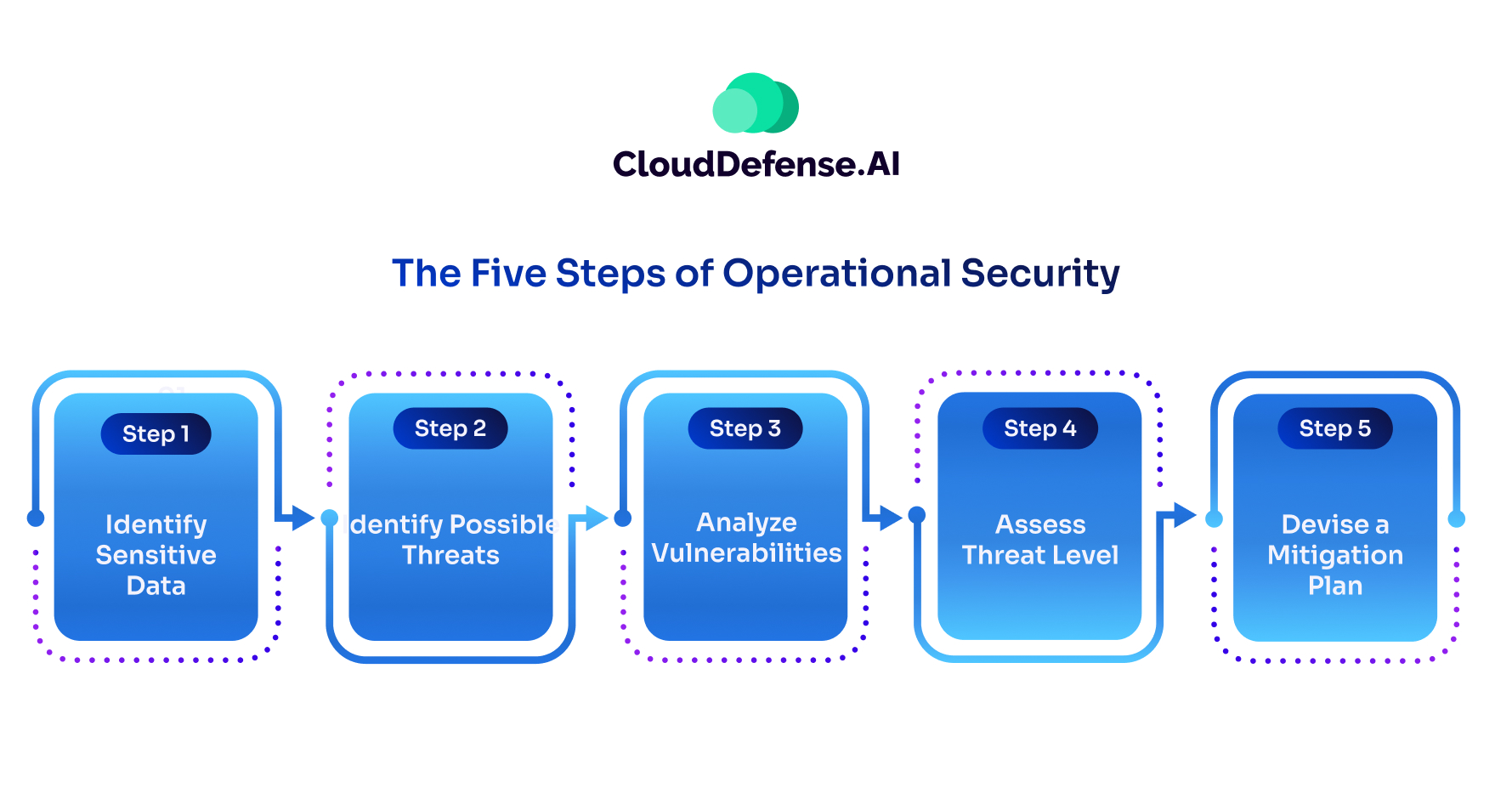
The immediate priority for the leadership at Goldman and Citi is not just "safety" but the Verification of Operational Integrity. This involves:
- Endpoint Hardening: Rapid deployment of advanced endpoint detection and response (EDR) on all devices leaving the office.
- Protocol Redundancy: Establishing secondary and tertiary communication channels (e.g., encrypted messaging apps outside of the bank’s internal email) to be used if the main network is compromised during a physical event.
- Human Verification: Implementing multi-factor authentication that includes a "Duress Signal" capability, allowing employees to signal they are being coerced at their home location.
The Paris incident is a precursor to a new era of Antifragile Banking. Firms will no longer seek to merely "resist" threats through physical barriers but will instead design their organizations to be "disappearance-ready." The ability to vanish from a physical location while maintaining a presence in the global markets is the new benchmark for institutional excellence.
The ultimate strategy for financial firms in high-risk zones is the abandonment of the "Command Center" mentality. The headquarters is no longer a site of production; it is a marketing asset and a site for occasional high-value socialization. The actual engine of the bank must remain geographically agnostic, capable of being re-instantiated in a new jurisdiction or a distributed cloud environment at a moment's notice. The firms that hesitate to decouple their operations from their physical addresses will be the ones that carry an unhedged, and eventually unpayable, security premium.