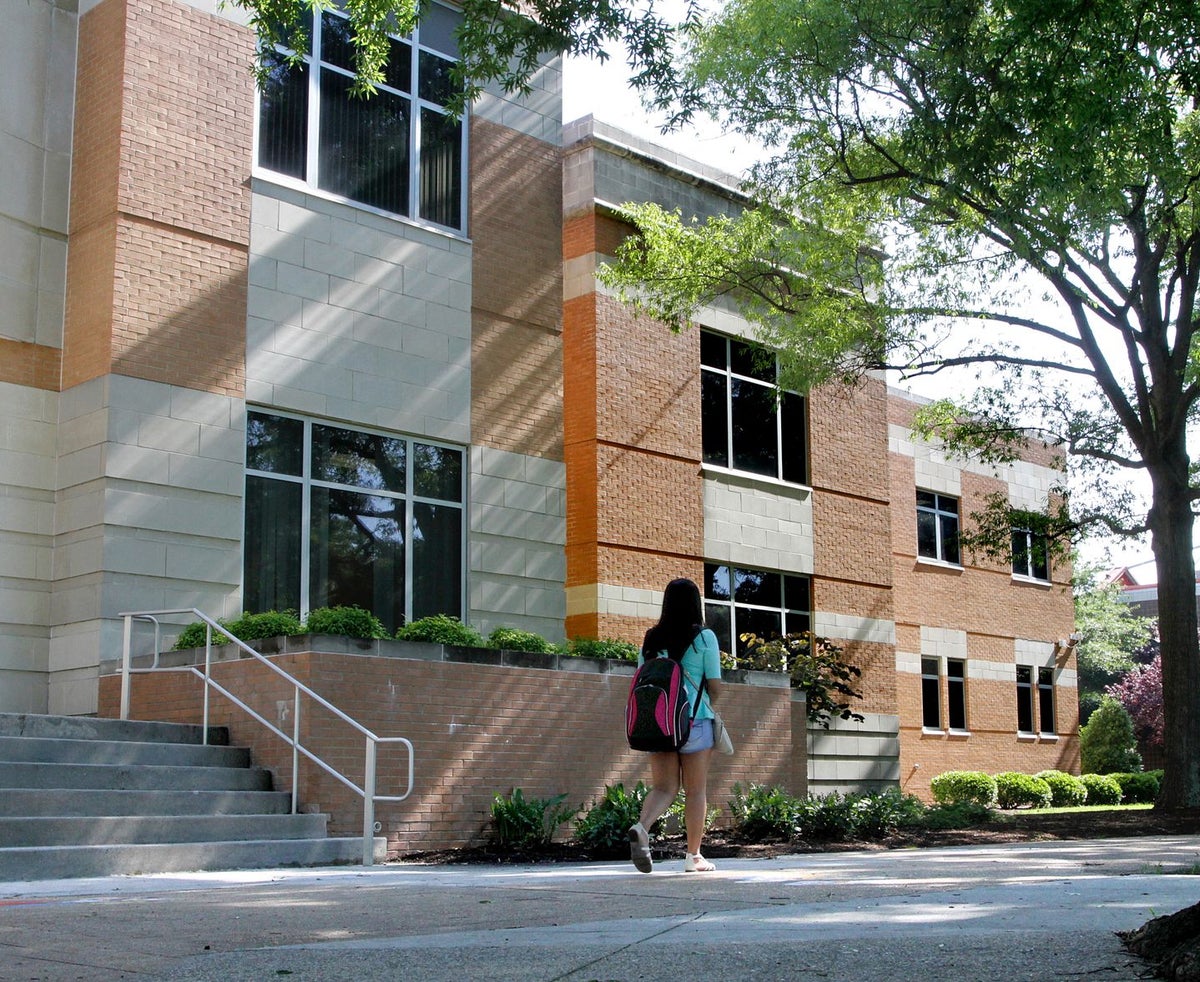
The survival rate in campus active shooter events is determined by the intersection of three variables: the velocity of the initial breach, the structural density of the immediate environment, and the latency of the neutralizing response. When an armed individual initiated an assault on the Bridgewater College campus in Virginia, the transition from a routine security interaction to a lethal engagement occurred in seconds. This compressed timeline exposes the inherent vulnerability in campus safety models that rely on decentralized security protocols.
To analyze the efficacy of a response, one must first deconstruct the anatomy of the incident through a clinical lens. The event was not a singular failure but a sequence of kinetic escalations that test the limits of modern law enforcement integration.
The Triad of Response Failure
Most institutional security analyses focus on the perpetrator's motivation, yet the outcome of such events is dictated by the operational mechanics of the scene. The effectiveness of any campus defense system rests on three pillars.
- Detection Latency: The time elapsed between the first suspicious observation and the formal notification of tactical responders. At Bridgewater, this period was shortened by the immediate presence of Campus Safety Officer J.J. Jefferson and Campus Police Officer John Painter. Their proximity transformed a potential mass-casualty event into a localized engagement, albeit at the cost of their lives.
- Engagement Friction: The physical and psychological barriers that prevent immediate neutralization. In a college setting, high foot traffic and complex architectural layouts create "visual noise" that shooters exploit to mask their movement.
- Command Convergence: The speed at which disparate agencies—State Police, local Sheriff departments, and Federal bureaus—establish a unified command structure.
The fatalities of the two officers highlight a critical flaw in the "soft-site" security philosophy. By positioning campus officers as the primary line of defense without the immediate tactical support of a rapid-response unit, institutions create a bottleneck where the first responders are often outgunned or tactically disadvantaged during the initial contact phase.
The Physics of the Kill Zone
The "active shooter" designation is a misnomer in the early stages of such events; it is more accurately described as a high-stakes encounter in a "transient environment." In the Bridgewater incident, the confrontation moved from an initial contact near Memorial Hall to a pursuit that ended across a river. This spatial expansion introduces variables that standard lockdown drills do not account for.
Ballistic Exchange and Exposure
In an open-air engagement, the lack of ballistic cover creates a linear relationship between distance and lethality. The officers' attempt to engage the suspect in an unfortified area suggests a prioritization of containment over self-preservation—a strategic necessity that frequently results in "first-responder attrition."
Terrain as a Tactical Variable
The suspect’s flight across the North River and onto an island demonstrates the transition from a campus security event to a rural tactical operation. This shift necessitates a change in equipment and strategy. Urban patrol tactics fail in riparian or wooded environments where lines of sight are obscured and movement is slowed by topographical obstacles. The eventual apprehension of the suspect, Alexander Wyatt Campbell, was only possible through a perimeter-containment strategy that prevented his re-entry into high-density student areas.
The Logistics of Trauma and Information Flow
Mass panic is a secondary threat vector that compounds the difficulty of the primary tactical mission. When the "Active Shooter" alert was broadcast, the immediate result was a total cessation of campus movement—a strategic win for containment but a logistical nightmare for medical evacuation.
The "two injured" individuals mentioned in the initial reports represent the "indirect cost" of the event. While not struck by gunfire, the physical toll of evacuation and the psychological shock to the student body create a surge in medical demand that can overwhelm on-site health centers.
The Information Vacuum
The delay between the neutralizing shot and the "All Clear" signal is the period of maximum risk for misinformation. In this instance, the delay was necessary to ensure no secondary shooters were present—a standard "clearing" protocol that often conflicts with the public’s demand for immediate transparency. The friction here exists between:
- Tactical Verification: Ensuring the threat is singular and terminated.
- Public Communication: Managing the digital footprint of the event to prevent vigilante interference or secondary panic.
Structural Hardening vs. Human Capital
The Bridgewater shooting forces a reassessment of the "Resource Allocation Paradox." Universities face a choice: invest in structural hardening (locked gates, biometric access, ballistic glass) or invest in human capital (more officers, better training, integrated mental health surveillance).
The presence of the two officers did not prevent the breach, but it did prevent the massacre. This suggests that structural hardening is a passive defense with a high failure rate once a perimeter is breached. Conversely, human-centric defense is highly effective but carries the highest risk of life.
The economic and social cost of losing two officers is a permanent scar on the institutional memory of the college. However, from a purely analytical standpoint, their sacrifice functioned as a "circuit breaker" in the shooter’s logic. By forcing the suspect into a defensive/flight posture immediately after the initial engagement, the officers removed his ability to target "soft" populations—students in classrooms or dining halls.
The Mechanism of Deterrence and Mental Health Redlines
The suspect, Campbell, was a former student, fitting the profile of the "insider threat." This category of perpetrator possesses intimate knowledge of campus layout, security schedules, and response protocols.
The mechanism of deterrence for an insider threat cannot be based on physical barriers alone. It requires a predictive intelligence model. The failure to identify the suspect’s transition from a disgruntled former student to an active combatant represents a breakdown in the behavioral intervention pipeline.
The Threshold of Escalation
Most campus shooters exhibit a "leakage" of intent—statements or behaviors that signal an impending breach. In a data-driven security model, these signals are treated as leading indicators. When these indicators are missed, the cost of the "remedial action" (the tactical response) increases exponentially.
- Phase 1: Ideation. Low-cost intervention (counseling/monitoring).
- Phase 2: Preparation. Medium-cost intervention (legal restriction/surveillance).
- Phase 3: Implementation. High-cost intervention (lethal force/loss of life).
Bridgewater existed in Phase 3 the moment the suspect stepped onto campus with a firearm. At that point, the only remaining metric of success was the minimization of the body count.
Technical Limitations of Current Alert Systems
The "Active Shooter" alert sent via email and SMS is the standard for American campuses, yet its efficacy is hampered by several technical bottlenecks.
- Network Congestion: Simultaneous pings to thousands of devices in a single cell tower radius can cause a 30 to 90-second delay in delivery. In a shooting, 90 seconds is an eternity.
- The Notification Paradox: Alerting the entire population informs the shooter that the response is underway, potentially accelerating their timeline for maximum impact before police arrival.
- Audible Indicators: If a student's phone rings or pings in a hiding spot, the alert system itself becomes a beacon for the perpetrator.
A superior model would involve a silent haptic alert or a centralized override of campus PA systems that uses directional sound to guide students away from the shooter’s last known location, rather than a blanket "shelter in place" command which often turns classrooms into static targets.
Strategic Direction for Institutional Safety
The Bridgewater incident proves that the "Police-Officer-on-Campus" model is the most effective tool for ending an active threat, but it is the least effective tool for preventing the trauma associated with it. To move beyond a reactive posture, institutions must adopt a decentralized intelligence-gathering network that treats campus safety as a data-science problem rather than a policing problem.
The immediate mandate for campus administrators is to shift from "General Awareness" training to "Kinetic Response" integration. This involves:
- Establishing a Direct-to-Patrol communication link that bypasses traditional dispatch for campus security when specific "High-Threat" keywords are used.
- Mapping Ballistic Corridors in campus buildings—identifying areas that offer zero cover—and retrofitting them with modular concealment options.
- Implementing Dynamic Lockdown Protocols where buildings are locked or unlocked selectively based on the shooter's real-time GPS or visual location, funneling the threat toward containment zones.
The sacrifice of Officers Jefferson and Painter was a tactical success within a failed strategic framework. The goal of future campus design must be to ensure that such heroism is a redundant backup, not a primary requirement for student survival.
Perform a full-scale audit of your campus "Visual Noise" and identify the blind spots where a suspect can transition from the perimeter to the core undetected. Once those are mapped, deploy thermal or movement-based sensors to these corridors to eliminate the latency between breach and engagement.


