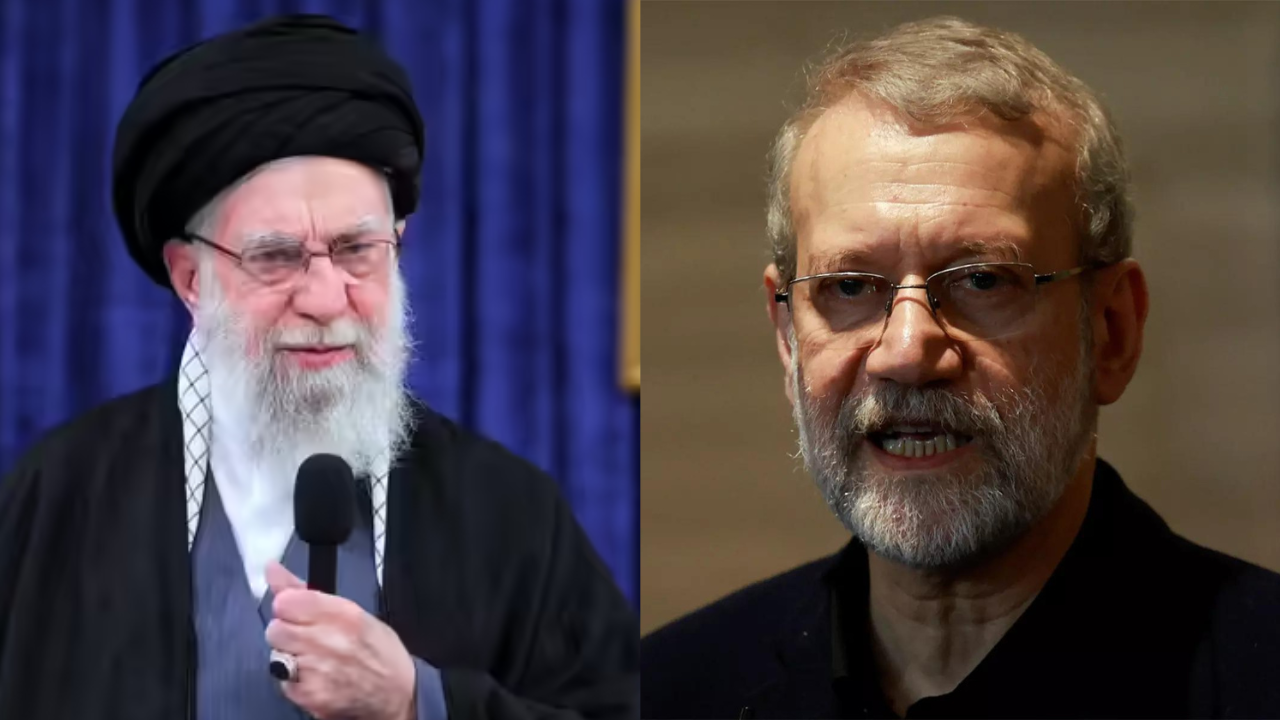
The elimination of high-value targets (HVTs) within the Iranian security and political apparatus represents more than a series of tactical successes; it is a systematic stress test of the Islamic Republic’s "Deep State" continuity protocols. When figures of the magnitude of a Supreme Leader or a high-ranking security chief are targeted, the immediate concern is not merely the vacancy of the seat, but the degradation of the informal networks and personal loyalties that hold the Iranian power structure together. The Iranian governance model relies on a dual-track system—formal bureaucratic institutions and informal ideological networks—meaning that the removal of a "Lynchpin" leader triggers a cascade of internal realignment that can either lead to institutional paralysis or a radicalized consolidation of power.
The Tri-Node Power Structure: Identifying Vulnerabilities
To analyze the impact of strikes on Iranian leadership, one must first categorize the targets based on their functional role within the state’s survival mechanism. The Iranian leadership is not a monolith; it is a triad of overlapping circles:
- The Ideological Vanguard (The Supreme Leader’s Office): This node provides the theological and legal legitimacy for the state. If the Supreme Leader is incapacitated or killed, the vacuum is not just political, but existential. The Assembly of Experts is tasked with a successor, yet the "vanguard" power relies on a personal cult of personality and direct control over the Bonyads (charitable foundations) that control up to 20% of Iran's GDP.
- The Operational Command (The IRGC and Quds Force): This is the kinetic arm. Leaders here, such as past security chiefs or generals, manage the "Axis of Resistance." Their removal disrupts the "Command and Control" (C2) loops between Tehran and its regional proxies in Lebanon, Iraq, and Yemen.
- The Technocratic Shield (The Presidency and Ministry of Intelligence): While often seen as subordinate, these figures manage the day-to-day economic survival and internal surveillance. Their removal weakens the state’s ability to suppress domestic dissent and manage the sanctions-strained economy.
The failure of many surface-level analyses is the assumption that killing a leader at the "Operational Command" level yields the same result as a strike on the "Ideological Vanguard." In reality, the IRGC is designed with a high degree of redundancy; it is a hydra-headed organization where mid-level commanders are trained to assume regional autonomy. However, the Ideological Vanguard has no such redundancy. It is a single-point-of-failure system.
The Kinetic-Political Feedback Loop
When a high-ranking official like Ali Khamenei or a top security strategist is removed from the equation, the immediate result is an "Information Blackout" period. During this window, the risk of "accidental escalation" peaks. Without a centralized authority to greenlight or veto retaliatory measures, various factions within the IRGC may act independently to prove their ideological purity or to seize the domestic narrative.
This creates a Retaliation Paradox:
- If the state does not respond forcefully, it loses "deterrence credibility" both internally (against protesters) and externally (against Israel and the US).
- If the state responds too aggressively without a centralized strategic vision, it risks a full-scale war for which its conventional forces—largely outdated compared to its asymmetric capabilities—are ill-prepared.
The "Cost Function" of losing a leader like Ali Larijani or similar high-level advisors is measured in the loss of "institutional memory." These individuals serve as the connective tissue between the hardline military elements and the pragmatic diplomatic circles. Their absence removes the friction that often prevents total kinetic escalation.
Disruption of the Proxy Value Chain
Iranian regional influence operates on a "Hub and Spoke" model. Tehran is the hub (providing funding, intelligence, and high-end weaponry), while proxies like Hezbollah and the Houthis are the spokes. High-level strikes on Iranian soil or against top Iranian commanders abroad sever the "Intelligence-to-Action" pipeline.
The degradation of this value chain occurs in three distinct phases:
Phase 1: Communication Latency
Immediately following the loss of a key security chief, communication protocols are overhauled for fear of further infiltration. This creates a "latency" where proxy groups are left without clear directives. During this phase, the "Axis of Resistance" becomes reactive rather than proactive.
Phase 2: Resource Misallocation
Top-tier leaders manage the complex logistics of moving sanctioned funds and illicit hardware across borders. When these managers are removed, the "Logistics of Insurgency" breaks down. Sub-commanders often lack the specialized knowledge required to navigate the international black markets and front companies that the senior leadership spent decades cultivating.
Phase 3: The Succession Crisis of Trust
The Iranian model is built on "Personalized Trust." An IRGC general’s relationship with a militia leader in Baghdad is often built over twenty years of shared combat. That trust cannot be transferred via a memo. A successor must spend years rebuilding those informal bonds, during which time the proxy may seek greater autonomy or succumb to external influence.
The Intelligence Breach Factor
A successful strike on a high-level leader in a high-security environment (like Tehran or a secure IRGC facility) serves as a "Psychological Deterrent" that outweighs the physical loss of the individual. It signals a "Total Intelligence Penetration."
The logic is simple: if the security chief, who is responsible for the safety of the state, cannot ensure his own safety, the entire hierarchy becomes suspect. This triggers internal purges. In the wake of such strikes, the Iranian security apparatus often turns inward, hunting for "moles" and collaborators. This internal friction—the "Purge Cycle"—is a silent victory for the attacker, as it consumes the time and resources that would otherwise be spent on external operations.
Assessing Institutional Resilience vs. Fragility
The Iranian state has shown a historical ability to absorb losses, such as the 1981 bombing that killed the President and Prime Minister, or the 2020 assassination of Qasem Soleimani. However, the current environment is significantly more volatile due to three converging pressures:
- Economic Attrition: The "Misery Index" (inflation + unemployment) in Iran is at a record high. Leadership strikes occur against a backdrop of a population that is increasingly unwilling to sacrifice for the state's ideological goals.
- The Succession Window: With the Supreme Leader’s advanced age, any strike on the inner circle is seen through the lens of the upcoming succession battle. This turns every security failure into a political weapon for rival factions (the "Hardliners" vs. the "Ultra-Hardliners").
- Technological Overmatch: The use of precision AI-guided munitions and cyber-kinetic attacks by adversaries has rendered traditional "bunker and bodyguard" security models obsolete.
The state’s resilience is currently being sustained by the "Parallel Economy" managed by the IRGC. As long as the IRGC can maintain its grip on the country’s ports, oil smuggling, and black-market currency exchanges, it can fund the security of its top leaders. The moment the "Financial Command" is targeted alongside the "Military Command," the state’s structural integrity will likely fail.
Strategic Forecast: The Shift Toward Decentralized Aggression
In the absence of a centralized, visionary leadership—should figures like Khamenei or his top security lieutenants be removed—expect a transition from "State-Directed Strategy" to "Franchise-Directed Chaos."
The successor leadership will likely be younger, more ideologically rigid, and less experienced in the nuances of international brinkmanship. This "Generational Hardening" means that while the state might be less efficient in its operations, it will be more unpredictable. The strategic play for regional actors is not to assume that "the head of the snake" being removed ends the threat, but rather to prepare for a "fragmented threat environment" where multiple sub-actors seek to avenge their leaders to gain internal legitimacy.
The primary risk moves from a "Chess Match" with a single grandmaster to a "Street Fight" with a dozen desperate lieutenants. Organizations must pivot their intelligence frameworks from monitoring centralized Tehran directives to tracking the autonomous movements of IRGC regional "Hub Commanders" who will increasingly act as independent warlords in the post-strike vacuum.