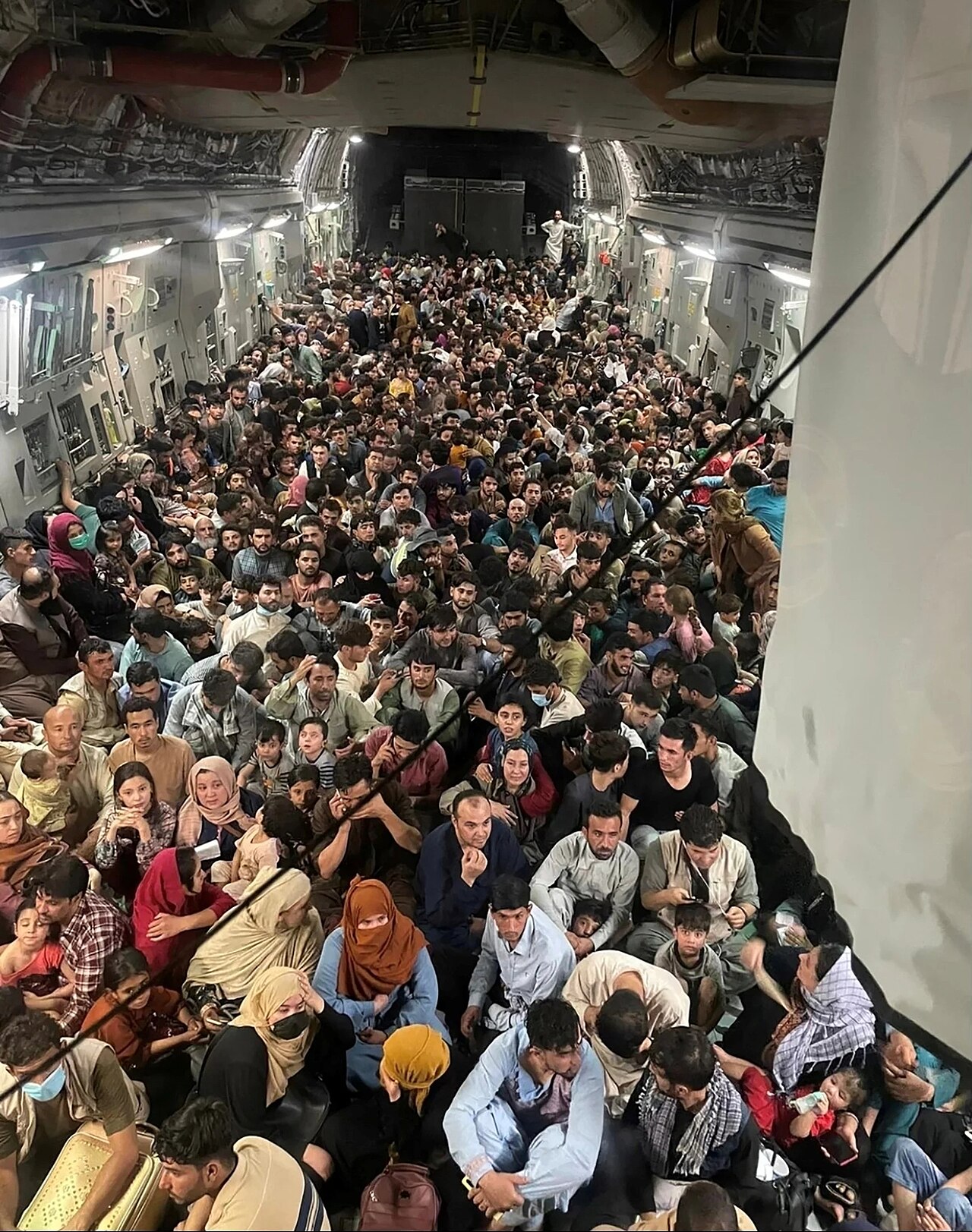
The effectiveness of a State Department’s response to citizens stranded in high-threat environments is determined by the speed at which a diplomatic bureaucracy can pivot into a logistics and security firm. When airports close and kinetic attacks commence, the challenge shifts from administrative assistance to a high-stakes problem of kinetic-logistical decoupling. The primary bottleneck in these scenarios is rarely a lack of intent, but rather a failure of information architecture and the physical inability to bridge the "last mile" between a safe haven and a citizen’s residence.
The Triad of Evacuation Friction
To evaluate the success of an emergency extraction, one must look at three specific variables that dictate the feasibility of movement: Permissivity, Capacity, and Visibility.
- Permissivity of Transit Corridors: This is the most volatile variable. It represents the degree to which a government or non-state actor controls the roads to the airport or border. When an airport closes, the environment transitions from "semi-permissive" to "non-permissive." In this state, the State Department cannot guarantee safety, shifting the burden of risk entirely onto the individual.
- Transport Capacity: This involves the sheer volume of seats available versus the number of registered citizens. When commercial flights cease, capacity drops to zero until chartered or military assets are deployed. The lag time between these two states is the "Critical Vulnerability Window."
- Data Visibility (The STEP Gap): The Smart Traveler Enrollment Program (STEP) is the primary tool for locating citizens. However, its data is often stale. If a citizen registers but does not update their precise GPS coordinates during a blackout, the State Department is effectively flying blind.
The Mechanics of Airport Closures and Strategic Inertia
An airport closure is not merely a cessation of flights; it is the destruction of a "Green Zone" node. Most diplomatic strategies rely on the airport as a centralized extraction point. When this node fails, the strategy must decentralized.
The scramble often seen in diplomatic circles stems from Path Dependency. Bureaucracies are optimized for "Tier 1" evacuations—where commercial airlines do the heavy lifting. When the situation degrades to "Tier 3"—requiring armored convoys or heavy-lift military aircraft—the State Department must coordinate with the Department of Defense (DoD). This handoff is governed by a Memorandum of Agreement that often requires a formal request for assistance (RFA). The time elapsed between the airport closure and the RFA being signed is the period where "scrambling" is most visible to the public.
Quantifying Risk in the Last Mile
The "Last Mile" problem in an active conflict zone is a calculation of Exposure Time vs. Extraction Velocity.
- Exposure Time: The duration a citizen spends in transit from their home to an extraction point.
- Extraction Velocity: The speed at which a high-occupancy vehicle (bus or plane) can move through checkpoints.
In recent attacks, the failure point occurred because the Extraction Velocity was reduced to near-zero by road blocks and active fire, while Exposure Time increased indefinitely. The State Department’s advice to "shelter in place" is a direct result of this math; if the risk of moving exceeds the risk of staying, the institution must recommend the latter to minimize liability, even if staying feels intuitively more dangerous to the person on the ground.
The Role of Redundant Communication Systems
During airport closures, cellular towers and internet service providers are often the first infrastructure components to fail or be throttled by local regimes. This creates a Communication Blackout Loop. The embassy sends instructions via email or SMS, but the recipients have no way to receive them.
High-authority extraction operations now utilize three layers of communication:
- Primary: Standard cellular and internet-based apps (WhatsApp, Signal).
- Secondary: Low-Earth Orbit (LEO) satellite links (Starlink, Iridium).
- Tertiary: High-frequency (HF) radio nets and localized "runners" or local national staff who can move with less scrutiny than foreign diplomats.
The absence of a pre-distributed LEO or HF infrastructure among the civilian population makes the "Primary" layer a single point of failure. When this fails, the State Department’s "scramble" is largely an attempt to re-establish a link with a disconnected population.
Tactical Disconnect: The Reality of Charter Flights
The public often demands "charter flights" as a panacea. However, the economics and security of private charters are brittle. Private insurance companies often have "War Risk" clauses that trigger the moment a rocket is fired within a certain radius of an airfield. This voids the aircraft's insurance, grounded the fleet instantly.
The State Department then enters a negotiation phase with "Grey Market" carriers—operators willing to fly into high-risk zones for a massive premium. These negotiations are not instantaneous. They require:
- Sovereign Guarantees: The U.S. government must often agree to indemnify the carrier against loss of the airframe.
- Overflight Permits: Negotiating with neighboring countries to allow unregistered or non-commercial flights through their airspace.
- Ground Security: Identifying a private security firm or local militia to hold the perimeter of the aircraft during the 45-minute "turn-around" time on the tarmac.
Intelligence Failures and the Predictive Void
The "scramble" suggests a failure of the Tripwire System. Every embassy has a series of "Tripwires"—specific events (e.g., a bank run, the assassination of a minor official, a localized riot) that should trigger an incremental drawdown of personnel.
When an embassy is surprised by an airport closure, it indicates one of two systemic failures:
- Normalization of Deviance: The situation has been bad for so long that minor escalations no longer trigger the appropriate tripwire.
- Information Siloing: The intelligence community (CIA/DIA) may have indicators of an imminent attack that are not communicated to the Consular Affairs officers responsible for citizen evacuation until it is too late to move the bulk of the population.
Structural Constraints of the Foreign Service Act
Legal frameworks also limit the speed of response. Under the Foreign Service Act, the U.S. government is generally required to seek "reimbursement to the extent practicable" from citizens for the cost of their evacuation. While this can be waived, the administrative requirement to collect promissory notes and verify identities creates a friction point at the very gate of the aircraft. In a chaotic environment, every minute spent on a "Promissory Note" is a minute the aircraft is a static target on a runway.
Distributed Extraction: The Future of NCO
The current model of "get everyone to the capital's airport" is increasingly obsolete in the face of urban warfare and drone-monitored corridors. A more resilient model involves Distributed Extraction Nodes. This would involve:
- Pre-positioned Supplies: Stashing food, water, and comms at multiple "Safe Houses" rather than just the embassy.
- Modular Convoys: Using smaller, unarmored, nondescript local vehicles rather than large, high-profile white SUVs that attract attention.
- Digital Triage: Using AI-driven sentiment analysis of local social media to map "safe" vs "hot" roads in real-time, then pushing those maps to citizens' phones.
The transition from a centralized evacuation model to a distributed, data-driven model is the only way to eliminate the "scramble" and replace it with a systematic extraction.
Diplomatic missions must stop viewing evacuation as an administrative task and start treating it as a dynamic supply chain problem. The "customers" (citizens) are in a state of high-perishability (threat), and the "product" (safety) requires a multi-modal transport network that does not rely on a single, vulnerable hub like a national airport.
The immediate tactical play for any administration facing this scenario is the deployment of Joint Travel Coordination Teams to neighboring "safe" countries. These teams must focus on land-border processing and the creation of "Humanitarian Bridgehead" points, bypassing the shut-down aerial nodes entirely. Simultaneously, the State Department must move from passive enrollment (STEP) to active "Heartbeat" monitoring, where citizens in high-risk zones are required to "check-in" digitally every 24 hours to maintain a live map of the extraction requirement.