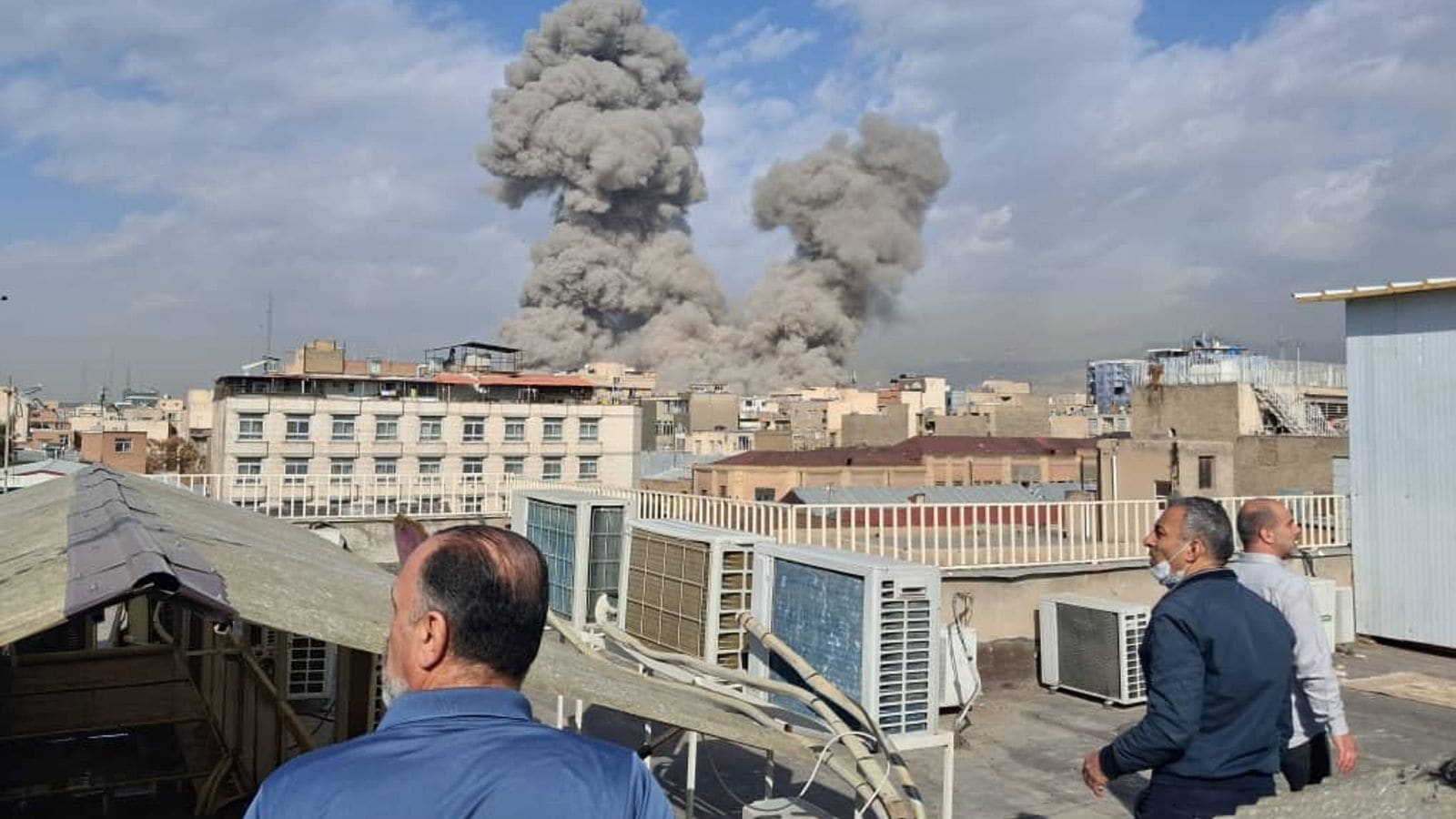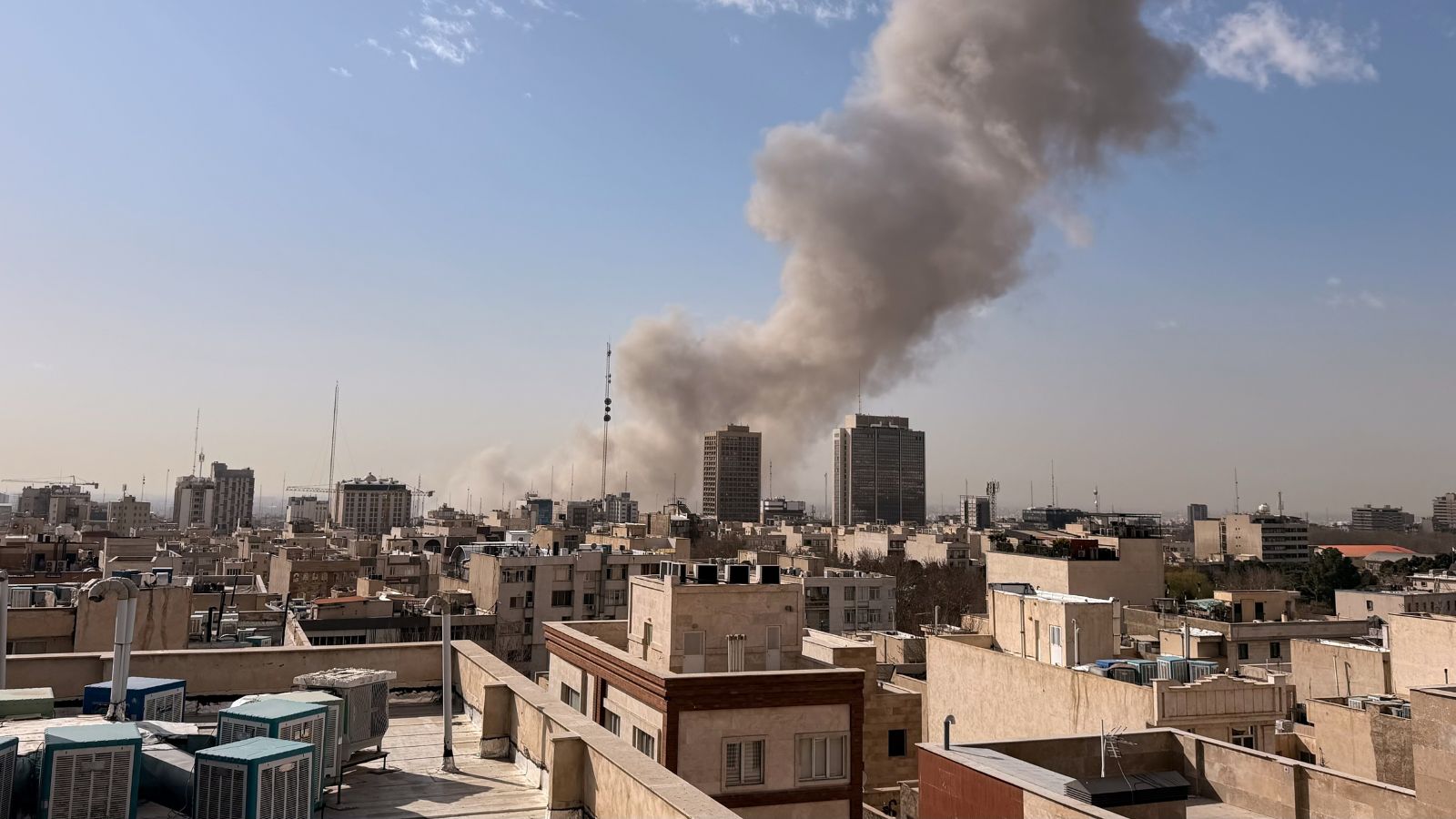
The footage released by the Israel Defense Forces (IDF) under the banner of Operation Roaring Lion is more than just a public relations victory. It is a technical autopsy of Iran’s supposed invulnerability. While initial reports focused on the spectacle of explosions in western Iran, the underlying reality is far more grim for the clerical leadership in Tehran. Israel did not just strike targets; they dismantled the very sensors meant to provide Iran with its first line of defense.
Western Iran has long served as the gateway for the Islamic Republic’s regional power projection. It is where the geography favors the defender, with the Zagros Mountains providing natural shielding for sensitive military sites. By releasing high-definition visuals of these strikes, Israel is sending a non-verbal message to the regional and international intelligence community. The message is simple. The Iranian sky is now open.
The Systematic Blinding of the Zagros
The core of the operation targeted S-300 air defense batteries and localized radar installations. These are not just generic military assets. They represent the high-water mark of Iranian defensive procurement. When these systems are neutralized, the rest of the country’s infrastructure—from the Parchin military complex to the enrichment facilities at Natanz—becomes an exposed nerve.
Most analysts missed the timing. The strikes were not a random response but a calculated effort to strip away the "sensor-to-shooter" loop that Iran relies on to intercept incoming cruise missiles and stealth aircraft. By taking out the long-range "Big Bird" and "Grave Stone" radars associated with the S-300, the IDF effectively created a corridor of invisibility.
The visuals show an almost surgical precision. This isn’t the carpet bombing of the twentieth century. This is the application of low-observable technology meeting high-yield kinetic energy. The IAF (Israeli Air Force) likely utilized a combination of stand-off missiles—potentially the Rampage or Blue Sparrow—which allow pilots to fire from outside the reach of Iranian interceptors.
The Failure of the Russian Shield
Tehran’s reliance on Russian-made hardware has proven to be a catastrophic miscalculation. For years, the S-300 was touted as a "red line" that would make any Israeli incursion too costly to contemplate. Operation Roaring Lion has turned that narrative into scrap metal.
The technical failure here is twofold. First, there is the issue of electronic warfare. The IDF has spent decades refining its ability to jam, spoof, and overwhelm Soviet-era and modern Russian frequencies. Second, there is the sheer speed of the engagement. The Iranian operators likely saw nothing on their screens until the warheads were already in the terminal phase of their flight.
This creates a massive "credibility gap" for the Iranian Revolutionary Guard Corps (IRGC). If the most advanced systems in their inventory cannot protect the western border, then nothing in the interior is safe. The psychological weight of this realization is likely causing more damage in Tehran than the actual explosives.
Key Infrastructure Targets in Western Iran
| Target Type | Strategic Function | Operational Impact |
|---|---|---|
| Radar Sites | Early warning and tracking | Loss of situational awareness |
| Logistics Hubs | Missile transport and storage | Disruption of "Land Bridge" to Syria |
| Command Centers | IRGC coordination | Decapitation of local leadership |
Why Western Iran Matters
To understand the weight of these strikes, you have to look at the map. Western Iran, specifically provinces like Kermanshah and Ilam, serves as the primary staging ground for the IRGC’s ballistic missile program. These locations are chosen for their proximity to the Iraqi border, allowing Iran to threaten targets across the Middle East with shorter-range, more accurate missiles.
By striking here, Israel is not just defending its own borders; it is actively disrupting the "Land Bridge" that connects Tehran to its proxies in Lebanon and Syria. This is a regional shift. When the logistics hubs in western Iran are smoking ruins, the flow of precision-guided munitions to Hezbollah slows to a crawl.
It is a war of attrition where the "attrition" is being felt almost exclusively by one side. Iran’s ability to replace these high-end sensors is nearly zero in the short term. They cannot simply call Moscow and ask for more, as Russia’s own production lines are choked by the ongoing conflict in Ukraine. Iran is, for the first time in forty years, truly on its own.
The Myth of Strategic Depth
For decades, Iranian military doctrine was built on the concept of Strategic Depth. The idea was to keep the fight far from Iranian soil, using proxies in Gaza, Yemen, and Lebanon to absorb the blows. Operation Roaring Lion has ended that era.
The fight is now at the doorstep of the IRGC. By bringing the war to western Iran, Israel has bypassed the proxies entirely. This forces the Iranian leadership to make a choice they have desperately avoided: do they commit their dwindling air force to a fight they cannot win, or do they sit back and watch their infrastructure be systematically erased?
There is no middle ground. The IRGC’s power is derived from the perception of strength. Once that perception is shattered, the internal domestic pressures within Iran begin to rise. A regime that cannot protect its own military bases looks increasingly fragile to a population already simmering with discontent.
Technical Superiority as a Deterrent
The precision of the visuals released by the IDF serves a secondary purpose: Deterrence through Transparency. By showing the exact moment of impact on hardened silos and mobile launchers, Israel is demonstrating a level of intelligence penetration that should terrify Iranian commanders.
It implies that Israel knows the GPS coordinates of every mobile unit. It suggests that the communication lines between the IRGC and their regional commands are compromised. In modern warfare, if you can be seen, you can be killed. The IDF is showing Iran that they are being watched in 4K.
The use of the F-35 "Adir" is the unspoken hero of this operation. While the IDF rarely confirms which specific airframes are used in a given sortie, the ability to operate in contested airspace over western Iran without being detected is the hallmark of the fifth-generation fighter. It is a technological leap that Iran simply cannot match.
"The era of the proxy buffer is over. We are now in the era of direct accountability." — Anonymous Western Intelligence Official.
The Economic Impact of the Strikes
War is expensive, but being the target of a precision campaign is ruinous. The cost of an S-300 battery is estimated at $120 million. The cost of a few Israeli stand-off missiles is a fraction of that. This is the asymmetric economic reality of the current conflict.
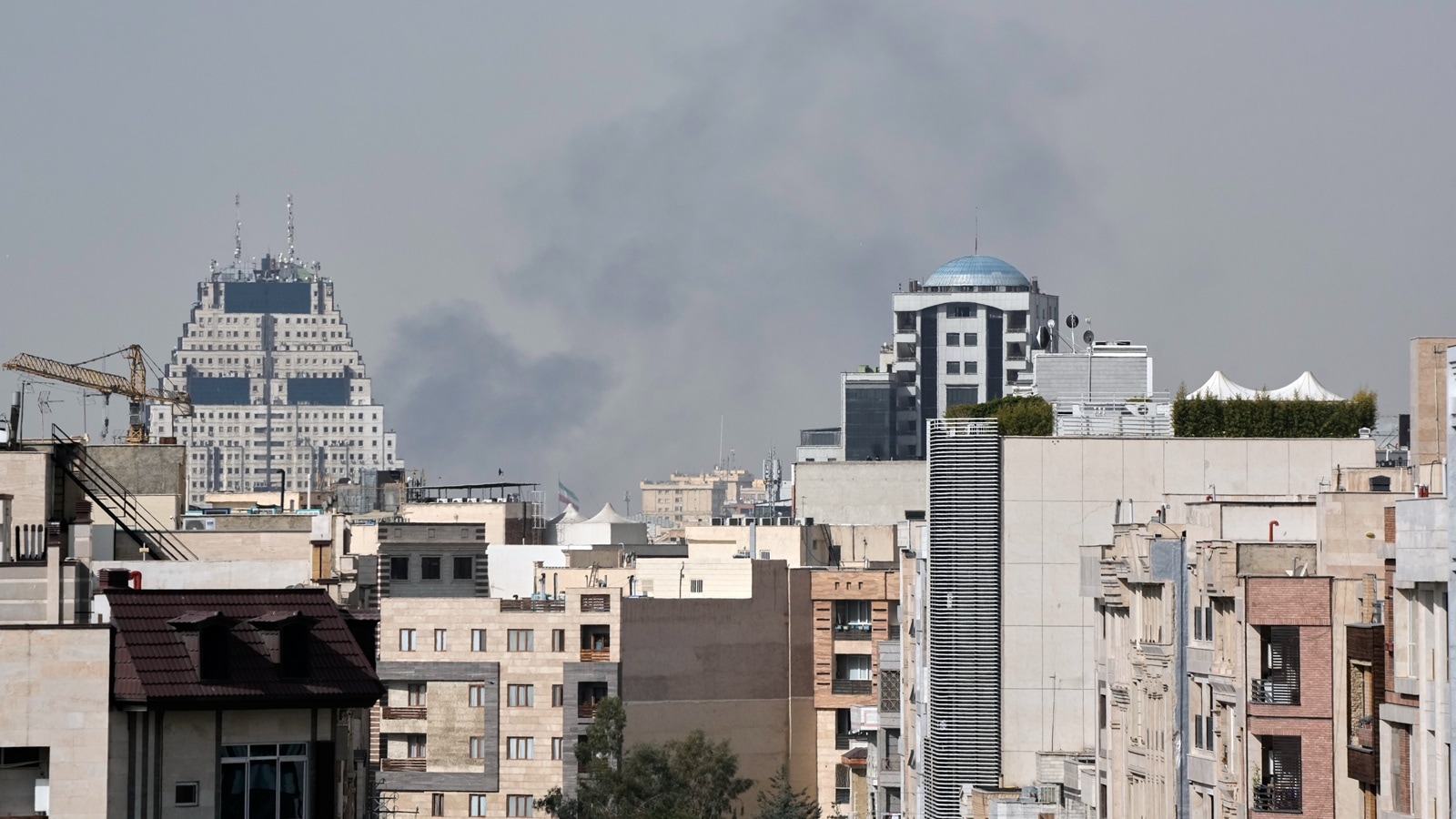
Iran is currently facing record inflation and a crippled energy sector. Every radar station that goes up in flames represents decades of diverted taxpayer money that has failed to provide the promised security. The IRGC can try to hide the extent of the damage from its public, but they cannot hide the smoke on the horizon or the sudden absence of the "impenetrable" air defense umbrella.
Furthermore, the strikes have likely impacted the development of the "underground cities" where Iran stores its long-range missiles. Even if the missiles themselves remain intact, the elevators, ventilation systems, and communication arrays required to launch them are vulnerable. A missile that cannot be launched is just a very expensive piece of lawn furniture.
The Silence from Tehran
Perhaps the most telling aspect of Operation Roaring Lion is the relative silence from Iranian state media. Initially, there were claims of "intercepted" threats and "minimal damage." However, as the visuals from the IDF began to circulate globally, the narrative shifted to a vague promise of "crushing revenge" at an unspecified time.
This is a classic defensive posture. When you cannot win the physical battle, you try to win the temporal one by delaying the response indefinitely. But time is not on Iran’s side. Every day that passes without a significant Iranian response further erodes their standing among their proxies. Hezbollah and the Houthis are watching. They are seeing that their patron is unable to protect its own heartland.
The "Lion" is roaring, and the echo is being felt from the Mediterranean to the Persian Gulf. This is not a contained incident. It is a fundamental rewriting of the Middle Eastern security manual.
Next Phase of the Shadow War
We are moving away from the era of "shadow" engagements into a period of high-visibility kinetic conflict. The release of these visuals signals that Israel is no longer interested in plausible deniability. They are claiming their work, and they are doing so with the confidence of a military that knows it has the upper hand.
The focus will now likely shift to the Iranian UAV production facilities. These drones have been the primary tool for Iranian escalation over the last year. If Israel can repeat the success of Operation Roaring Lion against the drone factories in western and central Iran, they will effectively disarm the IRGC's most effective offensive weapon.
The technical gap between the two nations has never been wider. While Iran produces quantity, Israel is demonstrating the absolute dominance of quality. In the thin air over the Zagros Mountains, that quality is currently deciding the future of the region.
Monitor the movement of Iranian transport aircraft between Tehran and Moscow. If the IRGC begins an emergency airlift of remaining air defense components from other provinces to the west, it will confirm that the "Roaring Lion" has indeed left them blind in the most critical sector of their defense. The board has been reset, and for the first time in decades, the Iranian leadership is playing without its most important pieces.