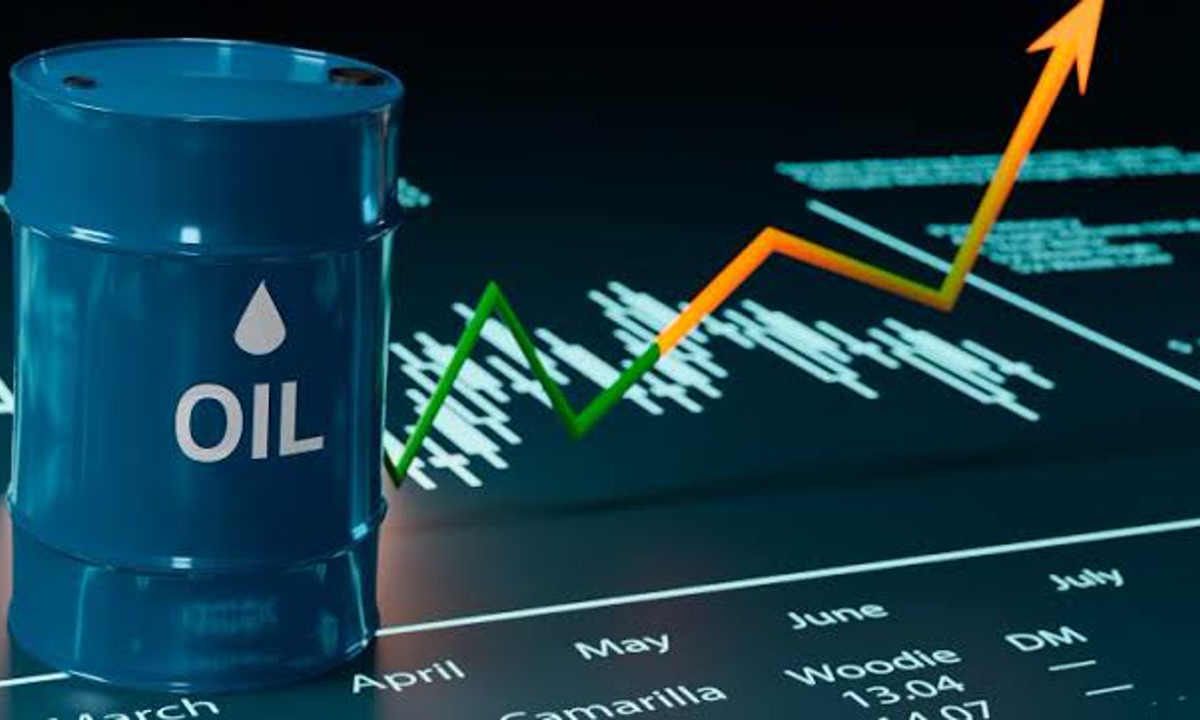
Oil prices are doing that thing again. You know the one—where every headline screams about a "risk-off" environment while your energy stocks and gas prices head in opposite directions. For the last few weeks of March 2026, the market has been obsessed with the Strait of Hormuz. It's the world's most sensitive windpipe for energy, and right now, it feels like someone’s stepping on it.
If you’re wondering why your portfolio looks like a heart rate monitor, it’s because the "risk-off" trade is back with a vengeance. Investors are dumping "risky" assets like tech and crypto to hide in the safety of cash and bonds, all while oil prices dance around the $90 to $100 mark.
The Strait of Hormuz Standoff
Let’s be real. The reason oil is dominating the conversation isn't just about supply; it’s about fear. Since the U.S. and Israel initiated joint operations in late February, the Strait of Hormuz has become virtually non-navigable for major tankers. We’re talking about 20 million barrels per day (mb/d) of crude and refined products that usually flow through that tiny strip of water.
When that flow stops, or even slows to a trickle, the math gets ugly fast. The International Energy Agency (IEA) recently estimated a global supply plunge of 8 mb/d for March alone. To put that in perspective, that’s a massive hole in the global energy bucket that non-OPEC+ producers like the U.S., Brazil, and Guyana can’t fill overnight.
Why This Risk-Off Trade Feels Different
In a typical risk-off scenario, you expect gold to soar. But look at the charts lately. Gold has been struggling to hold the $5,000 per ounce level. It’s a weird moment where the dollar is so strong—driven by high interest rates and "safe haven" flows—that it’s actually cannibalizing gold's gains.
- The Dollar King: The U.S. dollar index is up because everyone wants out of Euro and Yen denominated assets.
- Bonds are Back: We’re seeing a flight to Treasuries, which pushes yields down but keeps the "risk-off" sentiment firmly in place.
- Equity Volatility: The S&P 500 has taken a 3.7% haircut this month. Traders aren't betting on growth when they don't know if a factory in Germany or a trucking fleet in Ohio can afford its next fuel shipment.
Honestly, the "risk-off" trade isn't just about avoiding losses anymore. It's about surviving the volatility. When oil spiked toward $120/bbl a few weeks ago, it felt like 2022 all over again. The current retreat to the mid-$90s isn't because the world is safer; it’s because the IEA dumped 400 million barrels of emergency reserves onto the market. It’s a band-aid on a bullet wound.
Inflation is the Ghost in the Machine
You can't talk about oil without talking about the Federal Reserve. For most of early 2026, we were all hoping for rate cuts. That dream is currently on life support. High energy prices act like a hidden tax on everything. If it costs more to ship a container, it costs more for you to buy the shoes inside it.
The Fed is in a corner. If they cut rates to help the struggling stock market, they risk letting energy-driven inflation spiral out of control. If they keep rates high, they might break the economy. Most analysts, including those at J.P. Morgan, are now pushing back their expectations for the next rate cut until late Q3 or even Q4 2026.
Stop Overthinking the Headlines
Most people get the oil-market relationship wrong. They think high oil always means a bad economy. But the U.S. is a different beast in 2026. We’re now a net exporter of petroleum products, producing roughly 13.6 million barrels per day. This means while high prices hurt you at the pump, they actually bolster the balance sheets of a huge chunk of the U.S. economy.
However, the "risk-off" trade remains the dominant force because of global interconnectedness. If Japan—which imports nearly 90% of its oil—goes into a recession because of these prices, they stop buying U.S. tech. It’s a domino effect that no amount of domestic drilling can fully prevent.
What You Should Actually Do
Don't panic-sell your entire portfolio because of a headline about a tanker. But also, don't ignore the shift. The "risk-off" environment means the margin for error is razor-thin.
- Check Your Energy Exposure: If you’re heavy on airlines or transport, you’re catching the blunt end of this. If you’re in upstream oil and gas producers, you’re currently in the only sector that likes $95 oil.
- Watch the $90 Support: If Brent crude stays above $90, expect the Fed to stay hawkish. If it breaks below, the "risk-off" trade might start to unwind.
- Keep Cash Handy: In a high-volatility, risk-off market, cash isn't "trash"—it's optionality.
The conflict in the Middle East is the wildcard. Most strategic outlooks, like the one from Standard Chartered, see a 70% chance of things easing within the next month. But if we’re in that 30% "prolonged conflict" scenario, $100 oil is just the beginning.
Review your stop-loss orders today. If the Strait of Hormuz doesn't open up by next week, the market is going to get a lot noisier before it gets quiet. Stay grounded, watch the yields, and don't chase the daily spikes.