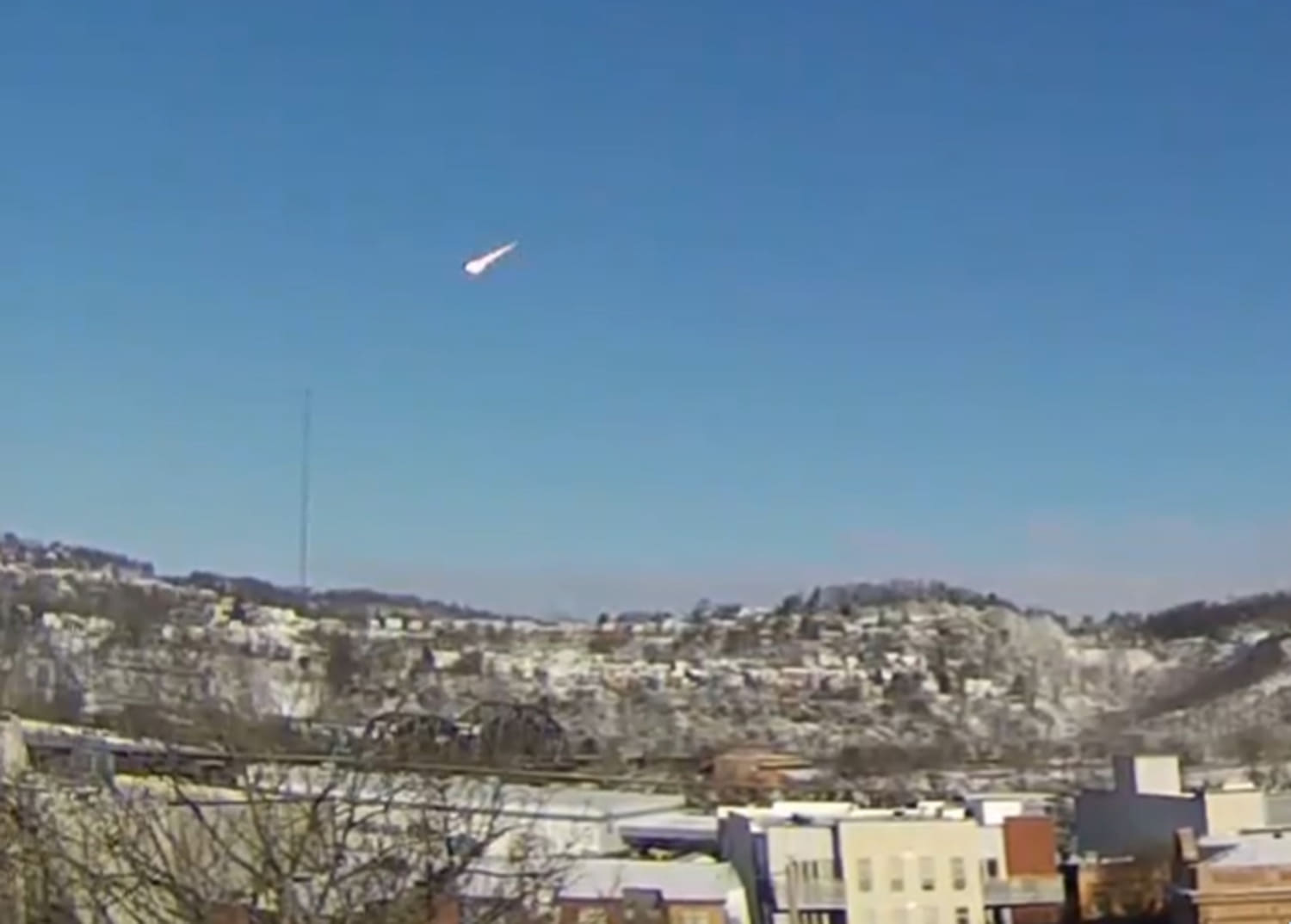
A massive sound rocked the ground across Ohio and Pennsylvania, and for a second, everyone thought the worst. It wasn’t an explosion at a plant or a plane crash. It was a space rock. On New Year’s Day, a meteor screamed through the atmosphere at 45,000 miles per hour, exploding with the force of 30 tons of TNT. If you felt your windows rattle or heard that deep, guttural thump, you witnessed a rare atmospheric event that most people only see in movies.
Most of the time, meteors are those tiny, graceful streaks of light we call shooting stars. They’re usually no bigger than a grain of sand. This one was different. Experts from NASA’s Meteor Watch confirmed the bolide—a technical term for an exceptionally bright meteor that explodes—was roughly a yard wide. That’s about the size of a large dog, but it carried enough kinetic energy to mimic a small earthquake.
The science behind the shockwave
The sound everyone heard wasn't just the rock breaking. It was a sonic boom. When an object travels faster than the speed of sound, it pushes air molecules out of the way with such violence that they form a high-pressure shockwave. This meteor was moving about 50 times faster than a commercial jet. By the time it hit the thicker parts of our atmosphere, the pressure became too much for the rock to handle. It shattered.
That fragmentation is where the "boom" gets its teeth. Imagine all that energy being released at once. It’s not a single pop; it’s a rolling, thunderous roar that can travel for miles. In Pittsburgh and eastern Ohio, the cloud cover was thick that day. You couldn’t see the fireball, which made the sound even more terrifying for people on the ground. Without the visual cue of a falling star, your brain goes straight to "danger."
Why the weather made it worse
If it had been a clear, crisp night, the sound might have dissipated differently. But the atmospheric conditions over the Ohio Valley acted like a megaphone. Temperature inversions—where a layer of warm air sits on top of cold air—can actually trap sound waves and bounce them back toward the ground. This "ducting" effect is why some people 50 miles away heard it clearly, while others closer to the flight path only felt a slight vibration.
NASA’s infrasound stations, which are designed to listen for clandestine nuclear tests, picked up the low-frequency vibrations from this event. These aren't sounds the human ear can naturally process, but the energy was there. It was enough to register on seismographs as a minor tremor. You weren't crazy if you thought the earth moved. It actually did.
Finding the fragments
When a meteor survives the trip through the atmosphere, the pieces that hit the ground are called meteorites. Finding them is the ultimate treasure hunt. For the Ohio and Pennsylvania event, hunters looked for "radar signatures." When a meteor breaks up, the debris cloud is often dense enough to be picked up by local weather radar. It looks like a small, intense patch of rain that shouldn't be there.
If you’re out looking for these space rocks, don’t look for glowing hot stones. That’s a total myth. By the time a meteorite hits the ground, it’s actually cold. It’s been sitting in the vacuum of space at near absolute zero for billions of years. The friction of entry only heats the very outer layer—the fusion crust—while the inside stays freezing. If you find a rock that looks like a burnt potato and sticks to a magnet, you might be holding something older than the Earth itself.
How to identify a real meteorite
- Check for a fusion crust: It should look like a thin, dark, eggshell-like coating.
- The magnet test: Most meteorites contain nickel and iron, so a strong magnet will usually jump right to them.
- Weight: They are significantly heavier than your average backyard rock because of that metal content.
- Regmaglypts: Look for indentations that look like thumbprints pressed into clay.
The odds of this happening again
Space is crowded. We hit about 100 tons of space dust and small rocks every single day. Most of it burns up 60 miles above our heads without a sound. An event like the one in Ohio and Pennsylvania happens maybe a few times a year globally, but usually over the ocean or unpopulated areas like Siberia. Having one detonate over a major metropolitan area is just a roll of the cosmic dice.
The good news is that NASA and other agencies are getting better at tracking the big stuff. We know where the "planet killers" are. It’s these smaller, house-sized or car-sized rocks that slip through the cracks because they’re too dark and small to see until they hit the atmosphere.
If you want to help scientists track these events, download the American Meteor Society’s app or visit their website. They rely on "citizen scientists" to report the exact time and direction of the sound. Your data helps them triangulate the "strewn field," which is the specific area where meteorites likely landed. Go check your security camera footage from that morning. Even if you didn't see the flash, the audio alone can help researchers calculate the energy of the blast. Look for the exact second the rattling starts and report it. It’s the best way to turn a scary morning into a win for science.