The headlines are screaming about a "buffer zone." Defense ministers are posturing with maps and talk of permanent presence. The media is salivating over the prospect of a traditional land grab to "ensure security." It is all theater.
If you think Israel actually wants to hold Southern Lebanon, you aren't paying attention to the last forty years of asymmetrical warfare. Occupying territory is an industrial-age solution to an information-age problem. In the 1980s, you held a ridge to stop a tank. In 2026, you hold a ridge just to become a static target for a $500 first-person-view (FPV) drone built in a basement.
The "lazy consensus" suggests that physical presence equals safety. The reality? Presence equals a target list.
The Geography of a Meat Grinder
Southern Lebanon isn't a flat desert. It is a nightmare of limestone ridges, deep wadis, and ancient subterranean networks. For an occupying force, the topography is a tax that never stops collecting.
When a conventional military occupies a space, they inherit the "Maintenance of Misery." You aren't just managing a front line; you are managing sewage, electricity, and a hostile population that views your presence as the ultimate recruitment tool. We saw this play out from 1982 to 2000. It ended in a unilateral retreat because the cost-to-benefit ratio hit zero.
Today, the math is even worse. Hezbollah is not the ragtag militia of the 90s. They are a light infantry force with a sophisticated anti-tank guided missile (ATGM) backbone. If the IDF sits in stationary outposts, they are essentially providing Hezbollah with live-fire practice for their Almas and Kornet-D systems.
Traditional occupation relies on the "Iron Fist" doctrine—heavy armor and fortified positions. But armor is increasingly a liability. A Merkava IV is a marvel of engineering, but it cannot see a drone hovering 300 meters above it in a blind spot. Staying in Lebanon isn't a strategy; it’s an invitation to a war of attrition where the defender spends pennies to destroy millions.
The Buffer Zone Myth
Ask any armchair general about the "security belt." They’ll tell you it pushes the threat back from the border. This is a fundamental misunderstanding of modern ballistics.
Pushing a line five miles north doesn't stop a cruise missile. It doesn't stop a long-range drone. It certainly doesn't stop the subterranean reality of modern warfare. Hezbollah’s "Metro" system—their vast tunnel network—doesn't care where you draw a line on a map.
If you occupy the surface, you are just living on top of the enemy's basement.
I have watched militaries try to "clear" urban and mountainous terrain for decades. You don't clear it; you just rent it with the lives of your soldiers. The moment you move to the next sector, the enemy pops back up through a hole you missed.
The real "buffer" isn't physical. It’s technological. It’s about sensor density and rapid-strike capability.
The Intelligence-Firepower Loop
Instead of boots on the ground, the modern solution is a "Transparent Battlefield."
- Persistent Overhead Surveillance: High-altitude long-endurance (HALE) drones that never blink.
- Acoustic Arrays: Sensors that can triangulate a rocket launch before the projectile clears the tube.
- AI-Driven Targeting: Automated systems that can distinguish between a civilian tractor and a truck-mounted Multi-Launch Rocket System (MLRS) in milliseconds.
When you occupy a territory, you lose the ability to use heavy fire. You have to worry about "friendly fire" and administrative logistics. When you keep the territory as a "kill zone" without your own troops inside it, you have total freedom of movement in the electromagnetic and kinetic spectrums.
The Economic Suicide of Occupation
Let’s talk about the one thing politicians ignore: the balance sheet.
Occupying Southern Lebanon would require at least three divisions on permanent rotation. That is tens of thousands of reservists pulled out of the Israeli tech sector—the engine of the entire economy. You aren't just paying for the fuel and the shells; you are paying in lost GDP.
Hezbollah’s strategy is "Cost Imposition." They don't need to win a battle. They just need to make the occupation so expensive that the Israeli shekel devalues and the middle class flees to Cyprus or Portugal.
A permanent presence in Lebanon is a massive transfer of wealth from the Israeli taxpayer to the defense industry, with zero long-term security ROI. It is a "Sunk Cost Fallacy" on a national scale. "We've spent so much blood here, we can't leave now." That logic is how empires die.
Dismantling the "Safe Return" Argument
The government says they need to occupy the south so the residents of Northern Israel can return to their homes. This is a lie told for domestic consumption.
Security is a feeling, not a fact. You could put a tank on every street corner in Metula, and if one Hezbollah suicide drone hits a kindergarten, the "security" is gone. You cannot provide 100% safety through physical occupation.
True safety in the 21st century comes from deterrence through "Offensive Dominance," not "Defensive Presence." You make the cost of firing a rocket so high for the enemy leadership that they choose not to fire it. You don't do that by patrolling a Lebanese village; you do that by decapitating the command structure and destroying the financial nodes.
The Thought Experiment: The Ghost Zone
Imagine a scenario where Israel ignores the call for occupation. Instead, they declare a "Zero-Movement Zone."
Anything that moves in a defined strip of Southern Lebanon is automatically targeted by autonomous loitering munitions. No IDF soldiers are inside the zone. No outposts to be sniped. No convoys to be IED’d.
This is the "Ghost Zone." It uses technology to create a vacuum. It is cheaper, deadlier, and carries zero political risk of "bringing home body bags."
Why isn't this the plan? Because it doesn't look good on a news broadcast. It doesn't give a General a chance to plant a flag. It’s cold, efficient, and lacks the "heroic" narrative of a ground invasion. But it works.
The Hidden Risk: The Mission Creep Trap
Every occupation starts as a "limited operation."
- "We're just going 10 kilometers in."
- "We need to hold the high ground just past the 10-kilometer mark."
- "We need to secure the supply lines to that high ground."
- Suddenly, you are in Beirut.
I've seen this play out in Iraq. I've seen it in Afghanistan. The "mission" morphs to justify the presence. Soon, the military isn't there to stop rockets; they are there to "protect the troops who are there to stop the rockets." The tail begins to wag the dog.
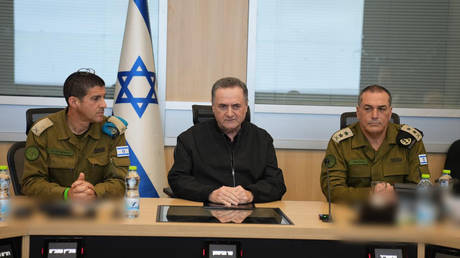
The Defense Minister knows this. The Cabinet knows this. The talk of occupation is a bargaining chip, a threat meant to force a diplomatic concession. But the danger is that they might start believing their own rhetoric.
The Brutal Truth
The status quo is broken, but the "solution" of occupation is a 20th-century relic being sold as a 21st-century necessity.
If Israel enters Southern Lebanon to stay, they aren't winning. They are surrendering to Hezbollah’s preferred theater of war. They are choosing a fight where the enemy has the home-field advantage, the tactical initiative, and the moral high ground of "resisting an occupier."
Stop asking when the occupation will start. Start asking why we are still using 1914 tactics in a 2026 world.
The most powerful thing Israel can do is stay out, turn the region into a high-tech sensor trap, and strike with total impunity. Anything else is just providing the enemy with targets they don't deserve to have.
Ground is not security. Ground is just a place to bury your soldiers.
Would you like me to analyze the specific electronic warfare capabilities that would make a "Ghost Zone" viable without a physical presence?