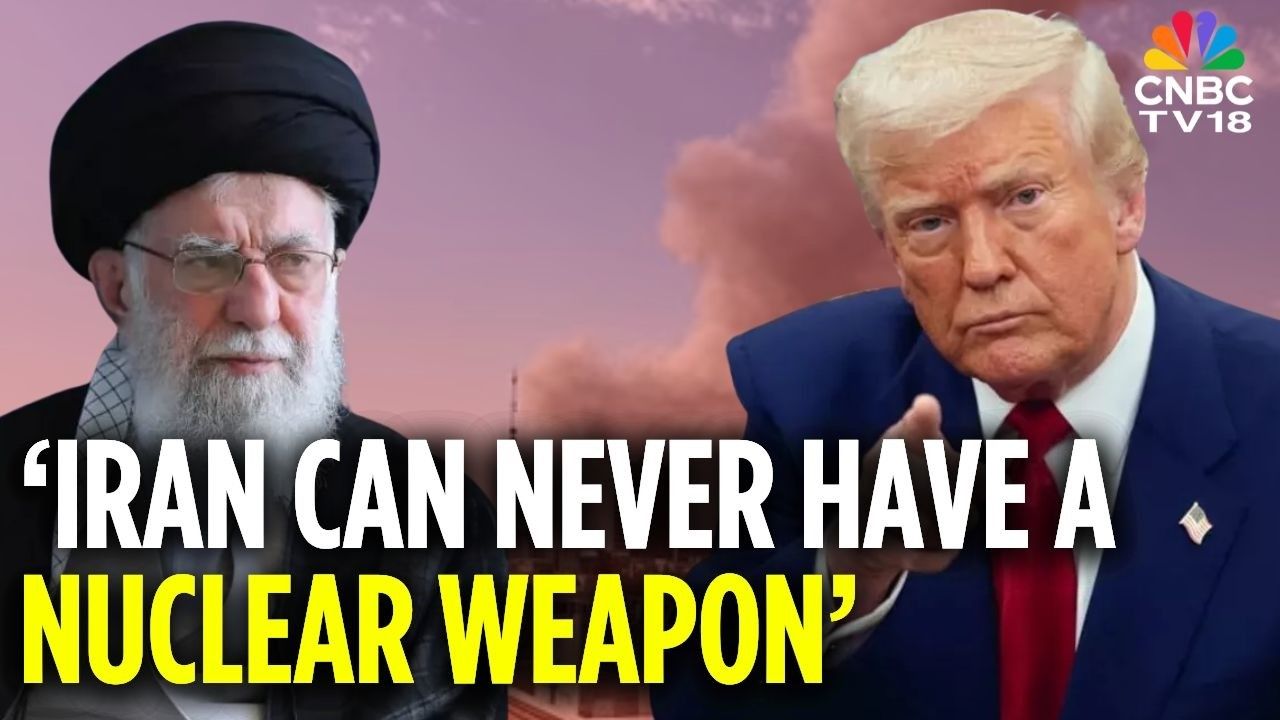
The Pentagon is moving. The headlines are screaming. The White House is promising that Iran will never have a nuclear weapon. It is a comforting narrative, wrapped in the steel of aircraft carriers and the certainty of "combat operations." It is also fundamentally, dangerously wrong.
By initiating combat operations to stop Iran’s nuclear progress, the U.S. has triggered the exact mechanism that makes a nuclear breakout inevitable. We are watching a classic strategic blunder: treating a technical problem as a military one, while ignoring the underlying physics and political psychology that actually drive the centrifuge.
The consensus says strikes can "set back the program by years." In reality, strikes turn a civilian-tinted research project into a hardened, underground national survival mission. You cannot bomb knowledge. You cannot kinetic-strike a nation’s collective memory of how to enrich uranium.
The Myth of the "Surgical Strike"
Mainstream pundits love the term "surgical." It implies we can reach in, pluck out the offending centrifuges at Natanz or Fordow, and leave the patient cured. This is a fantasy.
Uranium enrichment isn't a factory line; it's a distributed network of expertise. When you bomb a facility like Fordow—buried deep under a mountain—you don't destroy the capability. You validate the necessity of the capability.
I’ve seen how these "disruptions" play out in high-stakes environments. When you attack a system’s infrastructure without addressing its core motivation, the system becomes more resilient. It decentralizes. It goes dark. After the Stuxnet cyber-attack, Iran didn't quit. They replaced their IR-1 centrifuges with more efficient, more reliable IR-2m and IR-6 models. They didn't just rebuild; they upgraded.
Military action provides the ultimate justification for the "Supreme Leader" to move from 60% enrichment to the 90% "weapons-grade" threshold. Before the strikes, there was a debate in Tehran about the cost-benefit of a bomb. After the first Tomahawk hits, that debate ends. The bomb becomes the only insurance policy against regime change.
The Physics Problem We Can't Shoot Our Way Out Of
People often ask: "Can't we just destroy the fuel cycle?"
The short answer is no. The long answer involves the $UF_6$ (uranium hexafluoride) conversion process. Iran has mastered the fuel cycle. They aren't waiting for a delivery from a foreign power. They have the mines, the yellowcake production, the conversion plants, and the enrichment halls.
If you destroy the known sites, you leave behind thousands of trained scientists and engineers who now have a singular, vengeful purpose. Imagine a scenario where the U.S. destroys 80% of Iran's visible nuclear infrastructure. Within six months, the remaining 20% is moved into small, mobile, or deeply buried "clandestine" sites that are impossible to track via satellite.
By forcing the program underground, we lose the one thing that actually provided security: visibility. The IAEA (International Atomic Energy Agency) inspectors are the first casualties of war. Once the cameras are smashed and the inspectors are kicked out, Iran’s breakout clock doesn't stop. It just stops being visible to us. We’re trading a known threat for an invisible one.
The Proxy Trap: Why "Combat Operations" Backfire
The competitor article suggests that combat operations will "contain" Iran. This ignores the geography of the Middle East. Iran’s nuclear program is not its only weapon, and it’s arguably not even its most effective one.
The "Axis of Resistance"—Hezbollah in Lebanon, the Houthis in Yemen, and various militias in Iraq—serves as a distributed deterrent. When the first bombs fall on Iranian soil, these groups don't stay on the sidelines. They target the Strait of Hormuz.
- Global Oil Shock: Roughly 20% of the world's petroleum passes through that narrow waterway.
- The Math of Attrition: It costs $2 million for a Patriot missile to intercept a $20,000 drone.
- Economic Suicide: A 50% spike in global oil prices does more damage to the U.S. economy than a dozen Iranian centrifuges ever could.
The U.S. is essentially playing a game of checkers while Tehran is playing a game of "how long can you hold your breath?" The American public has zero appetite for a third Middle Eastern war that lasts a decade. Tehran knows this. They don't have to win a dogfight; they just have to survive the news cycle.
The Misunderstood "Breakout Clock"
We hear the term "breakout time" constantly. It’s usually defined as the time needed to produce enough Weapon-Grade Uranium (WGU) for one nuclear device.
The media treats this like a countdown to an explosion. It isn’t. Producing the WGU is the easy part for a nation with Iran's level of technical sophistication. The hard part is weaponization: miniaturizing the warhead to fit on a missile and ensuring it survives reentry into the atmosphere.
By starting a war now, we are incentivizing Iran to sprint through that final weaponization phase. We are removing the diplomatic and economic barriers that were keeping them at the "threshold" status. A threshold state is manageable. A cornered state with a half-finished warhead is a nightmare.
The Strategy Nobody Wants to Admit
If bombing doesn't work and "maximum pressure" only yields more centrifuges, what's left?
The uncomfortable truth is that we have to accept a "Nuclear-Capable" Iran to avoid a "Nuclear-Armed" Iran. There is a massive difference between a country that could build a bomb in three months and a country that has a bomb on a nosecone.
The current combat operations are erasing that distinction. We are telling the Iranians that they are already being treated as if they have the bomb, so they might as well go ahead and finish it.
We need to stop asking "How do we stop them from having the technology?" and start asking "How do we make it so they never feel the need to use it?"
- Re-establish the "Grey Zone": Absolute "red lines" are useless if you aren't willing to occupy the entire country. We need a return to messy, unsatisfying diplomacy that trades enrichment limits for economic oxygen.
- Intel-First, Kinetic-Last: Every dollar spent on a cruise missile would be better spent on human intelligence and cyber-sabotage. These methods delay the program without providing the "rally 'round the flag" effect that kinetic strikes produce.
- Accept the Iranian Reality: Iran is a regional power with a highly educated populace. They aren't a "rogue state" that can be bullied into total submission. They are a permanent fixture of the map.
The current administration is betting that force will produce a different result than it did in North Korea. It won’t. In 1994, we were told North Korea would never have a nuke. We used sanctions. We used threats. We used "combat readiness." Today, Pyongyang has ICBMs that can hit Los Angeles.
By following the same playbook with Tehran, we aren't preventing a nuclear Iran. We are midwifing it.
The missiles are in the air. The rhetoric is at a fever pitch. But don't be fooled by the high-definition footage of explosions. Every building we level in Natanz is a cornerstone for a new, deeper, more secret facility that we will never find.
War is not the solution to proliferation. It is the ultimate catalyst.
Stop cheering for the "surgical" strike. There is no such thing. There is only the long, slow, predictable slide into a nuclear-armed Middle East, fueled by the very bombs meant to prevent it.