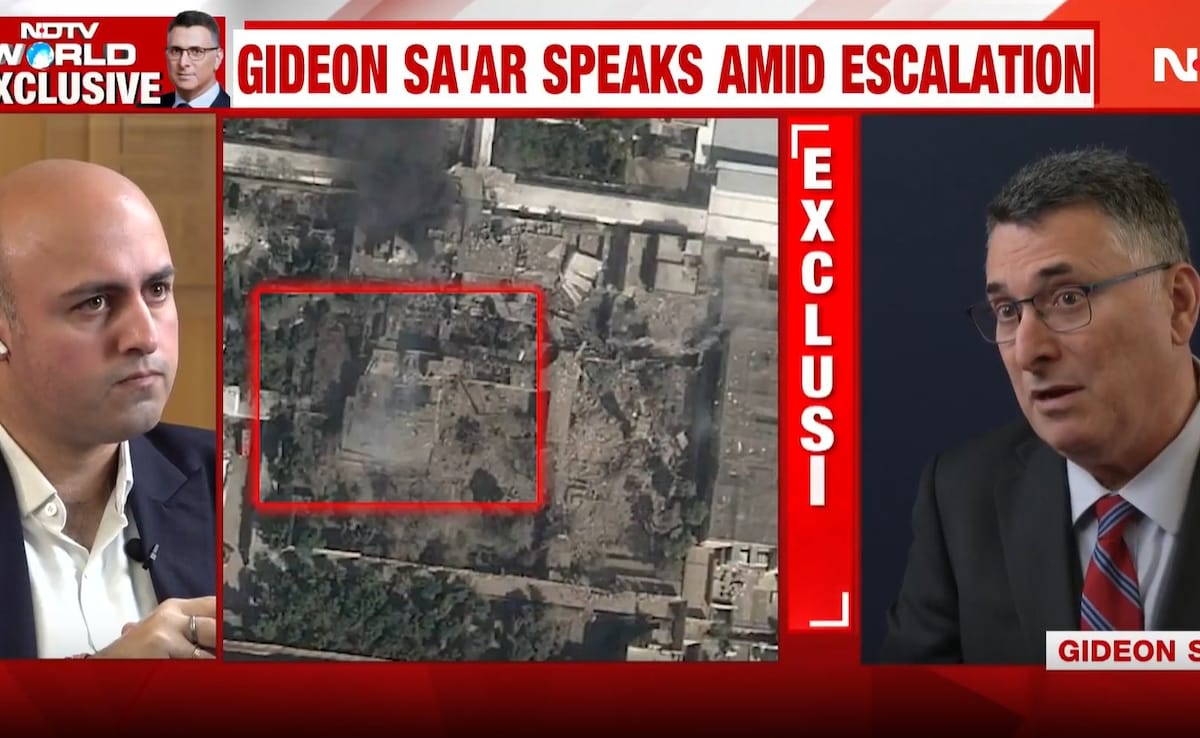
Israel’s periodic warnings about Iran "wasting time" on nuclear deadlines are not news. They are a scripted performance. When an official goes on camera to claim that Tehran is merely dragging its feet to build a bomb, they are counting on the fact that you don’t understand how leverage actually works in high-stakes geopolitics.
The "lazy consensus" pushed by mainstream outlets is that the clock is ticking toward a binary outcome: a deal or a mushroom cloud. This is a fairy tale. In reality, the delay is the product. The stalemate is the strategy. Iran isn't "wasting" time; they are manufacturing it, and every month they spend in this limbo increases their regional market share. For an alternative view, check out: this related article.
The Myth of the Red Line
For three decades, we have been told Iran is "months away" from a nuclear weapon. If you actually look at the physics—specifically the enrichment levels of $U^{235}$—the jump from 60% purity to weapons-grade 90% is technically the shortest leg of the journey. If Iran wanted a crude device, they could have sprinted for it years ago.
They haven't. Not because they are afraid of a strike, but because a physical bomb is a strategic liability. Similar reporting regarding this has been shared by Al Jazeera.
A bomb invites a definitive response. A threshold status, however, creates a permanent state of diplomatic immunity. By staying exactly five minutes away from the finish line, Iran forces the West to keep coming back to the table with concessions. They aren't trying to build a weapon; they are building a perpetual seat at the adult table while their conventional proxies—Hezbollah, the Houthis, and various militias—remake the map of the Middle East.
Why Israel Needs the Panic
When you hear "Dangerous Iran" headlines, look at the domestic budget of the person speaking. Fear is a currency.
The Israeli defense establishment relies on the Iranian nuclear threat to maintain its "qualitative military edge" (QME) funding from the United States. Without a looming existential threat, the argument for billions in annual military aid loses its bite. I’ve sat in rooms where security analysts admit that a nuclear Iran is less of a threat to Israel’s existence than a stable, economically integrated Iran would be.
If Iran becomes a normal regional power, the "only democracy in the Middle East" narrative loses its exclusive luster. The tension isn't a bug in the system; it is the system's fuel.
The Sanctions Delusion
Western commentators love to talk about "crippling sanctions" as if they are a slow-acting poison. They aren't. They are an evolutionary pressure.
By keeping Iran under a permanent state of economic siege, the West has forced Tehran to build the most sophisticated black-market economy in human history. They have mastered the art of ship-to-ship oil transfers, shell company layering in Dubai, and shadow banking via Beijing.
- Fact Check: Iran’s oil exports hit a five-year high in 2024 despite "maximum pressure."
- The Reality: Sanctions have only succeeded in purging the pro-Western moderates from Tehran’s parliament, leaving only the hardliners who thrive in a closed economy.
We are told sanctions will bring them to the table. In practice, sanctions have made the Iranian elite richer by giving them a monopoly on smuggled goods, while the middle class—the only group that could actually change the regime—is wiped out.
The "Time Wasting" Paradox
If Iran is wasting time, why is the U.S. still sitting in the waiting room?
The Biden administration, and likely those following it, benefit from the "negotiation theater." As long as there is a "process," they can avoid a hot war that would send oil to $200 a barrel and tank the global economy. Everyone is lying to you. The U.S. doesn't want a deal that settles the issue once and for all, because a settled issue requires them to actually enforce the terms or admit they failed.
The status quo is a comfortable lie for all parties:
- Iran gets to keep its centrifuges spinning as a hedge.
- The U.S. gets to say they are "pursuing diplomacy."
- Israel gets to keep its defense budget at record highs.
The Cost of the Wrong Question
The media keeps asking: "When will Iran get the bomb?"
The question you should be asking is: "Why are we still pretending the 1990s non-proliferation model works in 2026?"
Technology is no longer a secret. The blueprints for centrifuges are on the dark web. The chemicals are dual-use. You cannot "bomb" the knowledge out of a population’s head. Every time a scientist is assassinated or a facility is sabotaged via cyberwarfare, the Iranian program simply becomes more redundant, more underground, and more decentralized.
Imagine a scenario where we stop treating the nuclear program as the center of the universe. If we stopped the obsession with enrichment levels, we would see that Iran’s real power comes from its "Grey Zone" warfare—drones, missiles, and digital subversion. By focusing on the "nuclear deadline," the West is distracted while the real war is being won on the ground in Yemen, Iraq, and Lebanon.
The Intelligence Trap
I have watched intelligence agencies prioritize "signals" that fit the political narrative of the day. When an Israeli minister says Iran is "wasting time," they are using intelligence as a PR tool.
True intelligence shows a country that is perfectly content with the current friction. Friction generates heat, and heat keeps the neighbors nervous. Nervous neighbors buy more weapons. More weapons lead to more tension.
It is a self-perpetuating loop of profitable anxiety.
Stop Falling for the Countdown
The "Nuclear Clock" is a prop in a long-running play. There is no "deadline." There is only a series of tactical shifts in a game that has no intended end.
Iran has already won. They have achieved the ability to build a weapon whenever they choose, which, in the world of deterrence, is exactly the same as having one—without any of the international legal consequences of testing it.
The West is not "running out of time." The West has already run out of options, and the "wasting time" rhetoric is just a way to avoid admitting that the policy of the last thirty years has been a total, unmitigated failure.
Get used to the stalemate. It’s the most stable thing in the region.
Stop looking at the clock and start looking at the map.


