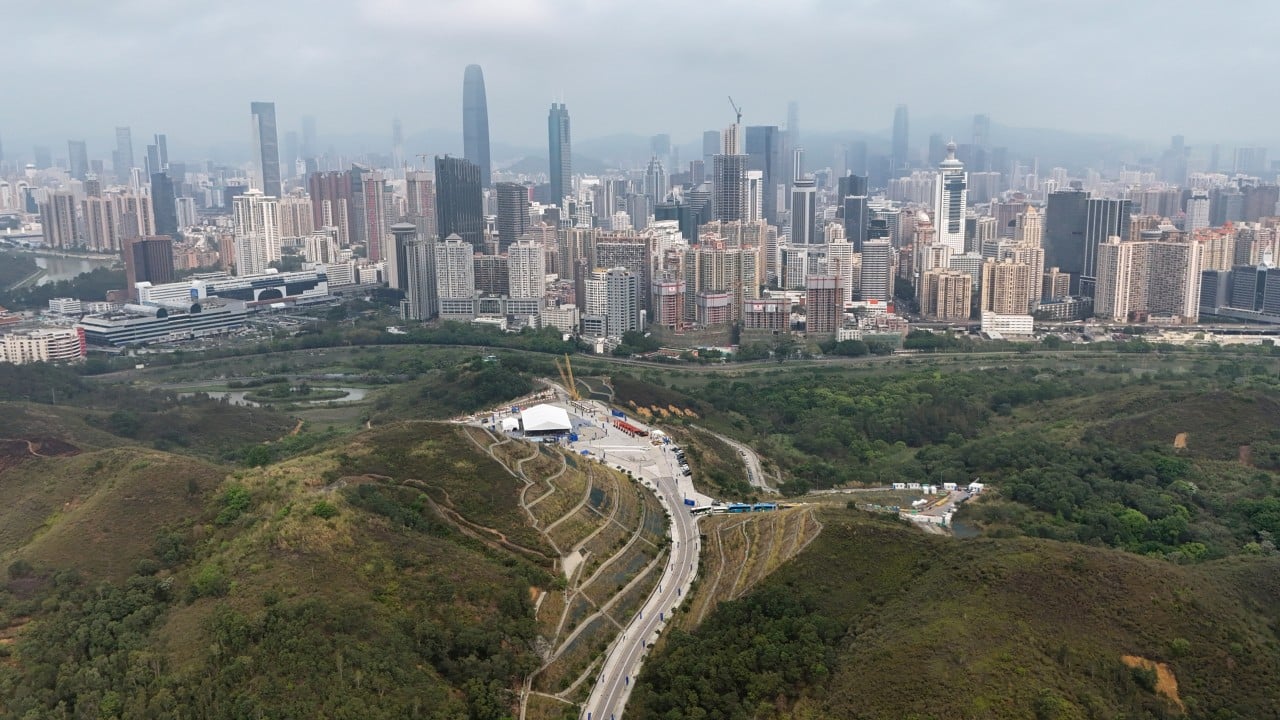
The headlines are panicking. They want you to believe that a cluster of server racks in the Northern Metropolis is about to out-consume the entire MTR Corporation. They paint a picture of a city held hostage by the insatiable appetite of the "cloud," suggesting that Hong Kong’s electrical backbone is one AI query away from a blackout.
It is a neat, terrifying narrative. It is also fundamentally wrong.
Comparing a static data hub to a sprawling transit network is not just apples and oranges; it is comparing a brick to a circulatory system. The MTR is a massive, fluctuating load spread across hundreds of kilometers of track, susceptible to the chaos of rush hour and mechanical friction. A data center is a predictable, managed, and hyper-efficient thermal environment.
If the Northern Metropolis consumes more power than the MTR, it isn't a sign of impending doom. It is a sign that Hong Kong is finally moving its economy from the physical movement of bodies to the digital movement of value. The real threat isn't the volume of power being used—it is the archaic way we think about who gets to use it and why.
The Efficiency Paradox the Alarmists Ignore
Critics love to cite raw megawatt numbers. They ignore PUE (Power Usage Effectiveness). In the last decade, the industry standard for PUE has plummeted from 2.0 to near 1.1 in high-performance facilities. This means for every watt used to run the servers, only a tiny fraction is "wasted" on cooling.
The MTR, meanwhile, is a slave to physics. Moving a thousand-ton train requires overcoming massive inertia every time it leaves a station. You cannot "optimize" the weight of a train out of existence. You can, however, optimize a cooling loop.
The Northern Metropolis isn't a drain; it's a concentration of efficiency. By centralizing compute power in a massive hub, we achieve economies of scale that distributed office servers could never touch. If you want to save the grid, you don't stop the data hub. You force every small business in Central to shut down their inefficient, dusty server closets and migrate to the hub.
Why the Grid Loves a Steady Load
The "burden on the grid" argument is a fundamental misunderstanding of electrical engineering. Power companies like CLP and HK Electric do not fear high loads. They fear unpredictable loads.
The MTR is a nightmare for a grid controller. It has sharp peaks during the morning commute and deep valleys at 3:00 AM. This requires the utility to keep "spinning reserves"—power plants running at idle just in case a surge happens. That is true waste.
Data centers are the ultimate "base load" customers. They pull a steady, flat line of power 24/7. This allows utilities to run their most efficient plants at a constant, optimal output. In a properly managed market, a massive data hub actually stabilizes the grid. It provides a guaranteed floor of demand that makes long-term infrastructure investment viable.
I have watched developers scramble to secure power allocations in Kwai Chung and Tsuen Wan, fighting over scraps of old industrial capacity. The Northern Metropolis solves this by building for purpose. It is the difference between trying to run a marathon in a crowded shopping mall versus a dedicated track.
The Liquid Cooling Revolution is Already Here
The "Top Consumer" title assumes we are still using 2015 technology. We aren't. We are moving toward liquid-to-chip cooling and immersion systems.
When you submerge a server in dielectric fluid, you eliminate the need for massive, energy-hungry fans. You also create a byproduct that the panicky articles never mention: high-grade waste heat.
In a smart city, a data hub isn't a sink; it’s a furnace. The Northern Metropolis has the unique opportunity to implement district heating or industrial heat recovery. That "excessive" power consumption could theoretically provide hot water and climate control for the surrounding residential towers.
Instead of complaining about how much energy the hub takes, we should be asking why the government hasn't mandated a heat-exchange mandate for every megawatt-hour consumed. We are flushing usable energy down the drain because we’re too busy staring at the meter.
The Myth of the "Jobless" Hub
A common jab at data centers is that they occupy massive footprints but employ very few people. "It's just a warehouse for blinking lights," they say.
This is peak short-term thinking.
The value of a data hub isn't in the security guards or the technicians swapping out hard drives. The value is in the latency. By housing the compute power for the Greater Bay Area inside our borders, Hong Kong secures its position as the clearinghouse for the region's digital economy.
If the data sits in Shenzhen or Singapore, the high-value fintech, biotech, and AI startups follow the data. You don't build a data center to create "data center jobs." You build it to ensure the rest of the economy has the oxygen it needs to breathe.
I’ve seen cities reject these hubs because they wanted "lifestyle hubs" instead. Five years later, those cities are ghost towns because the digital infrastructure went to their neighbors.
Stop Asking if We Have Enough Power
The question "Can our grid handle this?" is the wrong question. It assumes the grid is a static, finished product.
The right question is: "How fast can we decentralize the grid to meet this demand?"
The Northern Metropolis shouldn't just be a consumer. It should be a massive solar and hydrogen testbed. These facilities have huge roof spans and sophisticated power management systems. They are the perfect candidates for onsite microgrids and long-duration energy storage.
If a data center can’t survive a 50-millisecond flicker, it has to have world-class battery backups. If we integrated those backups into the city's broader grid, the Northern Metropolis wouldn't be a threat to the MTR—it would be the MTR’s emergency battery.
The Price of Caution
If Hong Kong flinches now because of a few scary headlines about "top power consumers," we surrender the next thirty years of growth.
The MTR was the backbone of 20th-century Hong Kong. It moved the labor force. The Northern Metropolis is the backbone of the 21st century. It moves the data.
You cannot have a world-class digital economy on a third-class power budget. If the data hub surpasses the MTR in power usage, we shouldn't be mourning. We should be celebrating. It means we finally stopped prioritizing the commute and started prioritizing the compute.
Stop treating electricity like a scarce resource to be hoarded and start treating it like the raw material for innovation that it is. The grid isn't breaking. It's evolving.
Build the hub. Pull the switch.