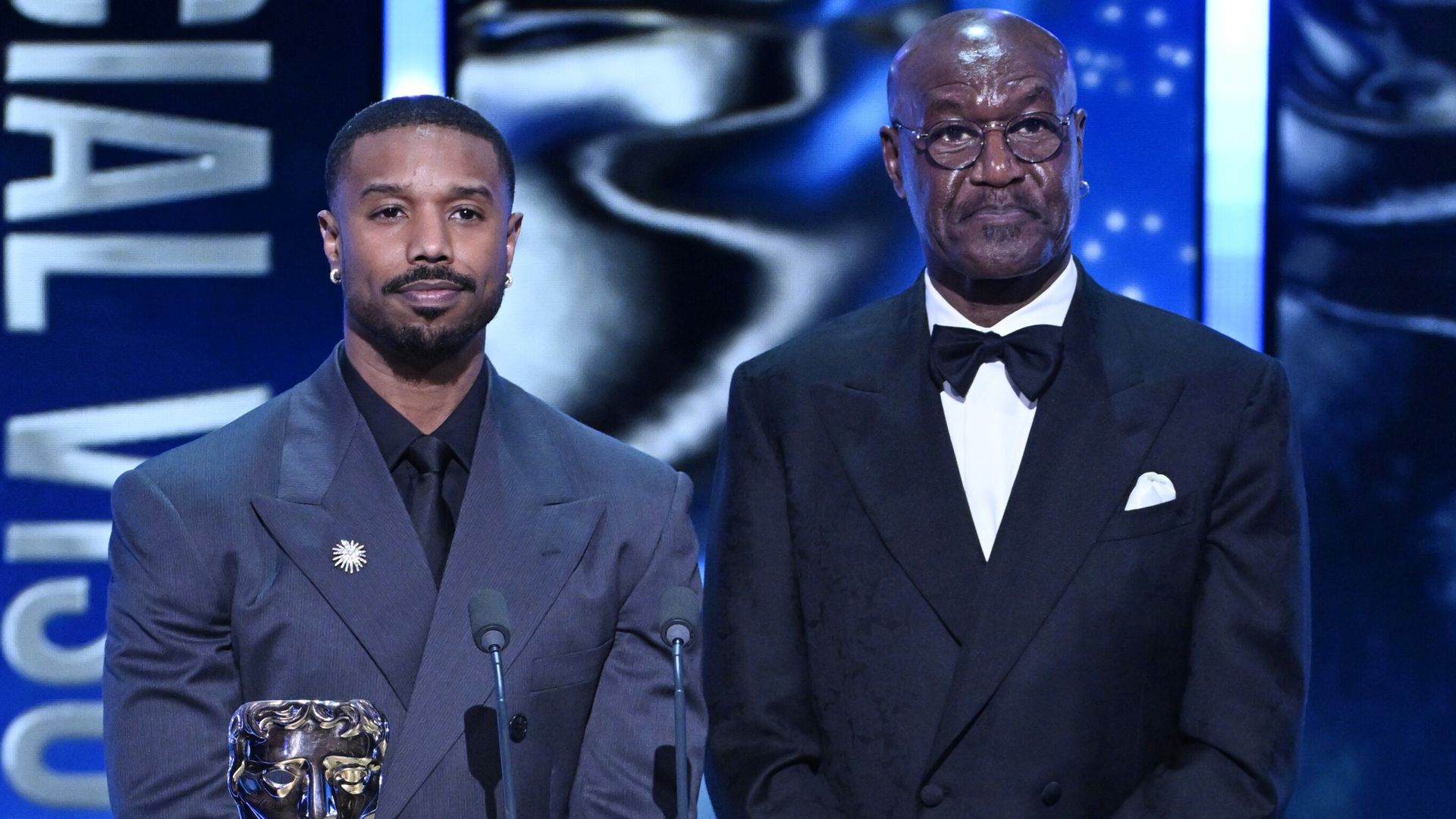
The air inside the Royal Festival Hall is usually thick with a specific kind of electricity during the BAFTAs. It is the scent of expensive oud, the rustle of heavy silk, and the desperate, quiet hum of nervous ambition. For a few hours, the world outside—the rain slicking the London pavement, the mundane worries of the morning—dissolves into a golden haze of recognition.
But at the heart of the most recent ceremony, that golden haze stuttered.
When Tim Davie, the Director General of the BBC, stood before a phalanx of microphones later, he wasn't there to celebrate a triumph of British broadcasting. He was there to offer a "profound regret." It is a heavy phrase, usually reserved for diplomatic incidents or catastrophic corporate failings. In the context of an awards show, it felt jarring. It felt like a crack in the porcelain.
The incident in question wasn't a technical glitch or a wardrobe malfunction. It was a failure of the one thing an awards show is built to provide: the moment.
The Anatomy of a Misfire
Imagine, for a second, that you are an actor. You have spent years in the trenches of regional theater, endured a hundred "noes" for every "maybe," and finally, you have reached the pinnacle. You are sitting in that hall. Your heart is a drum against your ribs. The presenter opens the envelope. They say a name.
It is your name.
You stand. The room erupts. You feel the heat of the lights. You walk toward the stage, your mind a blur of faces you need to thank. You reach the microphone, the heavy mask of the BAFTA cooling in your grip. And then, the music stops. The lights shift. A voice—disembodied, panicked—tells you there has been a mistake.
This isn't a hypothetical scenario for those who remember the La La Land and Moonlight debacle at the Oscars. But at the BAFTAs, the friction was different. It was a lapse in the live-to-tape transition, a moment where the "wrong" winner was announced to the room, only to be corrected before the televised broadcast reached the public.
To the millions watching at home, the seam was invisible. To the person standing on that stage, it was a soul-crushing pivot.
The BBC's apology wasn't just about a clerical error. It was an admission that they had broken the unspoken contract between the storyteller and the audience. We watch these ceremonies because we want to see the raw, unscripted eruption of human joy. When that joy is retracted, the artifice of the entire industry is laid bare. We are reminded that this is, after all, just a television production.
The Invisible Stakes of "Live" Television
We live in an era where "live" is a relative term. Most major awards shows operate on a delay, a safety net designed to catch swear words, protests, or the occasional stumble. But that safety net can also become a snare.
The BBC prides itself on being the gold standard of broadcasting. When Tim Davie speaks of "profound regret," he is speaking as the custodian of a brand that signifies reliability. In the hallways of Broadcasting House, a mistake of this magnitude is viewed as a systemic infection.
The stakes aren't just about hurt feelings. They are about the integrity of the vote and the sanctity of the record. If the room hears one thing and the world sees another, which one is the truth? In the digital age, where a clip can travel around the globe in thirty seconds, the "fix" often arrives too late to stop the bleeding.
Consider the ripple effect. An award isn't just a trophy; it is a "lever." It changes the budget for the winner's next film. It alters the way their name is spoken in rooms in Los Angeles and Mumbai. When the BBC fumbles that moment, they aren't just messing up a TV show. They are flickering the lights on someone's career trajectory.
The Human Cost of the Correction
There is a specific kind of silence that follows a corrected mistake on a stage. It is a vacuum. The person who was mistakenly called must retreat. The person who actually won must ascend through a cloud of awkwardness, their own triumph dampened by the ghost of the previous announcement.
Davie’s public contrition was a necessary act of theater in itself. He had to signal to the industry—to the agents, the studios, and the performers—that the BBC still knows how to handle the crown jewels of British culture.
"We are looking at our processes," is the standard corporate refrain. But how do you build a process that accounts for human panic? How do you ensure that when the red light goes on, the person holding the envelope doesn't succumb to the dizzying pressure of the moment?
The reality is that we are moving toward a world of clinical perfection, where AI-driven teleprompters and digital safeguards promise to eliminate "the human error." Yet, ironically, it is the human error that makes us tune in. We don't watch the BAFTAs to see a perfectly executed corporate presentation. We watch to see the cracks. We watch for the tear in the eye, the stumble on the stairs, and yes, even the mistake.
The Weight of the Mask
The BAFTA trophy is a mask based on the Commedia dell'arte. It is a fitting symbol. One side represents comedy, the other tragedy. On that night, the BBC found themselves wearing both.
The tragedy was the loss of a singular, pure moment of achievement for a winner. The comedy—of the dark, satirical variety—was the frantic scurrying behind the scenes to mend a bridge that had already collapsed in front of an audience of peers.
When the Director General apologized, he was trying to put the mask back on. He was trying to reassure the public that the BBC is still the master of the narrative. But the public is savvier now. We know that the person behind the curtain is often just as confused as the person in front of it.
The incident serves as a reminder that prestige is a fragile thing. It is built over decades and can be bruised in seconds. The BAFTAs will recover. The BBC will tighten its protocols. New winners will be crowned, and new envelopes will be opened with trembling fingers.
But for those few minutes in the hall, the illusion vanished. The lights were too bright, the oud was too cloying, and the "profound regret" of a powerful man couldn't stitch back together the shredded nerves of an artist who thought, for one fleeting second, that the world was finally calling their name.
The silence that followed the correction wasn't just an absence of sound. It was the sound of a dream being recalculated in real-time. It was the quiet realization that even in the most choreographed nights of our lives, the script can still be torn to pieces by a single, shaking hand.
The spotlight moved on, as it always does, searching for a new face to illuminate, indifferent to the shadows it left behind.