The air in the Situation Room doesn’t just feel heavy; it feels pressurized. It is the kind of silence that rings in your ears, a vacuum where the only sound is the rhythmic, mechanical hum of cooling fans and the occasional shuffle of a briefing paper. When the world is about to change, it rarely starts with a bang. It starts with a flicker on a digital screen.
On a night that would eventually see the horizon over Isfahan and Tehran lit by the artificial glow of interceptors and impacts, the mechanics of war were being greased by something far more volatile than rocket fuel: the personal physics of two leaders who had spent years circling one another. We often talk about geopolitics as if it were a game of chess played by grandmasters. We use words like "strategic depth" and "proportionality." But in the moments that actually define history, it usually comes down to a phone call, a jagged ego, and the terrifying reality of forcing someone’s hand. For a different view, consider: this related article.
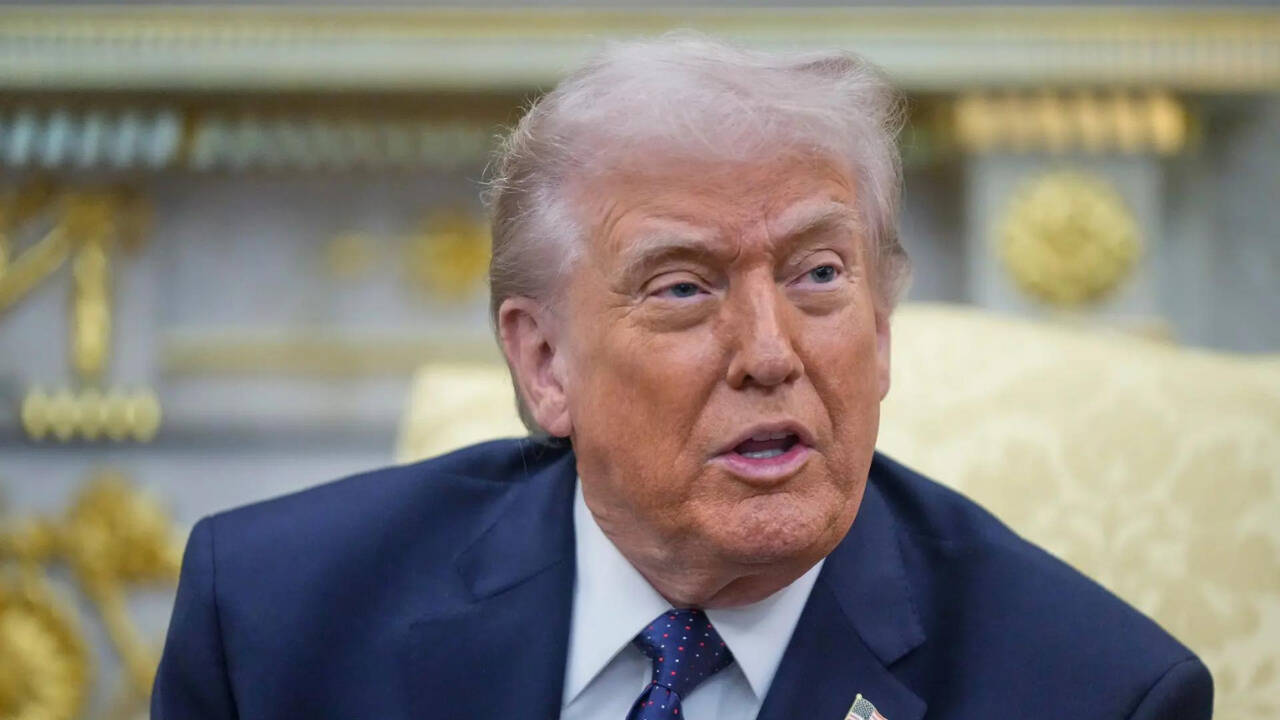
Donald Trump sat in the center of this particular storm, reflecting on the charred remains of Iranian military infrastructure. His assessment was blunt, stripped of the diplomatic lacquer that usually coats such events. "Everything knocked out," he remarked. It sounds like a line from a technician's report, but it carried the weight of a tectonic shift.
The Invisible Tripwire
To understand how we reached the point where a former president claims he "might have forced Israel's hand," we have to look past the missiles. We have to look at the psychology of the cornered. Further analysis regarding this has been provided by The Guardian.
Imagine you are standing in a narrow hallway. At one end is a door you must reach. At the other is an adversary who has spent decades building a fence of thorns between you and that door. This is the reality of the Israeli-Iranian shadow war. For years, the conflict existed in the "gray zone"—cyberattacks that crippled gas stations, mysterious explosions at centrifuge facilities, and the occasional targeted strike in a third-party country. It was a dance of shadows.
Then, the shadows vanished. The light of a thousand drones and missiles over the Negev Desert changed the math forever. When Trump speaks about forcing a hand, he isn't talking about a gentle nudge. He is talking about the removal of options.
By pulling back the curtain on the "Maximum Pressure" campaign and later critiquing the current administration’s perceived hesitance, Trump carved out a narrative where the only path forward for Israel was through the obstacle, not around it. He suggested that his posture had effectively boxed the Jewish state into a corner where military action wasn't just a choice; it was a biological imperative for survival.
The Human Cost of High Stakes
Statistics are a sedative. They make us forget that "everything knocked out" means thousands of individuals—technicians, soldiers, and nearby civilians—waking up to the sound of their world shattering.
When a missile battery is neutralized, it isn't just a win on a ledger. It is the destruction of a shield. For the Iranian leadership, it is a moment of profound nakedness. For the Israeli pilot screaming through the atmosphere at Mach 2, it is a moment of absolute isolation. There is no "international community" in a cockpit. There is only the mission and the cold, hard fact that if you fail, your home is the target.
The tension of these strikes isn't found in the explosions themselves, but in the seconds of flight time before impact. It’s the father in Haifa holding his daughter’s hand in a bomb shelter, wondering if the Iron Dome’s streak of light will find its mark. It’s the shopkeeper in Tehran watching the sky and wondering if the rumors of a "limited strike" are true, or if this is the beginning of the end.
The Poker Game of Sovereignty
Trump’s rhetoric suggests a level of influence that borders on the paternalistic. By claiming he "forced" a hand, he paints a picture of Israel as a reluctant actor pushed into the fray by American decisiveness—or the lack thereof.
But sovereignty is a jealous thing.
Israel has long maintained the "Begin Doctrine," the idea that they will not allow any enemy in the Middle East to acquire weapons of mass destruction. This isn't a political talking point; it is a scar from history that has never fully healed. When Trump reflects on the strikes, he is tapping into a fundamental truth about power: once you demonstrate that you are willing to burn the bridge, the other side has no choice but to start swimming.
Consider the ripple effect of a destroyed radar site.
- The "eyes" of the defense system go dark.
- The leadership loses its ability to see the incoming threat.
- Panic sets in at the command level.
- The decision-making process accelerates from minutes to seconds.
In that acceleration, mistakes happen. Miscalculations occur. Trump’s assertion is that by tightening the noose, he made the eventual explosion inevitable. He didn't just watch the pot boil; he turned up the flame and welded the lid shut.
The Silence After the Strike
There is a specific kind of quiet that follows a massive military operation. It is the silence of realization.
As the smoke cleared from the sites that Trump claimed were "knocked out," the world scrambled to find its footing. The markets fluctuated. Oil prices jittered. Diplomats at the UN dusted off their most sternly worded condemnations. But on the ground, the reality was simpler and much more terrifying. The "red lines" had been crossed, redrawn, and crossed again.
We often wonder if the people in power have a master plan. We want to believe there is a grand strategy, a 3D chess game where every move is calculated ten steps ahead. But listening to the raw, unfiltered commentary from the former president suggests something more chaotic. It suggests that history is often driven by a series of forced moves—a game of high-stakes chicken where neither side can afford to blink, and the person standing behind them is the one pushing them toward the edge.
The invisible stakes are the lives of millions who have no say in the phone calls made in Mar-a-Lago or the bunkers in Jerusalem. They are the collateral of a "forced hand."
When we look at the maps and the satellite imagery of the damage, we see charred earth and twisted metal. We see "everything knocked out." But if you look closer, you see the end of an era. The era of the shadow war is over. We have entered the era of the sun, where every strike is visible, every consequence is immediate, and no one can claim their hands were clean.
The sky over the Middle East has a way of staying red long after the sun goes down, reflecting the fires of a conflict that no longer knows how to stay within the lines.