The coffee in Ahmed’s thermos was still hot when the first vibration shuddered through the soles of his work boots.
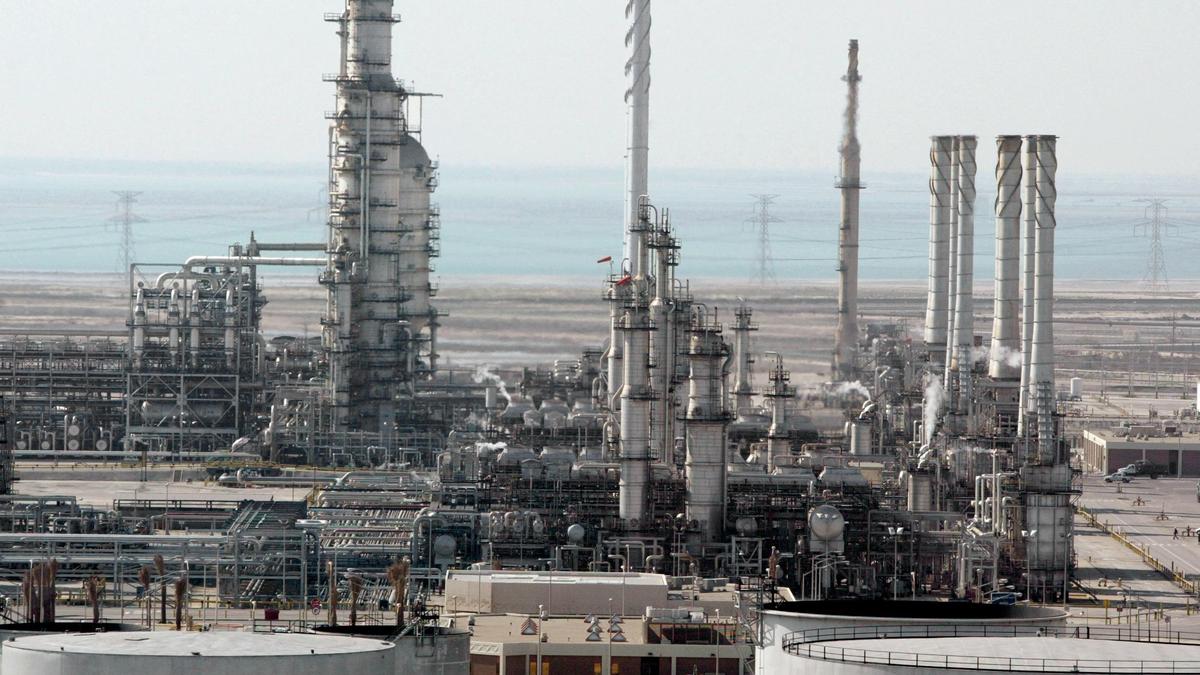
At the Ras Tanura refinery, sound is a constant companion. It is a rhythmic, industrial heartbeat—the hiss of high-pressure steam, the low-frequency thrum of massive turbines, and the distant roar of the flares that lick at the Persian Gulf sky. You learn to tune it out. But this sound was different. It wasn't a mechanical groan or a pressure release. It was a sharp, percussive crack that tore through the salt-heavy air, followed by a silence that felt heavier than the heat.
Then came the sirens.
To the outside world, Ras Tanura is a line item on a Bloomberg terminal. It is a "critical node in the global energy supply chain," a facility capable of processing over 500,000 barrels of crude oil every single day. When a drone swarm breached the perimeter of this Saudi Arabian titan, the global markets reacted with the cold, calculated twitch of an algorithm. Prices spiked. Analysts pulled up spreadsheets. Press releases were drafted with sterile phrases like "temporary suspension of operations" and "precautionary shutdown."
But for the men and women standing on the gantries, the reality wasn't about price per barrel. It was about the smell of burning hydrocarbons and the terrifying sight of a billion-dollar engine being forced to a grinding halt.
The Ghost in the Machine
Modern refineries are not just collections of pipes and tanks; they are living, breathing organisms. They operate at temperatures and pressures that would turn a human being into a memory in a heartbeat. The balance is delicate. Crude oil enters the system as a thick, dark slurry and is coaxed, heated, and pressurized through a labyrinth of steel until it emerges as the lifeblood of modern civilization.
Imagine a high-speed train traveling at three hundred miles per hour. Now, imagine someone throwing a steel bar into the tracks. That is what a sudden, forced shutdown feels like for a facility of this magnitude.
When the drones struck, the internal logic of the refinery took over. Automated safety systems—the "brain" of the plant—began a frantic sequence of closures. Valves slammed shut. Flows were diverted. To prevent a catastrophic explosion, the facility had to purge its guts. This is why the sky over the Eastern Province turned a violent, flickering orange. The flares, usually steady pilots, became towering infernos as the system vented gases to save itself.
The "temporary shutdown" reported in the news sounds like flicking a light switch. In reality, it is a desperate, coordinated scramble to prevent the metal itself from warping under the sudden change in thermal stress. If the cooling is too fast, the pipes crack. If the pressure isn't vented, the tanks fail.
The Invisible Stakes of a Silent Sky
Why does a drone attack on a spit of land in the Persian Gulf matter to a commuter in London or a farmer in Iowa?
We live in a world built on the assumption of flow. We assume that when we turn the key, the engine starts. We assume that the plastic casing of our phones, the fertilizer for our crops, and the heat in our homes will always be available because the "flow" is invisible. Ras Tanura is the heart that pumps that flow.
When that heart skips a beat, the ripple effect is almost instantaneous. It isn't just about gasoline. It’s about the entire derivative market of modern existence. The shutdown triggered a "force majeure" logic that reshuffles shipping lanes from Singapore to Rotterdam. Tankers already at sea, carrying millions of gallons of product, suddenly become floating islands of uncertainty. Their captains wait for orders, burning fuel just to stay in place, while the cost of insurance for the entire region skyrockets.
The attackers knew this. They weren't just aiming for steel and oil; they were aiming for the psyche of the global market. They wanted to prove that the most fortified energy hub on the planet is vulnerable to a machine that costs less than a used sedan.
The Human Cost of Calibration
While the world watches the Brent Crude tickers, the recovery effort is a human one.
Consider the "turnaround" crews. These are specialists who live in a world of tolerances measured in millimeters. Following a drone strike and a hard shutdown, every inch of the affected units must be inspected. You cannot simply "restart" a refinery. You have to court it back to life.
Engineers like our hypothetical Ahmed spend the following forty-eight hours in a haze of adrenaline and caffeine. They are looking for "hot spots." They are listening for the tell-tale whistle of a microscopic leak in a high-pressure line. They are recalibrating sensors that were jolted by the percussion of the blasts.
There is a profound psychological weight to this work. These workers know that they are standing on a target. Every time a shadow crosses the sun, or a distant engine backfires, heads turn toward the sky. The physical damage from the drones might be repaired with a few tons of steel and some specialized welding, but the sense of security is much harder to patch.
The refinery is a fortress, surrounded by Patriot missile batteries and high-tech surveillance. Yet, the "asymmetric" nature of the attack—using small, low-flying drones that mimic the radar signature of a large bird—means the defenders are playing a game where the rules change every night.
The Fragile Geometry of Energy
The shutdown at Ras Tanura is a symptom of a much larger shift in how we understand global security.
For decades, we thought in terms of "front lines" and "armies." Today, the front line is a cooling tower. The army is a remote operator sitting hundreds of miles away with a laptop and a joystick. This isn't a "game-changer"—to use a tired phrase—it is a total collapse of the old walls.
We are seeing the birth of a new kind of friction. In the past, if you wanted to cripple an economy, you needed a navy. Now, you just need to interrupt the "just-in-time" delivery of a single refinery's output. The complexity of our global systems is our greatest strength, but it is also our most glaring weakness. We have optimized for efficiency at the expense of resilience.
When the news cycle moves on to the next crisis, the scars at Ras Tanura remain. The soot is scrubbed away, and the twisted metal is replaced. But the engineers who walked those gantries in the orange glow of the flares don't forget. They know how close the system came to a total cardiac arrest.
The restart begins with a single flame. Slowly, the heaters are fired back up. The temperatures climb, degree by agonizing degree. The hooting of the steam returns to its familiar pitch. The "temporary shutdown" officially ends, and the Bloomberg terminal goes back to green.
But the silence that followed the explosion stays in the back of your mind. It serves as a reminder that the comfort of our modern lives is held together by a thin web of steel, guarded by tired men in fire-retardant coveralls, and threatened by shadows in the sky.
The world moves on, but the heartbeat of the refinery feels just a little more frantic than it did before.
Would you like me to analyze the historical data of similar energy infrastructure attacks to see how they influenced global policy?