The windows in Tehran do not just rattle when the missiles strike; they hum a low, terrifying frequency that vibrates in the marrow of your bones. Imagine a mother named Samira—a hypothetical woman but one whose fear is mirrored in millions of living rooms tonight. She isn't thinking about geopolitical alliances or the intricacies of the "axis of resistance." She is thinking about the thin pane of glass separating her sleeping child from a sky that has suddenly turned into a jagged mosaic of fire and steel.
When the news broke that Israel and the United States had launched strikes against Iranian military targets, the dry press releases described it as a "surgical operation" or a "strategic response." But there is nothing surgical about the sound of an explosion echoing through a valley. There is only the weight of the air changing and the realization that the world’s most dangerous friction point just sparked.
The Echo from the Kremlin
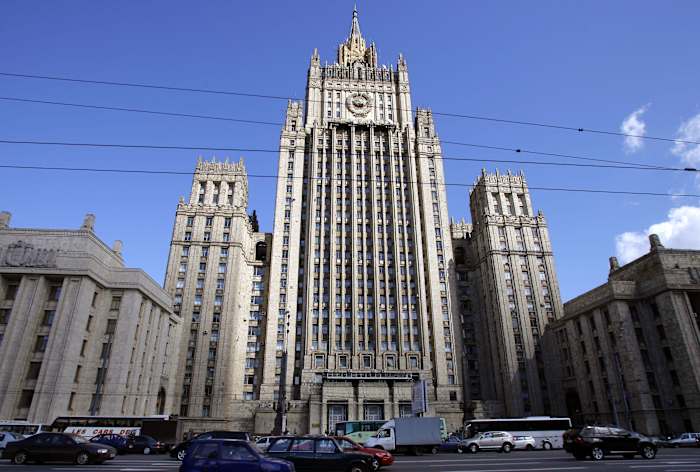
Far to the north, in the gilded halls where Moscow’s power resides, the reaction was swift. It wasn't just a diplomatic memo. It was a roar. Russia’s condemnation of the strikes as an "unprovoked act of armed aggression" represents a tectonic shift in how we view global conflict. To Moscow, this isn't a localized skirmish. It is a violation of the very concept of sovereignty—or at least, the version of sovereignty they choose to defend.
The Russian Ministry of Foreign Affairs didn’t mince words. They painted a picture of a world where the rule of law is being replaced by the rule of the missile. By labeling the strikes as "unprovoked," Russia is doing more than defending an ally. They are drawing a line in the sand, signaling that the era of Western military unilateralism is, in their eyes, a relic that must be dismantled.
Consider the mechanics of this alliance. It isn't born of shared culture or identical values. It is a marriage of necessity. When Russia looks at the smoking craters in Iran, they see a mirror. They see the same Western technology and the same strategic logic that they face on their own borders. This shared sense of being "under siege" has fused Moscow and Tehran into a partnership that is no longer just about trade—it’s about survival.
The Invisible Architecture of War
We often talk about war in terms of maps and arrows, but the reality is found in the "kill chain"—the split-second sequence of data, satellite imagery, and localized targeting that allows a jet hundreds of miles away to put a hole through a specific roof.
The US-Israel strikes weren't just about destroying hardware. They were a demonstration of a digital dominance that makes traditional borders feel like tissue paper. Israel’s intelligence apparatus, fused with American logistical and satellite support, creates a "glass house" effect. They see everything. They know where the centrifuges hum and where the commanders sleep.
Russia’s anger stems from this technological asymmetry. They know that if the US and Israel can strike Iran with impunity, the precedent for future "surgical" interventions grows stronger. It is a game of high-stakes chess where the board is the entire Middle East, and the pieces are human lives.
The Cost of the Calculated Risk
What does "unprovoked" actually mean in a land where history goes back thousands of years? To Washington and Tel Aviv, the provocation is a shadow war that has been simmering for decades—drones sent to Ukraine, proxies funded in Lebanon, and the persistent, low-grade thrum of a nuclear program that refuses to stay in the dark.
But to the Russian observer, this logic is a trap. They argue that "preventative" strikes are merely a euphemism for aggression. This creates a dangerous feedback loop.
- Country A feels threatened and strikes.
- Country B views the strike as unprovoked and retaliates.
- Country C (the ally) ramps up its military support to "restore balance."
The result? The balance is never restored. It only gets heavier.
The Human Geometry of a Missile Strike
Let’s go back to Samira. She doesn't have a seat at the UN Security Council. She doesn't have access to the encrypted channels between the Kremlin and the White House. To her, the "unprovoked act of armed aggression" isn't a headline—it’s the smell of ozone and the sight of her neighbors packing suitcases into the trunks of cars in the middle of the night.
There is a psychological toll to living in a state of "imminent" conflict. It erodes the ability to plan for next week, let alone next year. When Russia condemns these strikes, they are tapping into a global sentiment of exhaustion. Much of the world is tired of the sky falling. They are tired of the justifications that come after the smoke has cleared.
Yet, there is a harsh truth that Russia ignores in its rhetoric: the vacuum of inaction. If the US and Israel do nothing while a regional power expands its reach, does that lead to peace? Or does it simply delay a much larger, much darker explosion?
The Great Decoupling
The real story isn't just the missiles. It is the decoupling of the world into two distinct realities.
In one reality—the Western one—these strikes are a necessary defense of democratic interests and a deterrent against a regime that exports instability. In the other reality—the one shared by Russia and Iran—these strikes are the dying gasps of a colonial mindset, an attempt to hold onto power through brute force.
These two worlds no longer speak the same language. Words like "justice," "provocation," and "defense" have been hollowed out. They are now just weapons themselves, used to sharpen the resolve of the home crowd while alienating the "enemy."
Russia’s statement wasn't intended to change minds in Washington. It was intended to solidify the "Global South," to speak to countries that have felt the weight of Western intervention and are looking for a different way to exist. It is a recruitment drive disguised as a diplomatic protest.
The Weight of the Silence
After the explosions stop, a strange silence settles over a city. It is the silence of people waiting for the "other shoe" to drop. Will there be a response? Will the Strait of Hormuz be closed? Will the price of oil at a gas station in Ohio or a bakery in Paris skyrocket by morning?
Everything is connected. The missile that hits a warehouse in Isfahan ripples through the global economy, through the corridors of the UN, and through the hearts of people who just want to wake up in a world that makes sense.
Russia’s warning of "unpredictable consequences" isn't just a threat. It’s a prophecy. When you puncture the sovereignty of a nation, you aren't just hitting a target. You are tearing the fabric of a delicate, international agreement that has kept the "Big War" at bay since 1945. Every time a strike is launched, that fabric gets a little thinner.
The sky over Tehran might be clear now, the smoke dissipated by the morning breeze, but the air remains heavy. It is the weight of a world that has forgotten how to talk and has mastered the art of the strike.
Samira finally closes her eyes, her child still breathing softly in the dim light. She knows the glass didn't break tonight. But she also knows that out there, in the dark, the men with the maps are already choosing the next set of coordinates.