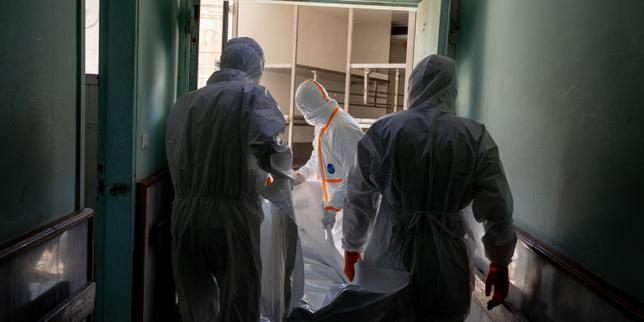
The windows in Tehran do not just shake; they rattle with a frequency that vibrates in the marrow of your bones. It is a specific, violent percussion. It is the sound of geopolitical posturing translated into the shattering of glass and the panicked rhythm of a heart that has nowhere to hide. When the Israeli military command announces that bombardments will intensify, they are talking about coordinates, military assets, and strategic degradation. But on the ground, the story is told in the smell of scorched concrete and the sight of a child clutching a battery-operated radio as if it were a holy relic.
History is rarely a straight line. It is a jagged sequence of escalations. We are currently watching the ink dry on a chapter that many hoped would never be written. The dry reports tell us that Israel has signaled a significant increase in its air campaign against Iranian targets. They cite the need to dismantle missile infrastructure and respond to previous volleys. These are the facts. They are cold. They are clinical. They are also entirely insufficient to describe the reality of a region holding its breath.
The Mathematics of Fear
Consider a hypothetical family in the suburbs of Karaj. Let’s call the father Elias. Elias is not a general. He is a man who worries about the price of bread and whether his daughter’s asthma will flare up from the dust kicked up by nearby impact zones. To Elias, "intensification" is not a word found in a press release. It is the calculation of how long it takes to get to the basement. It is the weight of the silence between the sirens.
The strategic logic used by planners in Tel Aviv suggests that a heightened pace of strikes will deter further aggression. They argue that by stripping away the layers of Iran’s defensive and offensive capabilities, they create a margin of safety for their own citizens. There is a brutal, mathematical consistency to this. If X amount of pressure did not stop the missiles, then X plus twenty percent must be the answer.
But humans are not variables in an equation.
Pressure often yields a different result in the crucible of war. Instead of a retreat, it creates a vacuum that is quickly filled by desperation and a hard-line resolve. When a civilian population hears that the fire will grow hotter, they don't always look for the exit. Sometimes, they simply learn to live in the flames.
The Invisible Stakes
We often talk about these conflicts as if they are chess matches played by giants. We track the movement of F-35s and the trajectory of ballistic missiles like we are watching a high-stakes sporting event. We miss the invisible stakes. These are the things that don't show up on satellite imagery.
There is the erosion of the middle ground. In every country involved, there are people who desperately want a future that involves trade, travel, and tranquility. Every time the "intensity" dial is turned clockwise, those voices are silenced. They are drowned out by the roar of jet engines and the rhetoric of "total victory."
The infrastructure being targeted might be military, but the psychological infrastructure being destroyed belongs to everyone. Trust is the first casualty, followed closely by the belief that tomorrow will look anything like yesterday. The international community watches from a distance, issuing statements that feel like throwing paper planes into a hurricane. They speak of "restraint" while the horizon is glowing orange.
The Language of Fire
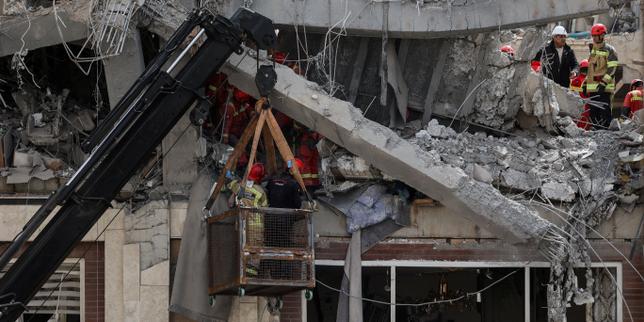
The military briefings are masterpieces of euphemism. They speak of "surgical strikes" and "neutralizing threats." If you have ever stood near a site where a high-explosive munition has detonated, you know there is nothing surgical about it. It is a blunt, deafening trauma. The air is sucked out of your lungs. The world turns gray with pulverized stone.
When Israel warns of an intensification, they are signaling a shift from targeted messaging to a broader campaign of attrition. This isn't just about hitting a warehouse; it's about breaking a chain of command and a national will. It involves a sophisticated dance of electronic warfare, where GPS signals flicker and die, and the very airwaves become a battlefield.
But for those underneath the flight paths, the sophistication is irrelevant. There is only the noise.
One-word descriptions of these nights:
- Heavy.
- Electric.
- Interminable.
The Ripple Effect
The world is smaller than the maps suggest. A strike in Iran ripples through the oil markets in London, the political debates in Washington, and the shipping lanes of the Red Sea. We are all tethered to these explosions. The intensification of the conflict isn't just a regional concern; it is a stress test for a global order that is already showing deep, jagged cracks.
Logic would dictate that there is a ceiling to this escalation—a point where the cost of continuing outweighs the benefit of the next strike. Yet, history is littered with the ruins of empires that thought they could control the fire once it was lit. The problem with "intensifying" a war is that you lose the ability to choose how it ends. The enemy gets a vote. The wind gets a vote. The unexpected failure of a single technical system can turn a "controlled strike" into a catalyst for a global catastrophe.
We are currently in the phase of the story where the protagonists believe they are in control of the narrative. They believe that by increasing the volume, they can force the other side to listen. But when everyone is screaming, no one can hear anything at all.
The Cost of Being Right
There is a specific kind of exhaustion that sets in during a prolonged conflict. It’s not the exhaustion of physical labor; it’s the exhaustion of constant hyper-vigilance. You begin to jump at the sound of a motorcycle backfiring. You find yourself staring at the clouds, wondering if the streak of white is a commercial flight or something meant to change your life forever.
The leaders making these decisions are often insulated from this exhaustion. They sit in bunkers or well-guarded offices, surrounded by maps and advisors. They see the "big picture." But the big picture is composed of millions of small pictures—lives that are being paused, altered, or ended.
If we look closely at the statistics provided by NGOs and news agencies, we see that the humanitarian corridors are narrowing. Supply chains for medicine are breaking. The "intensified" bombing campaign means that even if a missile hits its intended military target, the surrounding electrical grid fails. The water pumps stop. The hospitals switch to generators. The margin for error disappears.
Beyond the Horizon
We are told that this is necessary. We are told that this is the only way to ensure long-term peace. It is a paradoxical argument: we must burn the field to ensure the flowers grow back stronger.
Perhaps that is true in the world of cold strategy. But in the world of human experience, the ash remains. Even if the bombings stop tomorrow, the "intensification" has already done its work. It has etched a new layer of trauma into the collective memory of a generation. It has taught children that the sky is a source of danger, not wonder.
The real stakes aren't the silos or the command centers. The real stakes are the possibility of a world where we don't have to explain to a five-year-old why the house is shaking. Every time we move closer to the brink, that possibility recedes a little further into the distance.
The sirens are starting again. Not everywhere, and not all at once, but the frequency is increasing. The air is thick with the weight of what comes next. People are looking at their phones, looking at the sky, and then looking at each other. There is no more room for dry facts. There is only the waiting.
The sun will eventually rise over the rubble and the resilient, over the craters and the cafes that will stubbornly reopen. But it will rise on a world that has been irrevocably hardened. The sky may finally go quiet, but the silence that follows an intensification is never truly peaceful. It is merely the sound of a world catching its breath before the next scream.
Imagine Elias now. He isn't looking at a map. He is sitting on the edge of his bed, listening to the low, rhythmic thrum of distant engines, realizing that "intensify" is just a polite word for the end of the world as he knew it. He reaches out to steady a glass of water on his nightstand, watching the ripples spread across the surface, waiting for the impact that will turn those ripples into a wave.
The sky is no longer a canopy. It is a ceiling that is slowly, deliberately, being lowered.