The air in Riyadh usually tastes of dust and expensive gasoline, a dry heat that settles into your lungs like a physical weight. But on that Tuesday, the atmosphere felt different. It was brittle. Electric. Static seemed to dance on the skin of everyone walking past the high concrete blast walls of the Diplomatic Quarter.
Inside the US Embassy, the clocks ticked with a rhythmic, mechanical indifference. For the staff—the analysts, the security detail, the administrative aides—it was supposed to be another evening of managing the delicate, grinding gears of Middle Eastern diplomacy. Then came the sound.
It wasn’t a roar. It wasn’t the cinematic whistle of a missile. It was a low, persistent buzz, like a swarm of angry hornets trapped in a glass jar.
The Ghost in the Machine
Modern warfare has lost its grandeur. There are no bugles, no charging cavalry, no brightly colored uniforms visible from across a valley. Instead, there is the "loitering munition." To the engineers in Tehran who designed them, they are the Shahed series. To the people on the ground in Saudi Arabia, they are "suicide drones." To the young Marine standing watch on the embassy roof, they were just gray blips that refused to die.
The attack was a symphony of precision and chaos. While American and Israeli forces were busy trading blows with Iranian assets across the Persian Gulf—striking at missile silos and command centers in a rapid-fire escalation—the blowback arrived in a way that felt deeply personal. It struck at a sovereign patch of American dirt in the heart of the Kingdom.
Consider the physics of it. A drone weighing less than a compact car, powered by an engine not much more sophisticated than what you’d find in a high-end lawnmower, carrying a payload of high explosives. It doesn't need a pilot. It only needs a coordinate and the cold, unfeeling logic of its internal GPS.
The first impact shattered the evening prayer’s transition into night.
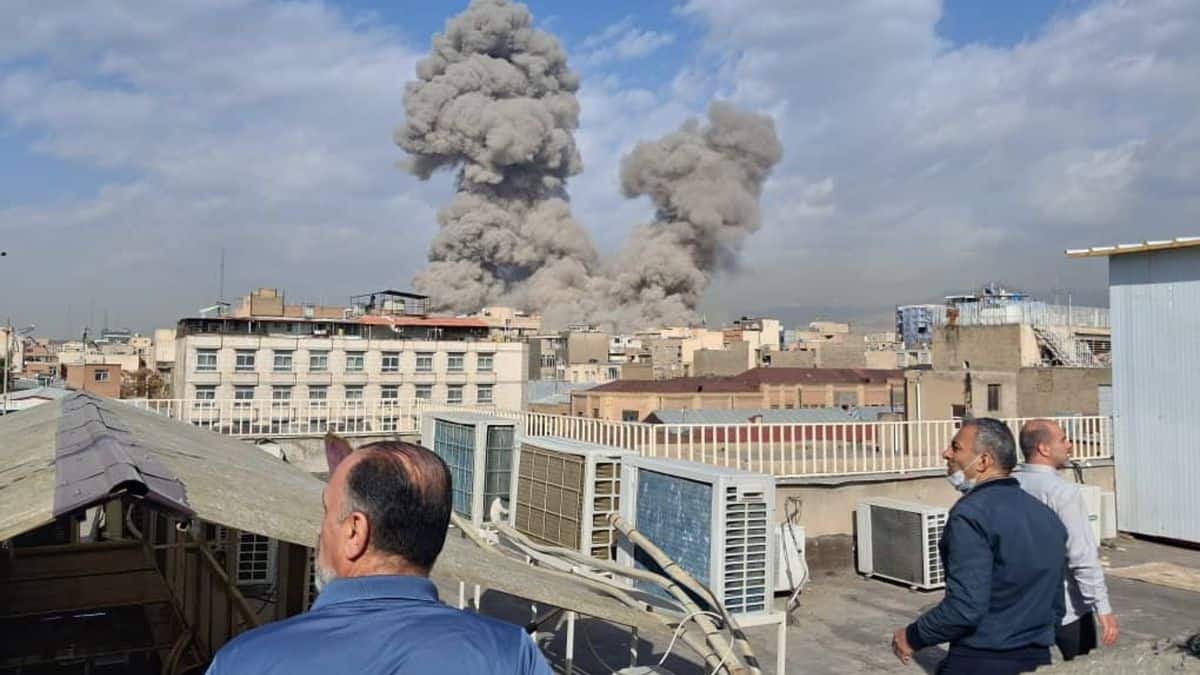
A fireball erupted near the perimeter, a bloom of orange and black that turned the palm trees into charred skeletons. Glass, reinforced and layered to withstand immense pressure, groaned but held. The scream of the sirens followed a heartbeat later, a wailing lament that echoed off the limestone facades of the surrounding villas.
A Chessboard Made of Glass
To understand why a drone hits a building in Riyadh, you have to look hundreds of miles away, to the darkened rooms where generals map out the "Gray Zone." This isn't a traditional war. It’s a series of messages written in fire.
For weeks, the cycle had been accelerating. Israel strikes a research facility near Isfahan. The US intercepts a shipment in the Red Sea. Iran feels the walls closing in. When a cornered power feels it cannot win a conventional fight against a superpower, it chooses the asymmetrical path. It chooses the drone.
The drone is the ultimate equalizer. It is cheap. It is replaceable. It is deniable—until it isn't.
Imagine a hypothetical diplomat named Sarah. She’s thirty-two, three years into her first major Middle East posting, and she’s currently huddled under a heavy oak desk. Her phone is vibrating with a text from her mother in Ohio asking if she’s seen the news. Sarah can’t answer because her hands are shaking too hard to type, and the power has just flickered into a dull, emergency red.
For Sarah, this isn't about geopolitical leverage or the "escalation ladder." It’s about the smell of ozone and the terrifying realization that the sky is no longer a ceiling, but a hatch.
The escalation between the US-Israeli alliance and Iran has moved past the point of shadow boxing. We are now in the era of the direct hit. Every time an Israeli F-35 paints a target in the Iranian desert, a drone is fueled up somewhere else. The stakes aren't just oil prices or maritime security; the stakes are the people sitting in offices, trying to hold the world together with memos and handshakes while the roof collapses.
The Invisible Cost of the High Ground
There is a specific kind of silence that follows an explosion. It is thick. Heavy. It’s the sound of thousands of people holding their breath at once.
As the smoke cleared over the US Embassy, the damage assessment began. Shrapnel had shredded the gardens. A section of the outer wall was blackened and pitted. But the real damage was invisible. It was the collapse of the illusion of safety.
For decades, the "Pax Americana" in the Gulf relied on a simple premise: we are too big to hit. That premise died in the dust of Riyadh. The technology has caught up to the intent. You don't need a billion-dollar air force to humiliate a giant; you just need a few dozen carbon-fiber wings and a clear night.
The American and Israeli strategy of "maximum pressure" is built on the idea that the opponent will eventually run out of room to breathe. But the opponent has found a way to breathe through a straw. By targeting the embassy, Iran sent a message that reached far beyond the diplomatic corps. They told the Saudi hosts that their skies were porous. They told the American public that their sons and daughters were within reach.
The Human Frequency
We often talk about these events in the language of a textbook. We use words like "strategic autonomy," "integrated air defense," and "kinetic response."
Stop.
Think about the gardener who was supposed to trim those palms the next morning. Think about the local Saudi security guard who has a wife and three kids in a suburb ten miles away, wondering if his job just became a death sentence. Think about the drone operator, perhaps hundreds of miles away, staring at a grainy thermal feed, waiting for a crosshair to turn green before he clicks a mouse and goes home to eat dinner.
War is becoming a video game for the person pushing the button and a nightmare for the person under the desk.
The escalation isn't a line on a graph. It is a series of heartbeats. It is the moment a father realizes he can't protect his family from something he can't even see until it's too late. The drones over Riyadh were a warning shot, not just to the US government, but to the very idea that we can contain a fire once we’ve started fanning the flames.
The US Embassy stands. The flags will be replaced. The glass will be swept up. But the vibration of those hornet-like engines stays in the bones. It lingers in the way people look at the horizon at sunset.
The sun set over the desert that evening, painting the dunes in shades of blood and violet. In the distance, the lights of Riyadh flickered on, one by one, a sprawling carpet of human life. And somewhere in the dark, the buzzing started again.
The sky is no longer empty. It is waiting.
The fire hasn't gone out; it’s just found a new place to burn.
Would you like me to research the specific technical specifications of the air defense systems currently deployed around the Riyadh Diplomatic Quarter?