The air in Baghdad’s International Zone doesn't just sit; it weighs. It is a thick, pressurized soup of heat, exhaust, and the invisible tension of a thousand unresolved histories. For those living within the high concrete blast walls of the U.S. Embassy compound—a sprawling fortress the size of Vatican City—the evening of the latest attack began like any other Tuesday.
The hum of industrial air conditioners provided the baseline. Somewhere, a coffee machine hissed. A diplomat checked a watch. A security contractor adjusted a radio. Then, the baseline vanished.
A whistle followed. It was a thin, tearing sound, like silk being ripped by a giant hand. Before the brain could categorize the noise, the impact arrived. It wasn't just a sound; it was a physical shove that vibrated through the marrow of every bone in the compound.
The Anatomy of a Siren
When the "C-RAM" system—the Counter Rocket, Artillery, and Mortar defense—engages, it sounds like a prehistoric beast screaming through a megaphone. It is a mechanical, repetitive wail designed to bypass the conscious mind and trigger the lizard brain’s "run" response.
This wasn't a drill.
Outside, the darkness of the Iraqi night was punctured by streaks of white-hot light. These are the tracers of the Phalanx weapon systems, literal walls of lead sent into the air to intercept incoming rockets. They look like laser beams from a distance. Up close, they are a desperate, high-stakes math problem played out in milliseconds.
If the math is right, the incoming rocket explodes in mid-air, a harmless firework against the stars. If the math is wrong, or if the sheer volume of fire overwhelms the sensors, the world turns into a chaos of shattered glass and scorched earth.
On this night, the rockets found their mark.
The Human Cost of Constant Vigilance
Consider a young logistics officer we will call Sarah. She isn't a combat soldier. She is a data analyst from Ohio who happens to work in a high-walled city in the middle of a desert. When the sirens began, she was mid-sentence in a video call with her mother.
The screen flickered. The connection died.
Sarah didn't scream. She didn't panic. She followed the ritual. Body armor on. Helmet buckled. Move to the hardened shelter. It is a choreographed dance of survival that every resident of the "Green Zone" knows by heart. But as she sat on the cold floor of the bunker, the silence was worse than the noise.
In that silence, you wonder if the fire you saw through the window was your office. You wonder if the colleague who stayed late at the desk is currently bleeding into a keyboard. You wonder if this is the night the walls finally prove to be too thin.
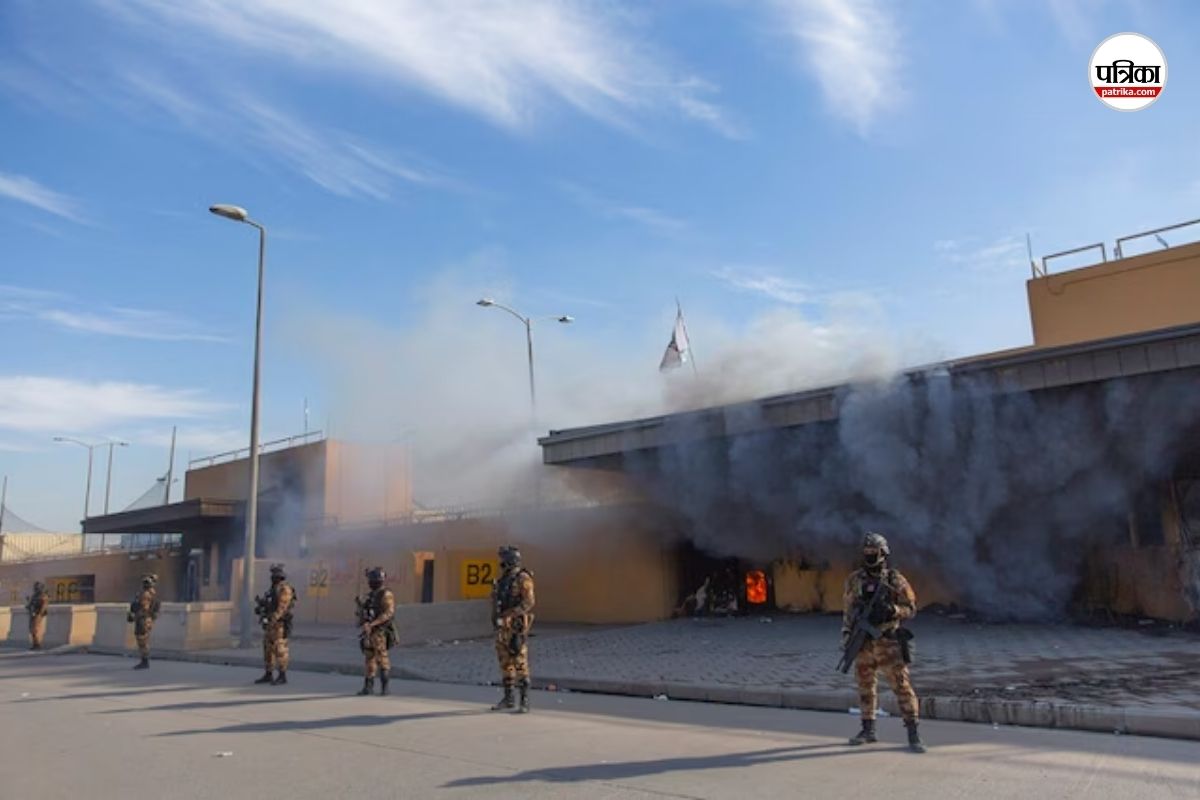
The reports filtering through the smoke spoke of "multiple projectiles." In the dry language of military briefings, these are statistics. In the reality of the ground, these are Katyusha rockets—cheap, unpredictable, and terrifyingly effective at sowing discord. One struck near the perimeter. Another found a civilian area nearby.
The flames didn't just rise; they roared. They illuminated the soot-stained faces of the local fire crews who have spent decades fighting fires started by their own countrymen and foreign powers alike.
A Cycle Without a Sunset
Why does this keep happening?
The answer isn't found in a single news cycle. It is woven into the very soil of the Tigris and Euphrates. The U.S. Embassy in Baghdad is more than a diplomatic mission; it is a giant, stationary symbol of a presence that many in the region view as a permanent scar. For militia groups backed by regional interests, these rocket attacks are a form of violent communication.
They aren't trying to "win" a war with a few rockets. They are trying to prove a point. They are saying: You are not safe here. You are not home here.
Every time a rocket is launched from the back of a flatbed truck in a dusty Baghdad suburb, it triggers a chain reaction that spans the globe. In Washington, phones buzz in the middle of the night. In Tehran, officials watch the fallout with calculated detachment. In the streets of Baghdad, ordinary Iraqis—the ones who just want to go to work without being caught in the crossfire—simply sigh and wait for the smoke to clear.
The tragedy of the "Green Zone" is that it is an island. Inside, there is bottled water, high-speed internet, and the illusion of Western order. Outside, there is a city of millions struggling with power outages, crumbling infrastructure, and the constant, vibrating threat of the next explosion. The rockets bridge that gap. They remind everyone that the walls are an atmospheric trick.
The Weight of the Morning After
When the sun finally rose over Baghdad the following morning, the sky was a bruised purple. The fires had been reduced to smoldering black patches on the pavement. The "all clear" had long since sounded.
Sarah returned to her room. Her laptop was still open, the video call long ended. She sent a short, coded text to her mother: I'm okay. Just a long night.
She didn't mention the smell of cordite that seemed to have permeated her hair. She didn't mention the way her hands shook when she tried to pour a glass of water. She didn't mention that for three minutes, while the C-RAM roared, she had forgotten what her own home smelled like.
The headlines the next day used words like "escalation" and "security breach." They analyzed the geopolitical implications of the strike. They debated the efficacy of the defense systems. But none of those words captured the sound of thirty people breathing in unison in a concrete bunker, waiting for the sky to stop falling.
Politics is a game of maps and move-sets played by people in air-conditioned rooms. But the map is made of skin. The move-sets are made of lives.
As the cleaners began to sweep up the glass shards outside the embassy gates, the city of Baghdad began its morning commute. The honking of horns replaced the wail of sirens. The market stalls opened. Life, stubborn and defiant, pushed through the soot.
But everyone knew. The rockets are never really gone. They are just waiting for the sun to go down again, hiding in the shadows of a city that has seen too many fires to ever truly feel cold.
The most terrifying thing about the attack wasn't the explosion itself, but the speed at which it became a memory. In a place where chaos is the baseline, peace is the only thing that feels like an anomaly.
Would you like me to analyze the historical frequency of these specific militia-led strikes to see if there's a predictable pattern emerging for the coming months?