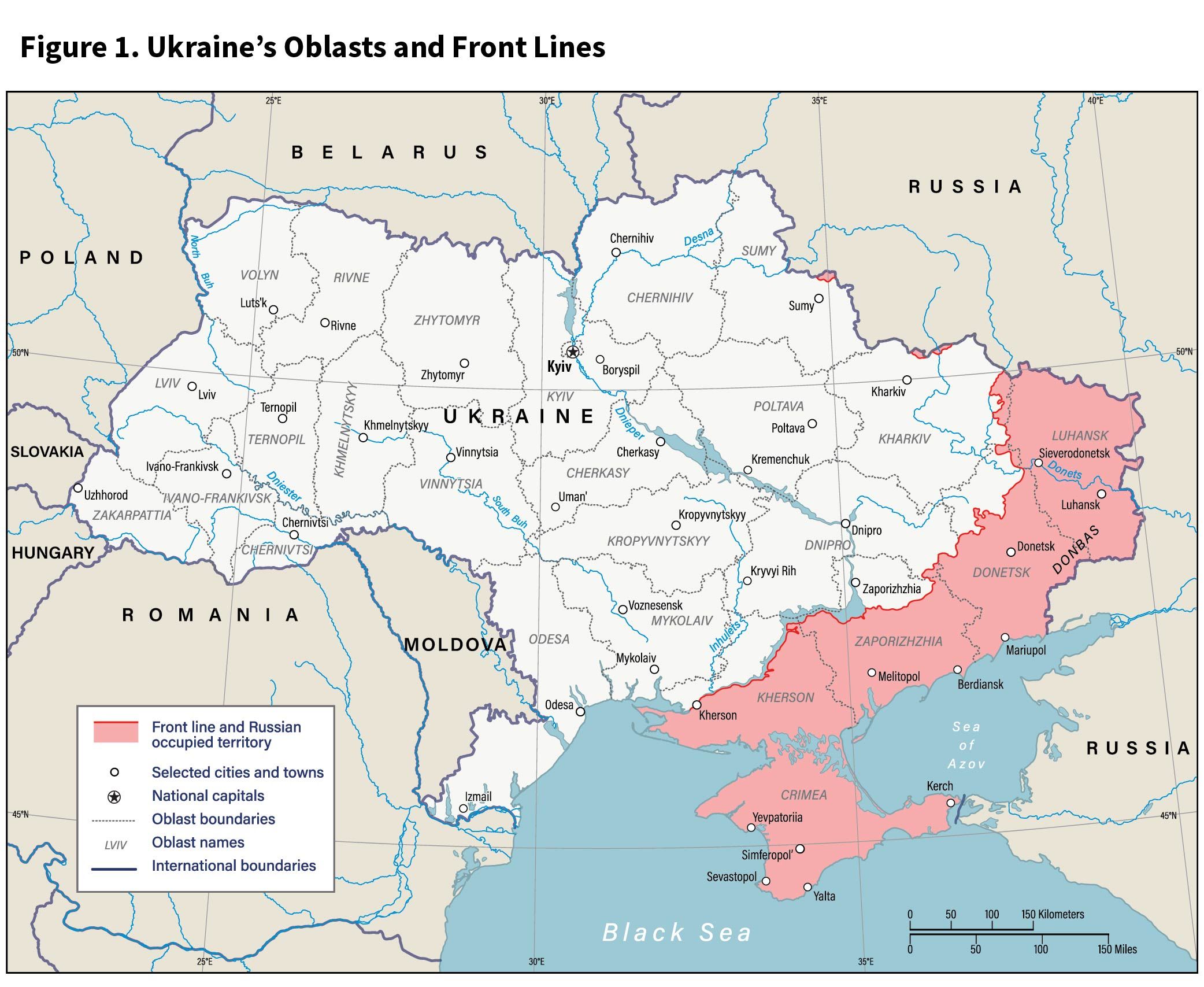
Somewhere in a concrete-reinforced control room along the border of Poland, a needle on a physical gauge began to shiver. It didn’t happen with a cinematic explosion or a frantic alarm. It was a slow, agonizing crawl toward zero.
Pressure is the heartbeat of modern civilization. We don’t think about it until it vanishes. When the Russian crude oil stopped flowing through the Druzhba—the "Friendship" pipeline—it wasn't just a logistical hiccup for a few distant refineries. It was a severance of a fifty-year-old mechanical artery.
The European Union, long accustomed to the steady, rhythmic pulse of energy from the East, suddenly found itself holding a dead limb. Germany, Poland, and their neighbors didn't just see a dip in supply; they saw a ghost in the machine. Now, they have ordered a joint probe to find out exactly who cut the cord and why.
But the investigation isn't just about steel pipes and flow meters. It’s about the terrifying realization that our warmth and our movement are at the mercy of a valve we no longer control.
The Ghost in the Steel
Imagine a refinery worker named Marek. He’s spent twenty years at the Płock refinery in central Poland. He knows the hum of the facility like the sound of his own breathing. To Marek, the oil isn't a geopolitical pawn; it’s a heavy, viscous reality that smells of ancient earth and sulfur.
When the Druzhba stops, Marek’s world changes. The silence in the pipes is louder than any engine. This pipeline, constructed during the height of the Cold War, was designed to be the ultimate bond—a tether of "friendship" that made the East and West mutually dependent. It was the ultimate insurance policy against conflict.
The current halt shattered that illusion.
Germany and Poland have historically had their differences on energy policy. Berlin leaned into the cheap reliability of Russian molecules for decades, while Warsaw warned of the noose tightening. Yet, in the face of this sudden vacuum, the two nations have been forced into a frantic, collective huddle. They are no longer debating policy; they are performing a forensic autopsy on a living supply chain.
The Invisible Stakes of a Dry Pipe
What happens when the oil stops?
The immediate headlines talk about "market volatility" and "Brent crude benchmarks." Those are sterile terms. The reality is much grittier. Without that specific grade of Russian Urals crude—which these refineries were literally built to digest—the chemistry changes.
Refineries are like giant, metal stomachs. You cannot simply swap one meal for another without making the system sick. If the Druzhba stays dry, engineers have to recalibrate massive, multi-billion-dollar infrastructures to handle seaborne oil from Saudi Arabia, Norway, or the United States.
Consider the technical violence of a sudden halt:
- The risk of "waxing" where stagnant oil cools and hardens inside the buried pipe.
- The cavitation of pumps that are suddenly sucking at air.
- The frantic rerouting of tankers to ports like Gdańsk or Rostock that weren't designed to carry the full weight of a continent's needs.
The joint probe ordered by the EU nations is looking for "irregularities." That is diplomatic shorthand for sabotage, or perhaps something more subtle: the deliberate weaponization of maintenance. When a pipeline stops, the owner usually points to a "technical fault." But in the current climate, a technical fault is often a political statement written in grease and iron.
A Marriage of Necessity
The investigation marks a shift in the European soul. For years, energy was handled in silos. Each nation cut its own deals, whispered its own secrets, and built its own reserves.
That era is over.
The halt has acted as a catalyst for a forced transparency. Germany’s economy ministry and Poland’s climate officials are now sharing data that was, until recently, guarded like crown jewels. They are looking at satellite imagery of pumping stations deep within Russian territory. They are analyzing the chemical signature of the last few thousand barrels that trickled through before the flow died.
They are looking for the "why," but they are finding the "what." What they are finding is a vulnerability that cannot be patched with a simple legal agreement.
The stakes are invisible until you try to start your car or heat a school in the dead of a Pomeranian winter. The EU isn't just investigating a pipeline; they are investigating the end of an epoch. They are realizing that the "Friendship" promised by the Druzhba was always a one-way street, and the toll has just become's unaffordable.
The Forensic Battle for the Truth
The probe faces a wall of silence. On one end of the pipe sits a consortium of European operators desperate for clarity. On the other end sits a state apparatus that views energy as the ultimate lever of influence.
How do you investigate a crime scene that spans a thousand miles of hostile territory?
You look at the pressure. You look at the timing. If the flow stopped simultaneously across multiple branches, it wasn't a localized leak. It was a command. If the pressure dropped gradually, it might be a failing seal. If it vanished in an instant, it was a closed valve.
The engineers are the new detectives. They are reading the "pulse" of the steel to determine if the heart was stopped by natural causes or by a hand on the throat.
This isn't just about finding a culprit. It’s about building a future where the needle on that gauge doesn't have the power to make a continent tremble. Poland and Germany are currently scouring the globe for alternatives, turning toward the sea, toward wind, toward anything that doesn't require permission from a neighbor who has proven they can turn out the lights whenever they please.
The investigation continues, the officials meet in hushed rooms, and the reports will eventually be filed in thick, leather-bound folders. But for Marek at the refinery, and for the millions of people who rely on the invisible river of oil, the conclusion has already been reached.
The friendship is dead. The pipes are cold. And the only way forward is to build a world where the pressure is ours to keep.
The needle stays at zero, a small, black line marking the spot where an old world ended and a much harder one began.