The air in Qom usually carries the scent of salt and ancient dust, a reminder of the desert that hems in one of Iran’s most sacred cities. But on a Tuesday that felt like any other, the atmosphere shifted. It wasn’t a change in the weather. It was the sudden, violent arrival of a reality that had been brewing in intelligence dossiers and satellite offices thousands of miles away.
Imagine a specialized technician—let’s call him Reza—standing inside the sprawling industrial complex on the city's outskirts. Reza doesn’t deal in ideology or grand geopolitical chess moves. He deals in microns. He understands the terrifyingly narrow tolerances required to make a turbine engine hum. These are the lungs of a drone, the spinning heart of a missile. If a single blade is off by the width of a human hair, the whole machine tears itself apart in a scream of metal.
Reza likely heard the whistling first. Then, the world turned white.
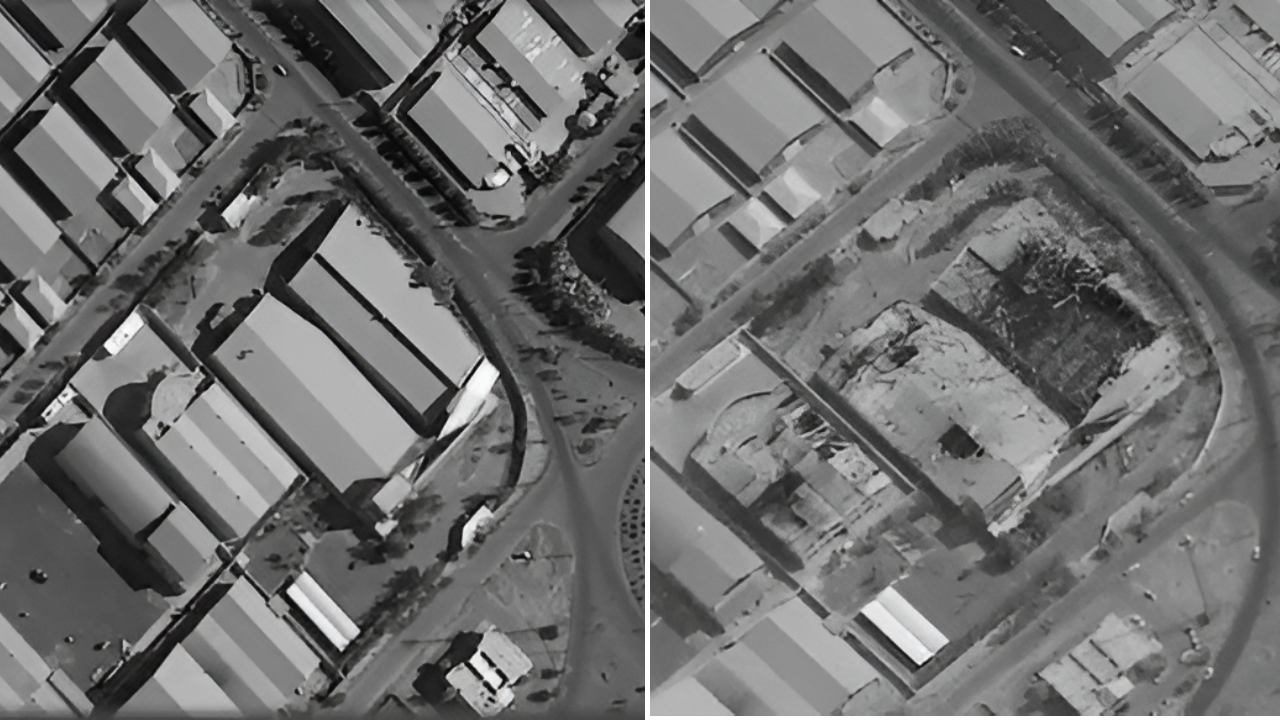
The United States military doesn't just drop bombs anymore; they perform surgery with high explosives. The recent strikes on Iran’s turbine engine production plant in Qom weren't meant to level the city or even the entire industrial zone. They were designed to lobotomize a very specific capability. When the smoke cleared and the satellite shutters clicked into place hours later, the "before and after" images told a story of clinical erasure.
Where there were once rooflines housing expensive, imported CNC machines—the kind of hardware that costs millions and takes years to calibrate—there were now jagged craters and charred skeletons of steel.
The Anatomy of a Bottleneck
We often talk about war in terms of troop movements or "strategic assets," but those phrases are too cold to capture what actually happened in Qom. To understand why this specific plant mattered, you have to understand the bottleneck of modern warfare.
Anyone can build a frame for a drone. You can buy the carbon fiber and the GPS chips on the open market. But you cannot easily build the engine. A turbine engine is a masterpiece of metallurgy. It has to withstand temperatures that would melt lead while spinning at thirty thousand revolutions per minute.
Iran has spent decades perfecting the art of the "shadow supply chain," smuggling in components and reverse-engineering Western designs. The Qom facility was the crown jewel of this effort. It was the place where raw materials were transformed into the propulsion systems that allow Shahed drones to swarm across distant borders.
When the American munitions hit, they didn't just break buildings. They broke time. You can’t simply go to a hardware store and replace a specialized turbine blade casting mold. Those tools are the result of years of trial and error. By targeting the production equipment rather than just the finished drones, the strike effectively reset the clock on Iran’s regional reach. It was a message written in fire: We know exactly which room you work in.
The View from Two Miles Up
The satellite imagery released following the strike is haunting in its stillness. In the "before" shots, the facility looks like a thriving hive. You see the neat rows of vehicles in the parking lot—people coming to work, thinking about their mortgages, their lunch, their children’s school grades.
In the "after" shots, the parking lot is empty. The silence is visible.
There is a peculiar, detached horror in analyzing these photos. Intelligence officers use a process called "Battle Damage Assessment." They look at the way a roof has collapsed. If it bows inward, the pressure wave was external. If the walls are blown outward, something inside—perhaps fuel, perhaps chemicals—added to the destruction. In Qom, the precision was so high that adjacent buildings remained untouched. A tea shop a few hundred yards away might not have even lost a window, while the men and machines inside the engine plant were vaporized.
This is the "invisible stake" of modern conflict. It’s no longer about who has the biggest army. It’s about who has the best map of the enemy’s brain. The U.S. didn't need to invade Qom. They just needed to delete a specific paragraph of Iran's industrial manual.
The Ripple Effect in the Dirt
Consider the geopolitical math that led to this moment. For months, the tension had been vibrating like a taut wire. Tensions in the Red Sea, the humming of drones over Ukrainian cities, the shadow boxing in the Levant—all of it leads back to the engines made in places like Qom.
When those engines stop, the ripples are felt instantly.
A commander in a distant theater of operations suddenly finds his "re-up" date pushed back. A procurement officer in Tehran frantically picks up a secure line, wondering which of their "neutral" suppliers leaked the coordinates of the cooling vents. The human element here isn't just the people in the blast zone; it's the sudden, cold realization among the survivors that their secrets aren't secret.
There is a psychological weight to a strike like this. It creates a feeling of nakedness. If a satellite can see through the roof of a factory to identify the exact location of a lathe, then there is no such thing as "behind the lines." The front line is everywhere. It is in the office, the factory floor, and the laboratory.
The Cost of Cold Iron
Critics often argue that such strikes are a temporary fix—a "mowing of the grass" that only delays the inevitable. And there is truth in the confusion of war. People are resilient. They clear the rubble. They move the remaining machines to basements and tunnels. They start again.
But the cost isn't just measured in rials or dollars. It’s measured in the loss of momentum. In the world of high-tech manufacturing, momentum is everything. You lose your best engineers to fear or injury, you lose your precision jigs to fire, and suddenly, your "cutting-edge" program is ten years behind the curve.
We look at the craters and see "damage." The people living through it see the collapse of a decade of labor. They see the dust of a billion-dollar dream.
The machines in Qom are silent now. The desert wind will eventually blow the scent of burnt oil away, leaving only the salt and the dust. But the silence itself is a roar. It tells the story of a world where the distance between a satellite's lens and a factory floor has shrunk to nothing, and where the most important parts of a war are the things we never see until they are gone.
Somewhere, in a different facility, another technician is likely looking at a blueprint, his hands shaking slightly as he wonders if the next whistle he hears will be the last thing he ever knows. The war of the twenty-first century isn't fought for land. It is fought for the right to keep your machines running. And tonight, in the shadow of the salt flats, the engines have stopped.
Would you like me to analyze the specific satellite imagery techniques used to confirm the destruction of the turbine molds at the Qom facility?