The phone rings at an hour that never brings good news. It is the kind of sound that slices through the heavy, grey silence of a Tuesday morning, vibrating against a bedside table with a persistence that feels like a physical blow. For the partner of Ian Coates, that ring was the beginning of a fracture in reality.
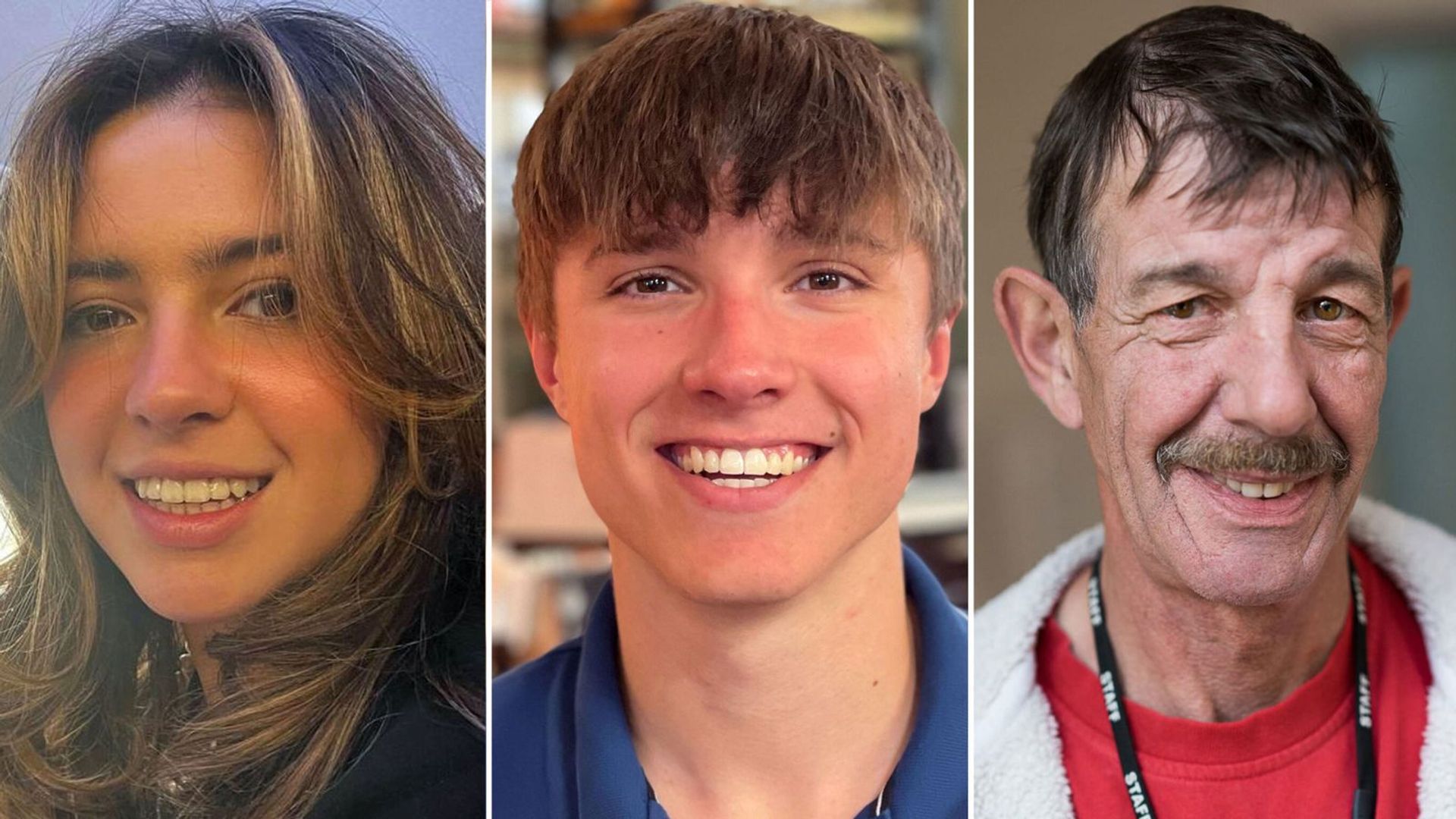
Ian was sixty-five. He was a school caretaker, a man whose life was measured in the rhythmic opening of gates, the comforting clutter of a shed, and the upcoming promise of retirement. He was one of three victims in the Nottingham attacks—a spree of senseless violence that turned a quiet city into a crime scene under the pale light of a June dawn. But for those who loved him, the horror of the blade was soon followed by the horror of a word.
A police officer stood in a room, perhaps clutching a cap or a notebook, and delivered a sentence that would settle in a young man’s mind like poison. They told Ian’s partner that he had died in a road traffic accident.
It was a lie. Not a malicious one, but a mechanical failure of the soul.
In the immediate aftermath of a catastrophe, facts are supposed to be the only solid ground left to stand on. We rely on the authorities to provide the "what," the "where," and the "how" because the "why" is usually far out of reach. When that factual foundation is swapped for a fiction—even an accidental one—the grieving process doesn't just stall. It breaks.
The Anatomy of a Terrible Error
Consider the weight of a narrative. If you are told your loved one died in a car crash, your mind immediately begins a frantic, subconscious construction project. You see the twisted metal. You hear the screech of tires. You wonder if it was quick, if the brakes failed, if the rain made the asphalt slick. You build a shrine of grief around a specific set of circumstances. You find a way to make sense of the tragedy through the lens of a mechanical failure or a momentary lapse in judgment.
Then, hours later, the police return.
"We made a mistake," they say. The phrase "terrible error" was later used by Kate Meynell, the Chief Constable of Nottinghamshire Police. But "error" feels like a word for a typo or a missed turning. This was a total demolition of a person's immediate past.
They had to tell him that Ian hadn't died in a collision. He had been stabbed. He had been targeted. His van had been stolen by his killer to continue a rampage.
In that moment, the partner had to mourn Ian Coates a second time. The first version of his death—the "cleaner" version of a traffic accident—was stripped away, replaced by a reality defined by malice and steel. It is a psychological whiplash that few human beings are equipped to survive. The police didn't just deliver news; they forced a man to watch his partner die twice in the span of a single afternoon.
When the System Forgets the Human
We often talk about "police procedure" as if it is a cold, immutable machine. We want it to be. We want the chain of command to be a series of steel links, ensuring that information flows from the street to the station to the family without a drop being spilled.
But systems are made of people. And people, when faced with the overwhelming adrenaline of a city-wide manhunt, become prone to the most basic of failures.
The Nottinghamshire Police eventually admitted that the officer who delivered the news had been given the wrong information. In the chaos of the morning—where two students had already been killed and a van was being used as a weapon to mow down pedestrians—the details blurred. Someone saw a van. Someone saw a body. Someone checked a box that said "collision" instead of "homicide."
This wasn't just a clerical slip. It was a failure of empathy in the face of efficiency. When we prioritize the speed of notification over the accuracy of the truth, we treat the bereaved as recipients of data rather than victims of trauma. The "invisible stakes" here aren't just about police transparency; they are about the sanctity of the last moments of a human life. How a person dies becomes the final chapter of their story. When the state gets that chapter wrong, they are effectively vandalizing a biography.
The Ghost in the Machine
We live in an era where we expect instant answers. We refresh our feeds. We demand live updates. This pressure trickles down to the boots on the ground. There is a desperate, driving need to "close the loop," to inform the next of kin before they see a name on social media or a blurred photo on a news site.
But there is a silence that is better than a lie.
If the officer had said, "We know he is gone, but we are still piecing together exactly what happened," the trauma would have been singular. Instead, by offering a definitive, incorrect cause of death, they created a phantom trauma. They gave the family a false memory to contend with.
Imagine the dinner tables in Nottingham that night. Imagine the conversations where people tried to reconcile the man they knew—a man who loved fishing and his grandchildren—with the violent end he met. The "road accident" narrative allowed for a certain kind of peace; accidents are part of the chaotic neutral of the universe. Murder is different. Murder is a choice. By misreporting the cause, the police briefly shielded the family from the malice of the world, only to drop them into it with twice the force later on.
The Cost of Admitting a Mistake
It took time for the apology to come. It came in the form of a meeting, a "sincere" expression of regret. Chief Constable Meynell acknowledged the "upset and distress" caused.
Upset. Distress.
These are clinical words. They belong in a brochure about mild inconveniences. They do not belong in a conversation about a man who lost his partner to a stabbing and was told it was a fender-bender.
The reality of the Nottingham attacks was a tapestry of failures. There were failures in mental health monitoring for the attacker. There were failures in the legal system’s ability to track a dangerous individual. But this specific failure—the "terrible error" of the notification—is the one that stings the most because it was entirely preventable. It didn't require a change in the law or a multi-million pound budget. It required a moment of pause. It required someone to say, "Are we sure?"
We often forgive the police for not being able to stop every crime. We know the world is a dark and unpredictable place. What is harder to forgive is the mishandling of the aftermath. When the tragedy is over, the only thing the state owes the citizen is the truth.
The Resonance of the Unspoken
Ian Coates wasn't just a headline. He was the guy who made sure the school was warm in the winter. He was the guy who had a joke for the teachers and a firm hand for the troublemakers. He was three months away from a retirement he had earned through decades of quiet service.
His death was a robbery. The police’s mistake was a second theft—a theft of the family’s right to grieve truthfully.
When we look back at the Nottingham attacks, we will remember the bravery of the first responders and the outpouring of grief for the young students, Barnaby Webber and Grace O’Malley-Kumar. But we must also remember the quiet room where a man sat, processing a car crash that never happened, waiting for the world to break all over again.
The lesson here isn't about better software or faster radios. It's about the weight of the words we use when the world is ending. It’s about the realization that in the wake of a nightmare, the truth is the only thing that has the power to eventually—slowly, painfully—set the story straight.
The gate to the school stayed locked that week. The shed remained full of tools that would never be used by the hands that knew them best. And in a home nearby, a man had to learn to live in a world where even the police couldn't tell him how his life had been shattered.
Sometimes, the most honest thing a person in authority can say is nothing at all, until the truth is heavy enough to carry the grief.
Would you like me to analyze how this incident changed the protocols for family liaison officers in the UK?