The glow of a smartphone screen at 2:00 AM isn't just light. For a certain breed of devotee, it’s a lifeline.
For years, the ritual was the same. You would sit on the edge of a bed in a darkened room, squinting at a grainy, pixelated livestream hosted on a platform that felt like it was held together by digital scotch tape. The audio would crackle. The image would freeze just as Harry Styles leaned into the microphone to hit that high note in "Sign of the Times." You weren't there, and the technology made sure you knew it. You were an outsider looking through a dirty window.
That window just shattered.
Netflix has officially moved to claim the crown jewel of modern pop culture, announcing that Harry Styles’ record-breaking "Love On Tour" is coming to the streaming giant. This isn't just another concert film added to a library of endless scrolling. It is a fundamental shift in how we consume the communal experience of music. It is the democratization of the "Pit."
The Ghost in the Stadium
To understand why this matters, you have to understand the sheer, crushing weight of FOMO—the Fear Of Missing Out—that has defined the music industry since the world reopened.
Live music transitioned from a luxury to a desperate necessity. Tickets for Styles' residency at Madison Square Garden or his stint at Wembley didn't just sell out; they evaporated. They became currency. If you didn't have five hundred dollars for a "nosebleed" seat or two thousand for a spot near the barricade, you were effectively erased from the cultural moment.
Consider a hypothetical fan named Maya. Maya lives in a small town three hours from the nearest major city. She works forty hours a week at a bookstore. For Maya, a Harry Styles concert isn't just a ticket price. It’s a hotel stay. It’s a tank of gas. It’s two days of missed wages. It is, quite simply, impossible.
For the Mayas of the world, this Netflix deal is an act of inclusion.
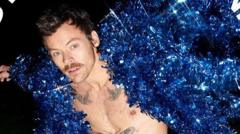
Netflix isn't just filming a show; they are capturing a subculture. The "Love On Tour" phenomenon wasn't just about a man in sequins singing hits. It was a traveling ecosystem of boas, cowboy hats, and the radical, neon-soaked acceptance of others. It was a space where the air felt lighter.
When you strip away the lights and the sound, what is a concert?
It’s an agreement.
An agreement between thirty thousand strangers to feel the same thing at the exact same time. The magic of "Love On Tour" was its ability to make thirty thousand people feel as though they were in a single, crowded living room.
Why the Screen Doesn't Lie
Critics have long argued that a concert film is a pale imitation of the real thing. They point to the lack of vibration in your chest from the bass or the absence of the smell of stale beer and expensive perfume. They are right, of course.
But they miss the point.
Traditional concert films often felt like documentaries—detached, archival, a piece of history. Netflix’s strategy for the Styles special is to lean into the intimacy. High-definition cameras don't just see the sweat on a performer’s brow; they see the flicker of a smile when a fan throws a toy onstage. They see the micro-gestures that make a superstar feel like a person.
The invisible stakes for Netflix are monumental.
For the streamer, this is a calculated gamble on "appointment viewing." In an era where "the algorithm" dictates what we watch, a Harry Styles special is a blunt force instrument. It is a tentpole event designed to stop the churn of cancellations. It’s an attempt to capture the zeitgeist and hold it hostage in their app.
But for the viewer, the stakes are different.
The stakes are emotional.
There is a specific kind of loneliness that comes from being a fan of something you can't touch. You see the clips on TikTok. You watch the fan-cam footage from someone’s iPhone 13. You hear the muffled screams of the crowd, and you feel a pang of distance.
Now, that distance is being bridged by fiber optic cables.
The Evolution of the Fan-Artist Pact
Harry Styles has built his career on a specific promise: "Treat People With Kindness."
It’s a mantra. It’s on the shirts. It’s on the signs. But more than that, it’s a pact. He provides the spectacle, and the fans provide the sanctuary. The "Love On Tour" run was the longest and most physically demanding of his career, spanning years and continents. It saw him evolve from a boy band heartthrob into a stadium-filling titan who can command a stage with nothing but a grin and a microphone.
This Netflix special is the final chapter of that saga.
It’s the "victory lap" for a tour that redefined what it means to be a modern rock star. When the film drops, it won't just be Maya in her small town bookstore. It will be millions of fans across the globe, hitting "play" at the exact same second.
The living room becomes the arena.
The "Pit" moves to your couch.
The agreement is renewed.
Consider the logistical feat of capturing this. Multiple nights, dozens of camera angles, and the Herculean task of mixing audio to replicate the wall of sound that hits you in a stadium. It is a technical masterpiece hiding inside a pop song.
We are witnessing the birth of a new kind of "live" experience.
It’s an experience where the barriers to entry are lowering. While the purists will always argue that "you had to be there," the reality is that "there" is now everywhere.
The lights go down. The static of the Netflix "Ta-dum" sound effect rings out. The first chords of "Music for a Sushi Restaurant" kick in.
Suddenly, the bookshelf in the corner of your bedroom starts to vibrate with the ghost of a thousand dancing feet.
The screen isn't a window anymore. It’s a door.
And for the first time, everyone is invited inside.