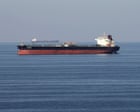
The sea at midnight in the Strait of Hormuz is not black. It is a shifting, oily charcoal, slick with the history of the world’s energy and the constant, vibrating hum of steel hulls. On the bridge of a 300-meter VLCC—a Very Large Crude Carrier—the silence is heavy. Captain Marek (a composite of the many veterans who have walked these decks) stares at the radar screen. The blips are more than just coordinates. They are $200,000,000$ in cargo and thirty lives.
Usually, the invisible shield around this ship is made of paper. It is an insurance policy. It is the guarantee that if a drone strikes or a mine clings to the hull, someone, somewhere in a glass office in London, will pay.
That shield just vanished.
Last week, the giants of the maritime insurance world did something quieter and more devastating than any physical blockade. They stopped covering war risks in the Gulf. This is not a bureaucratic adjustment. It is a severance of the global circulatory system. When the underwriters at Lloyd’s or the regional cartels pull back, they aren't just adjusting a spreadsheet. They are telling Captain Marek that he is on his own.
The Math of a Floating Powder Keg
To understand why a few canceled policies in a London boardroom can spike the price of a gallon of gas in Ohio, you have to understand the sheer, terrifying scale of a modern tanker. These vessels are the largest moving objects ever built by human hands. They carry enough oil to heat a city for a month.
But they are fragile.
Modern maritime law operates on a delicate balance of risk and reward. Under normal circumstances, a ship owner pays a "Hull and Machinery" premium. It’s standard. But when a region becomes "listed"—meaning the likelihood of someone shooting at you or seizing your ship rises above a negligible percentage—a "War Risk" premium is added.
Lately, the Gulf has been more than just listed. It has been a laboratory for asymmetric warfare.
Consider the "shadow war" at sea. It doesn't look like Midway. There are no sweeping carrier groups or thunderous broadsides. It looks like a small, fast boat approaching in the gray light of dawn. It looks like a "limpet mine," a device roughly the size of a dinner plate, magnetically attached to the hull just below the waterline. It is designed not to sink the ship, but to bleed it. To make it uninsurable.
When insurers look at the mounting tension between Iran and the West, they don't see political ideology. They see a probability curve that has spiked into the red. They see the seizure of the Stena Impero or the attacks on the Front Altair. They see a cost-benefit analysis where the cost of a single total loss could wipe out a decade of premiums.
So, they walked away.
The Invisible Ghost Ships
What happens when the insurance stops? The world doesn't stop needing oil. The demand remains a constant, thrumming pressure.
The first result is a "dark fleet."
Ships that cannot get traditional Western insurance often turn to "sovereign guarantees" or fly-by-night insurers with questionable capital. They turn off their AIS—the Automatic Identification System that tells the world where they are. They become ghosts.
Imagine a 1,000-foot ship, laden with explosive cargo, navigating one of the most crowded waterways on Earth without a digital footprint. It is a recipe for a catastrophe that goes far beyond a missed delivery. If two "dark" tankers collide because they were hiding from the global financial system, there is no one to pay for the cleanup. There is no one to compensate the families of the drowned.
The "War Risk" cancellation creates a vacuum. In that vacuum, the rules of the sea revert to something more primal. Something more dangerous.
The Human Toll of an Underwriter’s Pen
We often talk about "shipping" as if the ships move themselves. We talk about "insurers" as if they are faceless entities. But the ripple effect of these canceled policies hits the crew first.
Marek knows that his contract has a "War Zone" clause. Usually, it means double pay for every day spent in the high-risk area. It’s a grisly trade: your life for a higher mortgage payment back home in Gdansk or Manila. But without insurance, the ship owner might not even be allowed to enter the Gulf by their bank.
The global economy is built on debt. Almost every ship on the water is mortgaged. And the banks have a very simple rule: No insurance, no sailing.
Suddenly, hundreds of ships are diverted. They take the long way around. They sit in port, their crews trapped in a limbo of maritime law. The cost of chartering a vessel skyrockets because the supply of "insured" ships has dwindled.
Think about the math of a simple detour. To avoid the Gulf and find an alternative route, or to wait for a "safe" window that may never come, costs roughly $30,000 to $50,000 a day in fuel and wages alone. Multiply that by thousands of voyages.
The price of your morning commute is being decided by a man in a pinstriped suit who just decided that the risk of an Iranian drone is no longer "actuarially sound."
The Fragility of the "Just-in-Time" Illusion
We live in a world that believes in the infinite availability of things. We click a button, and a product appears. We turn a key, and the engine starts. We have demystified the supply chain so much that we have forgotten it is actually a physical, heavy, and violent process.
The withdrawal of war risk cover is a reminder that the global economy is not a digital cloud. It is a series of pipes, and those pipes are currently being squeezed.
Insurers are the world’s most honest historians. They don't care about the rhetoric coming out of Tehran or Washington. They care about the data. And the data tells them that the Gulf is no longer a place for business. It is a theater of war.
When the insurers leave, they are effectively declaring a "no-fly zone" for the global economy. They are saying that the "Pax Americana" that has guaranteed safe passage for trade since 1945 is fraying at the edges.
The New Map of Risk
If you look at a map of the world’s maritime "Hot Zones," the Gulf is glowing bright red. But the heat is spreading.
As insurers pull back from one area, they reassess others. Is the Red Sea safe? What about the South China Sea? We are witnessing the balkanization of the ocean. The high seas were once a commons. Now, they are being partitioned into zones where you are protected and zones where you are a target.
This shift forces a choice upon nations. Do you provide your own "sovereign" insurance, effectively putting the taxpayer on the hook for a torpedo strike? Or do you let your trade wither?
For the average person, this feels distant. It feels like a story about ships and billionaires.
It isn't.
It is a story about the fragility of the peace we take for granted. Every time an insurance company cancels a policy in the Gulf, the world becomes a little more expensive and a lot more dangerous. The "invisible hand" of the market is currently pulling back, and in its place, we are seeing the very visible hand of conflict.
The Last Watch
Back on the bridge, Marek checks the horizon. There are no lights where there should be. Another tanker has gone "dark," slipping past the checkpoints in a desperate bid to deliver its cargo.
He wonders if his next voyage will be his last. Not because of a storm. Not because of a mechanical failure. But because a group of people in a quiet room thousands of miles away decided that his life was no longer a risk they were willing to price.
The ship moves on, a titan of industry reduced to a target, sailing through a sea where the only thing more dangerous than the mines is the sudden, cold absence of a guarantee. The lights of the coast of Iran flicker in the distance, a reminder that the world is much smaller—and much more volatile—than the spreadsheets ever suggest.
The true cost of war isn't just the iron and the fire. It is the moment we decide that the safety of the journey is no longer worth the price of the ticket.