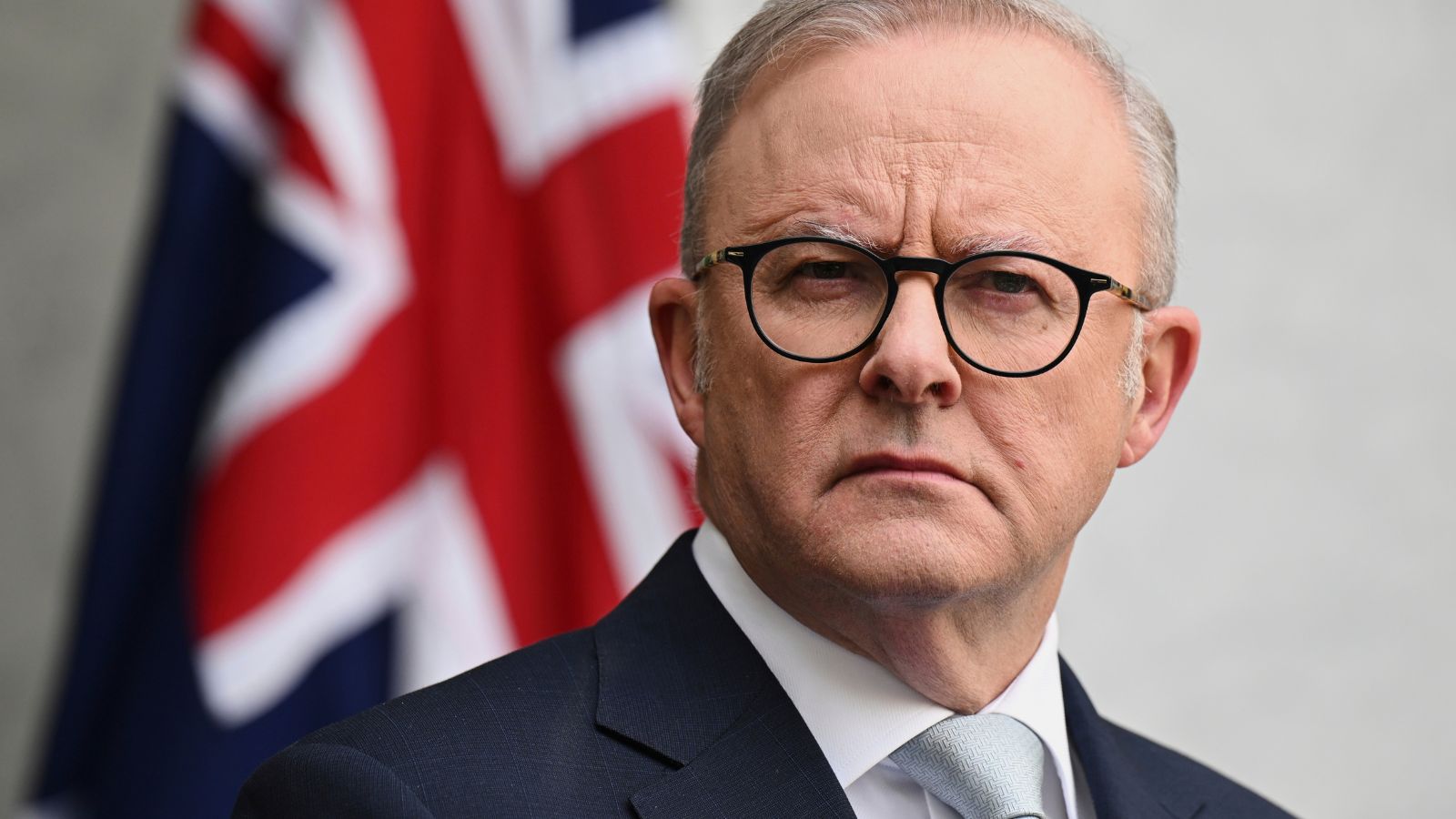
The sandstone walls of Kirribilli House have watched the harbor for over a century. They have seen the arrival of world leaders, the hushed negotiations of midnight summits, and the steady, rhythmic pulse of Sydney’s tides. Usually, the air here smells of salt and old wood. It is a place designed to feel permanent. But at 8:30 PM on a Tuesday, the air tasted of adrenaline and cold harbor wind.
Power doesn't usually run. It is escorted.
When the threat came—sharp, sudden, and directed—the machinery of the state did not hesitate. It didn't matter that the threat was delivered via the digital ether or a frantic phone call. In the world of high-stakes security, a possibility is treated as a certainty until proven otherwise. Anthony Albanese, a man who grew up in public housing and now occupies the most guarded residence in the country, was pulled from the quiet routine of a leader’s evening.
We often think of Prime Ministers as figures on a screen, shielded by the weight of their office. We forget the vulnerability of the human being beneath the suit. Imagine, for a moment, being told that the ground beneath your feet might no longer be safe. There is no time to pack a bag. No time to check if the stove is off. There is only the firm grip of a security detail and the rapid-fire crunch of gravel under boots as you are moved toward the waiting motorcade.
The Anatomy of a Shadow
The "bomb threat" is a peculiar weapon of the modern age. It is often bloodless, yet it draws blood from the psyche. It weaponizes the unknown. For the Australian Federal Police and the tactical teams descending on the leafy streets of Kirribilli, the task was a grim binary. They had to assume the worst while hoping for the mundane.
Uniformed officers fanned out across the perimeter. Blue and red lights sliced through the darkness, reflecting off the water where ferries usually drift lazily toward Circular Quay. The neighbors—residents of one of the most expensive postcodes in the Southern Hemisphere—peered through their curtains. They saw the dogs. The black SUVs. The men in heavy vests who move with a practiced, terrifying silence.
Security isn't just about bulletproof glass. It is about the management of chaos.
A threat like this operates on two levels. First, there is the immediate physical risk: the search for wires, timers, and volatile chemicals. Second, there is the symbolic strike. To threaten the official residence of a head of state is to attempt to puncture the aura of stability that holds a country together. It is a reminder that the person we choose to lead us is, at the end of the day, a target.
The Loneliness of the Motorcade
As the Prime Minister was whisked away to a secure, undisclosed location, the silence inside the armored car must have been deafening. This is the hidden cost of the job. You are never just "Albo" from Marrickville in those moments. You are the embodiment of the Commonwealth, a walking piece of infrastructure that must be preserved at all costs.
Consider the psychological toll of being evacuated. It is a disruption of the most basic human need: the sanctuary of home. Even if that home is a historic mansion owned by the taxpayers, it is where you sleep. It is where you let your guard down. When that sanctuary is violated by the threat of violence, the world shrinks. Every shadow in the hallway becomes a question mark. Every unexplained sound is a heartbeat skipped.
The investigation began before the PM’s car even cleared the suburb. Intelligence officers tracked digital footprints. They combed through call logs. They looked for the "who" while the tactical teams looked for the "what."
The False Alarm and the Real Scar
By the time the sun rose over the Opera House the next morning, the "all clear" had been given. No devices were found. No explosions rocked the harbor. The threat was a hoax—a cruel, calculated piece of theater designed to test the reflexes of the state and the nerves of a man.
But to call it "just a hoax" is a mistake.
A hoax still requires the mobilization of dozens of emergency workers. It still costs thousands in taxpayer dollars. Most importantly, it leaves a residue. You can sweep a room for bombs, but you cannot sweep a mind for the memory of being told your life is in danger.
The Prime Minister returned to work. The meetings continued. The legislative agenda pressed on. To the public, it was a headline that faded by the afternoon news cycle. To the security teams, it was a successful drill of their worst-case scenario protocols. But to the human being at the center of it, it was a night where the fragility of everything became crystal clear.
We demand that our leaders be stoic. We expect them to shrug off these incidents as "part of the job." We rarely stop to think about the adrenaline crash that follows a midnight evacuation. We don't consider the phone calls made to family members to say, "I'm fine, don't worry," while the heart is still racing.
The Invisible Perimeter
The fences at Kirribilli are high, but they are not thick enough to keep out the toxicity of a fractured political landscape. In an era where online rhetoric often spills over into physical intimidation, the "bomb threat" is the ultimate expression of a breakdown in civil discourse. It is the moment where disagreement turns into a desire for destruction.
The officers who walked those grounds that night were looking for explosives. What they were actually guarding was the principle that a leader should be able to serve without the constant shadow of assassination hanging over their breakfast table.
As the motorcade eventually rolled back through the gates, the sandstone walls stood as they always have. The harbor remained indifferent. The salt air returned. But the house felt different. It was a reminder that the highest office in the land is also the most exposed.
The lights stayed on at Kirribilli House that night, not because someone was home, but because the state wanted the world to see that it would not blink. Underneath that defiance, however, was a man who had been reminded, in the harshest way possible, that the price of power is the loss of peace.
The gravel has been raked. The dogs are back in their kennels. The harbor is quiet. Yet, in the silence of the halls, the echo of those heavy boots remains, a permanent ghost in the architecture of Australian democracy.