The desert at night is not actually dark. If you stand on a ridge outside of Boulder City, Nevada, the horizon glows with a persistent, electric neon hum. It is the visual heartbeat of millions of lives—refrigerators keeping insulin cold, servers whirring with the world's data, and streetlights guiding tired parents home. We take this for granted. We treat the flip of a switch as a fundamental law of physics rather than what it actually is: a fragile, synchronized dance of copper, turbines, and high-voltage steel.
On a nondescript evening in the Mojave, that dance nearly turned into a funeral march.
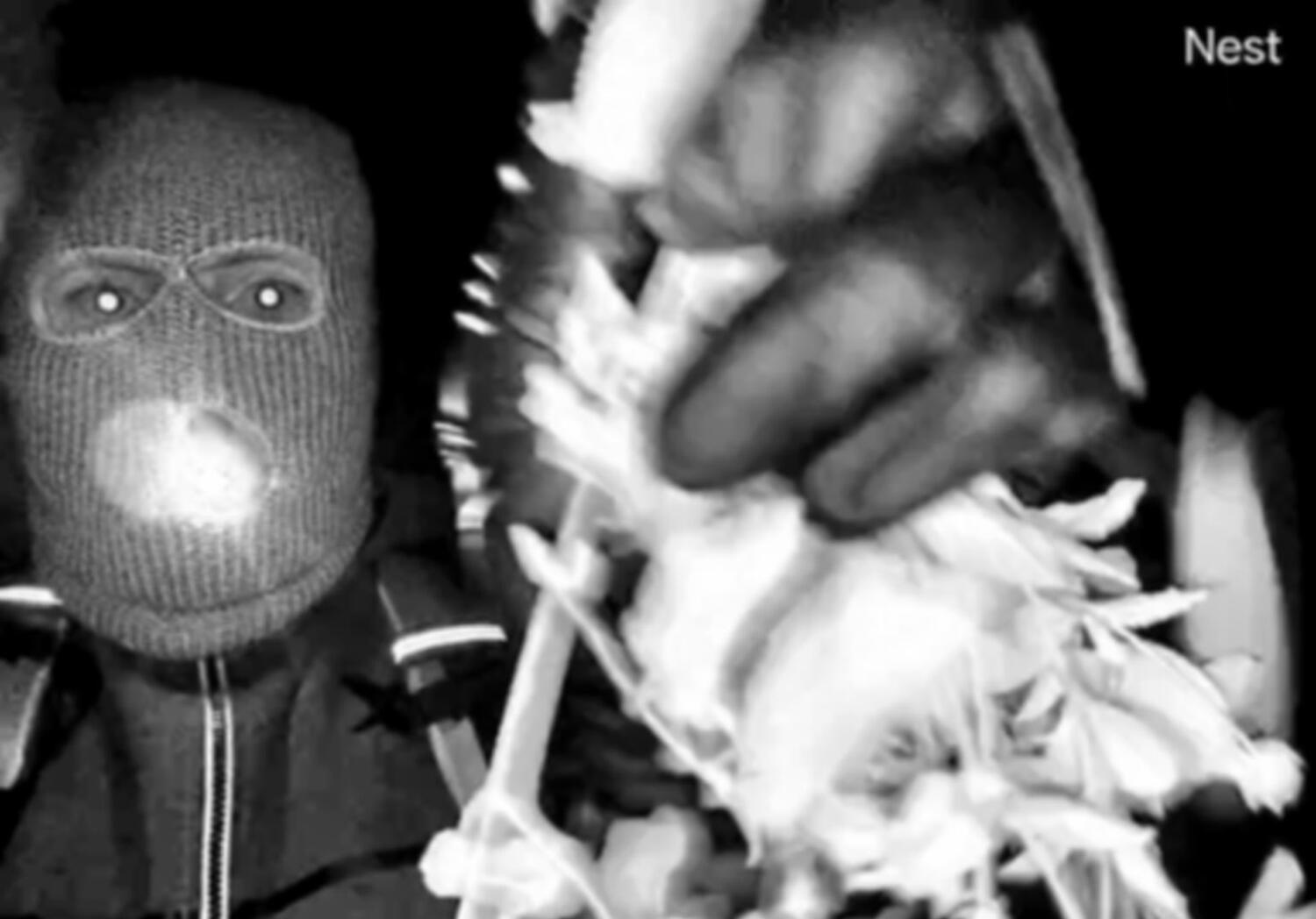
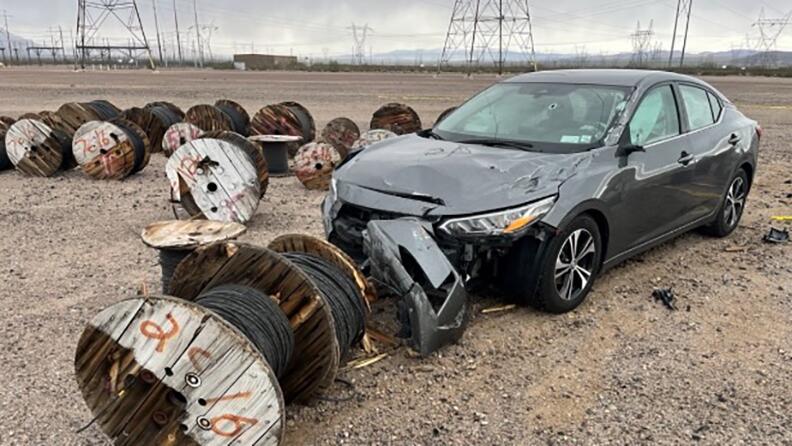
A man sat behind the wheel of a heavy vehicle, his eyes fixed on the Los Angeles Department of Water and Power (LADWP) substation. This wasn't a casual trespasser or a confused tourist. This was a kinetic threat. He hit the gas, aiming the mass of his car directly at the infrastructure that bridges the gap between raw energy and human civilization. He tried to ram his way into the gut of the grid.
He failed. But the ripples of that impact are currently vibrating through the halls of the FBI and the nerve centers of national security.
The Invisible Veins of the West
To understand why a car hitting a fence in the middle of a wasteland matters, you have to look at a map of how we survive. Substations are the translators of the modern world. They take the screaming, raw power coming off dams and wind farms—voltage so high it would melt your household wiring—and step it down into something usable.
If you kill a substation, you don't just turn off the lights. You sever the lifeline. In the arid West, power is water. Without electricity, the pumps that move water through the desert stop. The air conditioning that makes Nevada and Southern California habitable in 110-degree heat vanishes. Within hours, a silent city becomes a furnace.
The FBI isn't investigating this as a simple case of reckless driving or a mental health crisis in a vacuum. They are looking for the "T" word: Terrorism. When someone targets the grid, they aren't attacking a building. They are attacking the social contract. They are betting that if they can plunge us into the dark, the rest of our complicated, fragile society will tear itself apart in the shadows.
The Hunter and the Hardened Target
Consider the perspective of the men and women who monitor these sites. For decades, the greatest threats to a substation were curious raccoons, lightning strikes, or the occasional bored teenager with a hunting rifle. Security was a chain-link fence and a "Danger: High Voltage" sign.
That era ended.
In recent years, we have seen a terrifying uptick in "coordinated' attacks on energy infrastructure. From the sniper attack on the Metcalf substation in California years ago to more recent sabotages in Washington and North Carolina, a pattern is emerging. Extremists of various stripes have realized that you don't need to storm a capital building to seize power. You just need to find the right transformer.
The Nevada incident fits a chilling profile. The driver didn't just veer off the road. He attempted to breach the perimeter of a facility that feeds the massive hunger of the Los Angeles basin. Had he succeeded in causing a catastrophic fire or a transformer explosion, the repair time wouldn't have been measured in hours. Transformers are not items you pick up at a local hardware store. They are multi-ton, custom-built machines that can take months, or even years, to replace.
The Fragility We Refuse to See
We live in a state of high-voltage denial. We assume that because the power has always been there, it always will be. But the engineers who manage these sites speak a different language. They talk about "cascading failures." They talk about "N-1 contingencies"—the idea that the system should be able to lose one major component and keep running.
But what happens when the attacks are N-2? Or N-10?
The Nevada driver represents a terrifyingly low-cost method of warfare. You don't need a cyber-army or a suitcase nuke. You just need a heavy truck and a willingness to die for a dark cause. It is the ultimate asymmetrical threat. On one side, you have billions of dollars in infrastructure and millions of lives depending on it. On the other, you have one man with a steering wheel and a grudge against the world.
The FBI’s involvement signifies that this wasn't an isolated moment of madness. They are scouring digital footprints, looking for the "why." Was this a lone actor inspired by the growing online chatter about "accelerationism"—the fringe philosophy that society must be violently pushed toward collapse to build something new? Or was this a dry run for something larger?
The Cost of the Guard
Since the Nevada incident, the "quiet" work of utility companies has become significantly louder. We are seeing the hardening of the American interior. This means more than just taller fences. It means ballistic shielding around transformers that can stop high-caliber rounds. It means AI-driven thermal cameras that can distinguish between a coyote and a saboteur at midnight. It means a level of surveillance that we once reserved for nuclear silos.
This is the hidden tax of the modern age. We pay it every month on our utility bills, not just for the coal or the wind, but for the guards and the concrete barriers required to protect our way of life from ourselves.
It feels like a fever dream. We are a civilization that can map the human genome and send rovers to Mars, yet we are vulnerable to a guy in a sedan with a lead foot. It reveals a profound truth about the world we've built: the more complex we become, the more we rely on a few simple, unprotected points of failure.
The Ghost in the Grid
There is a specific kind of silence that happens when the power goes out. It isn't just the lack of noise. It's the absence of the "hum." We are so accustomed to the 60-hertz vibration of our world that we don't realize we're hearing it until it stops.
In that silence, the modern world retreats. The GPS on your phone eventually dies. The grocery store scanners stop working. The digital money in your bank account becomes an abstraction that you cannot reach. We are reduced to the physical space we occupy and the people within earshot.
The man in Nevada was trying to force that silence upon us. He was trying to push us back into a pre-industrial cold.
As the investigation continues, the focus will remain on the driver’s motives and his potential links to broader networks. But the real story isn't just about one man in a car. It's about the millions of us on the other side of that fence. It’s about the vulnerability we’ve traded for convenience and the heavy, metallic realization that our entire reality hangs on a few wires stretched across a lonely desert.
The lights stayed on this time. The hum continued. The refrigerators kept whirring, and the neon stayed bright. But in the offices of the FBI and the control rooms of the LADWP, the adrenaline hasn't faded. They know that somewhere out there, the next driver is already looking at a map, searching for a place where the fence looks thin and the desert looks dark.
The desert wind still blows through those Nevada substations, rattling the chain-link. It sounds like a warning. It sounds like a question we aren't yet ready to answer.
Would you like me to look into the specific security upgrades being implemented at power substations across the country to counter these kinetic threats?